InDrive is stretching far beyond ride-hailing. The company has begun running ads in its app across its top 20 markets. At the same time, it is launching grocery delivery in Pakistan. The goal is simple. It wants to become a super app that earns more than just ride fees. This move comes as transport apps face rising costs and tougher competition in emerging markets. By adding ads and daily shopping, inDrive hopes to grow without raising prices for users.
The Mountain View, California-based firm is best known for its bidding model. Riders and drivers agree on a fare instead of using fixed prices. That keeps trips affordable in price-sensitive markets. Still, the space remains crowded with players like Uber and many local options. So, inDrive now wants people to open its app more often, not only when they need a ride.
Advertising is one clear step. It brings high margins and grows with app use. Grocery delivery is another. It pushes daily visits and supports ad demand. Together, they help inDrive rely less on ride commissions while keeping its core service strong.
Ads become a new growth engine
inDrive has started rolling out ads in markets like Mexico, Colombia, Pakistan, Kazakhstan, Egypt, and Morocco. The launch follows mid-2025 tests that produced hundreds of millions of impressions. Those trials also attracted global brands and banks, said Andries Smit, the company’s chief growth business officer.
The first ads will appear inside the app. They will show while riders wait for a car and during trips. These moments get close attention from users. Over time, inDrive also plans to place ads inside cars and on vehicles. However, the company will focus on in-app formats through 2026. Smit said those are easier to run and already show stronger returns.
This ad push links closely with the grocery plan. Shopping creates more sessions than rides. That gives brands more chances to reach users. It also makes the app more useful in daily life.
Pakistan becomes the test ground
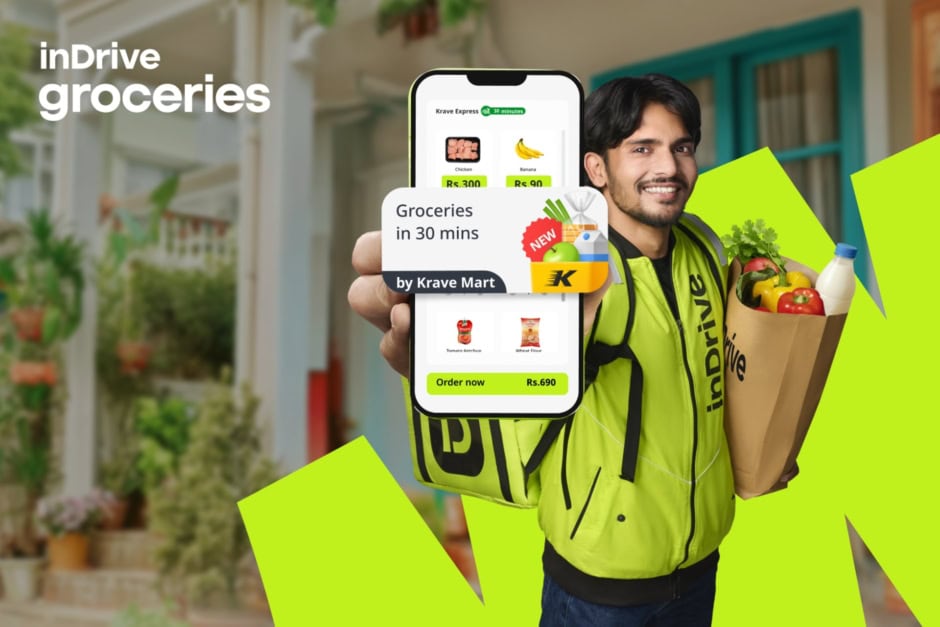
Pakistan is the second market for inDrive’s grocery service after Kazakhstan. The company is working with Krave Mart, a local dark store operator. InDrive invested in Krave Mart in December 2024. The country stands out due to fast growth in quick commerce and inDrive’s own large base of riders.
Grocery retail in Pakistan remains fragmented. Many shops still operate offline. At the same time, city users now rely on apps as work and family demands rise. inDrive already serves many of these users. That lets it sell groceries without high marketing costs.
Since 2021, inDrive has grown fast in Pakistan. Ride volumes rose almost 40 percent year over year in 2025. Courier deliveries jumped 67 percent in the first half of the year. The company now runs ride-hailing in more than 20 cities. It also offers intercity travel across over 200 locations. Karachi, Lahore, and Islamabad lead in usage.
The grocery service will start in Karachi. Users will get daily items in 20 to 30 minutes. The service will then expand to Lahore, Islamabad, and Rawalpindi later this year. The catalog will include more than 7,500 products. These cover fresh food, meat, dairy, snacks, and home goods. Orders above PKR 499, about $2, will get free delivery with no service fees.
Pakistan also attracts much of inDrive’s capital. Of its $100 million program announced in late 2023, the largest share has gone to the country. At least half of the total has already been spent. Smit said the firm plans to invest even more as results improve.
This focus comes despite weak investor interest. Equity funding in Pakistan rose 63 percent in 2025 to $36.6 million across 10 rounds. Still, that remains far below the $347 million and $331 million raised in 2021 and 2022. Yet inDrive sees this gap as an edge. It knows how to work in volatile markets. It also brings partners instant access to a large user base.
Globally, inDrive operates in 1,065 cities across 48 countries. The app has passed 360 million downloads. It now ranks as the second most downloaded mobility app for the third year in a row, behind Uber.
Ads and commerce now make a growing share of revenue. Ride-hailing once made up about 95 percent of sales. That figure is closer to 85 percent today. Over the next three to five years, groceries, delivery, ads, and even financial services should play a bigger role as inDrive expands in key markets.