
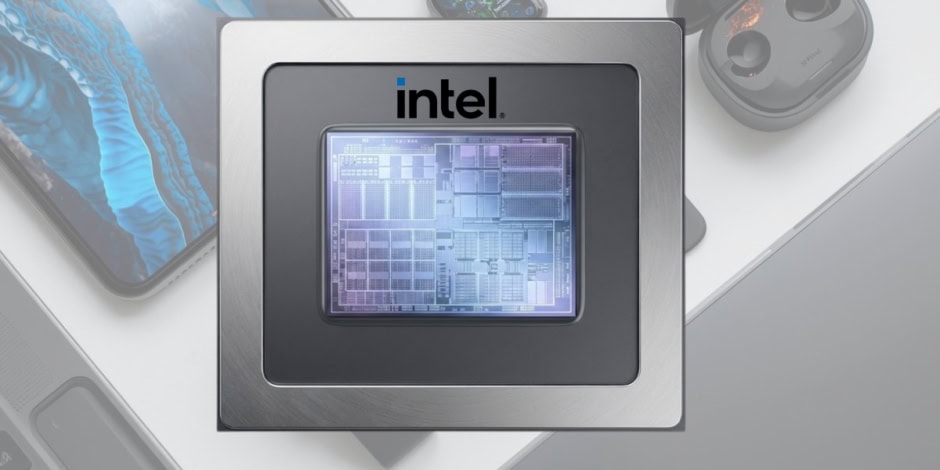
Intel has formally expanded its AI PC roadmap by introducing the Core Ultra Series 3 processors, a move designed to bring on-device artificial intelligence capabilities to a significantly broader segment of the global PC market, official sources said. The announcement, made ahead of CES 2026, clears the way for mainstream laptops and compact desktops to ship with dedicated neural processing units rather than relying solely on cloud-based AI workloads.

The decision enables original equipment manufacturers to integrate AI acceleration into lower power and more affordable systems, extending Intel’s AI PC strategy beyond premium notebooks and enterprise devices.
Built using Intel’s cutting-edge 18A process technology and proudly designed and manufactured in the United States, Series 3 represents the company’s inaugural AI PC platform crafted on this advanced node. Intel is honing in on performance efficiency, integrated AI capabilities, and a wide-reaching ecosystem.
“With Series 3, we are laser-focused on improving power efficiency, adding more CPU performance, a bigger GPU in a class of its own, more AI compute and app compatibility you can count on with x86,” said Jim Johnson, Senior Vice President and General Manager, Client Computing Group, Intel.
At the processor level, Series 3 introduces a new tier of Intel Core Ultra X9 and X7 mobile chips aimed at users with sustained performance demands spanning gaming, content creation, and professional productivity. Flagship configurations feature up to 16 CPU cores, integrated Intel Arc graphics with as many as 12 Xe cores, and neural processing units delivering up to 50 trillion operations per second.
Intel claims the new processors deliver up to 60% gains in multithreaded performance, more than 77% faster gaming performance, and battery life extending to as much as 27 hours in select laptop designs.
Alongside premium models, Intel is also deploying mainstream Core processors built on the same Series 3 architecture. These chips target thinner and more energy-efficient systems at lower price points, while retaining integrated AI acceleration and improved graphics compared with earlier generations.
A defining feature of Series 3 is its unified AI architecture, which delivers up to 180 platform TOPS across the CPU, GPU, and NPU. Intel said this enables advanced workloads such as real-time inspection, predictive maintenance, and intelligent monitoring to run locally, reducing dependence on cloud infrastructure and lowering data transfer costs.
Updated Intel Arc graphics play a central role in this strategy. With up to 12 Xe cores and as much as 50% higher graphics performance, the GPUs are designed to support AI vision tasks including 3D inspection, automated optical inspection, and high-resolution interface rendering without discrete accelerators.
For the first time, Intel is launching edge-optimized Core Ultra Series 3 processors in parallel with its PC lineup. Certified for embedded and industrial use, these chips support extended temperature ranges, continuous operation, and deterministic performance, targeting applications across robotics, smart infrastructure, industrial automation, and healthcare.
Intel said early benchmarks show substantial advantages over competing edge platforms, including up to 1.9 times higher large language model performance, more than double the performance per watt per dollar in video analytics, and up to 4.5 times higher throughput in vision-language-action workloads.
By consolidating compute, graphics, and AI acceleration into a single system-on-chip, Intel argues that Series 3 simplifies system design while improving cost efficiency at scale. Edge systems based on Core Ultra Series 3 are expected to begin shipping in the second quarter of 2026, extending Intel’s AI PC strategy beyond laptops and into real-world environments where decisions increasingly need to be made locally and in real time.
Intel has confirmed that the platform supports hardware-level isolation and secure execution environments required by regulated industries. OEMs are expected to begin shipping Core Ultra Series 3 systems in early 2026, following CES design announcements.