The highly anticipated Google Pixel 9a vs iPhone 16e showdown is set to take the spotlight this April.
The Pixel 9a, Google’s affordable yet feature-packed midrange phone, promises to deliver a smooth experience with its core Google features and an impressive main camera for just $500.
On the other hand, the iPhone 16e, Apple’s take on the “core” phone, offers a single camera, an A18 processor, and plenty of RAM for $600. Both phones may sit in the same midrange category, but they each come with their unique selling points. Let’s dive in!
Design & Build
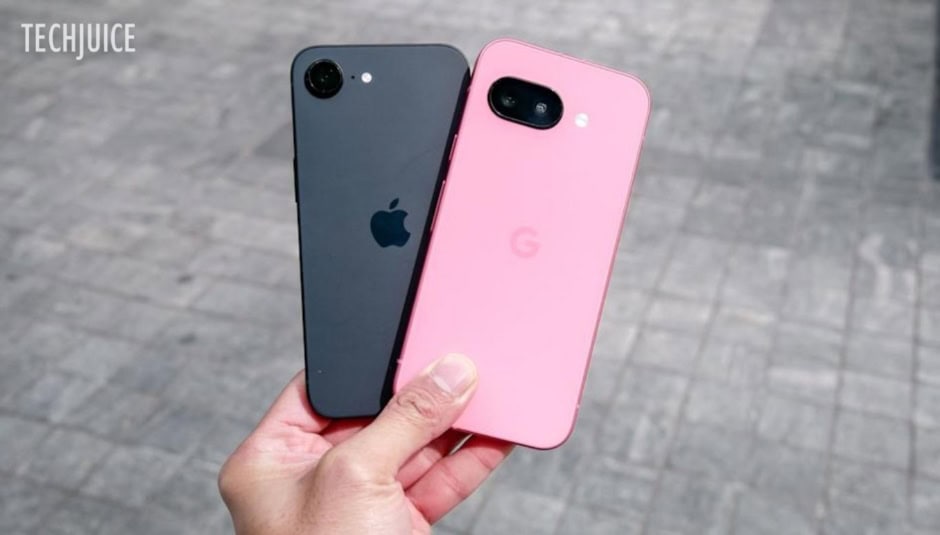
The iPhone 16e takes the familiar iPhone 14 aesthetic—flat aluminum sides and a glass back. It’s minimalist with a single 48 MP rear camera, no Dynamic Island, and a nostalgic notch. Simple, but effective.
On the flip side, the Pixel 9a offers a shiny, flat metal frame with a frosted plastic back, giving it a premium feel without the price tag. The camera module has been redesigned with a sleek, pill-shaped protrusion—still a looker, but it loses some of the Pixel’s signature charm. And while Apple enthusiasts may miss the classic mute toggle, the Pixel 9a keeps things simple with its power button and volume rocker.
Both phones boast the highly coveted IP68 water resistance rating, so no worries about accidental splashes. The Pixel’s 120Hz display might give it the edge in smoothness, though, making every swipe feel fluid.
Display: Bigger Isn’t Always Better
The Pixel 9a features a slightly larger 6.3-inch OLED display compared to the 6.1-inch OLED screen on the iPhone 16e. The real kicker is brightness: Google’s Actua Display can reach a staggering 2,700 nits, while Apple’s iPhone peaks at 1,200 nits. That means the Pixel 9a will shine brighter outdoors, but both displays are incredibly sharp, with the iPhone boasting a higher 457 PPI compared to the Pixel’s 420.

But here’s the catch—the iPhone 16e sticks with a 60Hz refresh rate, while the Pixel 9a offers a smoother 120Hz experience. For those who want buttery-smooth scrolling, the Pixel is your pick.
Performance & Software
When it comes to raw power, the iPhone 16e is a beast, with the A18 chip paired with 8GB of RAM. Geekbench scores reflect Apple’s clear lead in multi-core performance, showing that it outperforms the Pixel 9a in both CPU and GPU benchmarks.
The Pixel 9a, however, isn’t lacking. Powered by Google’s custom Tensor G4 chip, it may not have the raw muscle of Apple’s A18, but it’s optimized for Google’s AI and camera magic. Expect smooth performance, especially in tasks like photo processing and AI features. While Apple’s A18 may claim the speed crown, the Pixel’s integration of software and hardware offers a different kind of efficiency, particularly in photo and AI tasks.
Camera
Apple’s minimalist approach means the iPhone 16e packs a single 48 MP rear camera, with no ultra-wide lens. However, Apple’s software tricks like digital zoom provide surprisingly sharp results. The Pixel 9a, on the other hand, brings the usual Pixel magic with a 48 MP main camera and a 13 MP ultra-wide lens. This gives the Pixel a slight edge in versatility, even if its zoom shots might not be as sharp as the iPhone’s.
Selfie lovers will find both phones equally competent, though the Pixel 9a tends to boost exposure to brighten up shadowed faces, perhaps too much in some cases, giving a slightly unnatural look.
Battery Life
When it comes to battery life, the Pixel 9a packs a 5,100 mAh battery, promising up to 19 hours of browsing time. The iPhone 16e, while more efficient, only has a 4,005 mAh battery, which means fewer hours of screen-on time. In real-world use, the Pixel 9a will outlast the iPhone 16e by a good margin, especially when gaming or binge-watching videos.

Charging is where the two differ: the Pixel 9a doesn’t support wireless charging, but it has a hefty battery to make up for it. The iPhone 16e supports wireless charging at a slower rate of 7.5W, but it lacks the beloved MagSafe magnets.
Final Verdict
-
If you want raw performance, AI integration, and a premium experience, the iPhone 16e with its A18 chip and sleek design is hard to beat.
-
If you prefer a versatile camera system, smooth 120Hz display, and longer battery life for the price, the Google Pixel 9a stands out as the more affordable, feature-packed choice.
Both phones bring something special to the table. But ultimately, it comes down to what matters most to you—whether it’s performance, camera quality, or battery life. Whatever you choose, you’re getting a mini flagship that punches above its weight.