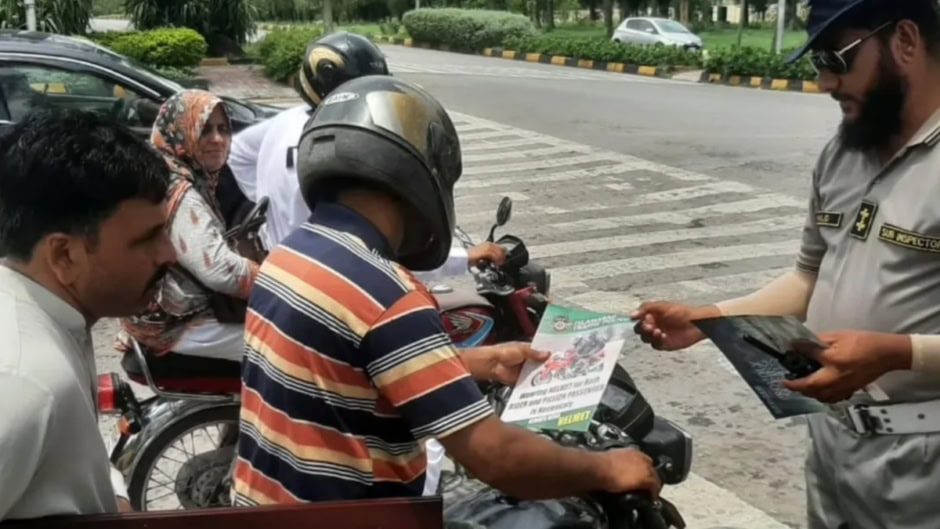
The Islamabad helmet rule is set to get stricter as the capital’s traffic police have announced that helmets will now be compulsory not only for motorcycle riders but also for their passengers. The move comes amid growing concerns over frequent motorcycle accidents and overall road safety.
Chief Traffic Officer Syed Zeeshan Haider shared details of the new enforcement plan on Thursday, explaining that the stricter Islamabad helmet rule will come into force after a two-week awareness drive. This period will give citizens time to adjust and understand the importance of the new safety requirement. Afterward, anyone caught riding or traveling on a motorcycle without a helmet will face fines.
Officials say the tougher Islamabad helmet rule aims to improve safety standards in the capital, where motorcycle-related incidents continue to pose serious risks. “Riding a motorcycle is more than 20 times riskier than driving a car,” noted a police spokesperson, emphasizing that both the driver and the passenger have equal responsibility for protecting themselves.
Helmet Safety a Broader Concern Across Pakistan
The concern isn’t limited to Islamabad. Major cities across Pakistan, including Karachi and Lahore, regularly see high rates of traffic accidents, often caused by violations and low public awareness of safety practices. Authorities believe that making helmets mandatory for passengers, in addition to riders, will significantly reduce injuries and fatalities.
Traffic police pointed out that many motorcycle users come from lower-middle-income groups, where knowledge of road safety laws is limited. By tightening the Islamabad helmet rule, officials hope to foster safer habits across all segments of society.
They are also urging citizens to adhere to other traffic rules, maintain reasonable speeds, and use protective gear to safeguard not just their own lives but also those of fellow commuters.
With the Islamabad helmet rule set to get stricter in the coming weeks, the traffic department has appealed to residents to cooperate fully, stressing that improved safety is a collective responsibility.