Jamaat-e-Islami (JI) has demanded an independent audit of the Rs. 1.26 billion collected by the Pakistan Medical and Dental Council (PMDC) for MDCAT 2026, citing alleged irregularities and concerns over transparency in the examination process.
In a letter to PMDC President Prof. Dr. Rizwan Taj, JI Karachi chief Monem Zafar called for an investigation into the medical entrance test held on September 20, including question paper preparation, distribution, answer keys, and possible result tampering. He also demanded that candidates be allowed to retain their question papers for self-assessment and that the top 100 candidates undergo retesting by an independent third party.
According to the letter, 138,158 candidates registered for MDCAT 2026 nationwide, including 33,336 from Sindh and 9,505 from Karachi. With a standard registration fee of Rs. 9,000 and a late fee of Rs. 13,000, Zafar questioned how the approximately Rs. 1.26 billion collected would be spent and called on PMDC to publish a detailed breakdown of examination expenses.
Zafar also raised concerns about examination arrangements in Karachi, where only two centres were established for 9,505 candidates, both located on University Road. He said ongoing construction of the BRT Red Line project and heavy traffic created difficulties for students and parents. In comparison, Peshawar had 19 centres for 16,722 candidates, while Lahore had six centres for 12,064 candidates. He urged PMDC to increase the number of centres in Karachi according to student numbers and the city’s geographical spread.
The JI leader also questioned the decision to assign MDCAT arrangements in Sindh to IBA Sukkur, citing previous complaints about the institution’s role in examinations conducted under the Sindh government. He further raised concerns about instructions issued 10 days before the test requiring candidates to return their question papers, as well as reported answer-key complaints involving Biology, Chemistry, and Physics, particularly Paper Codes A and D.
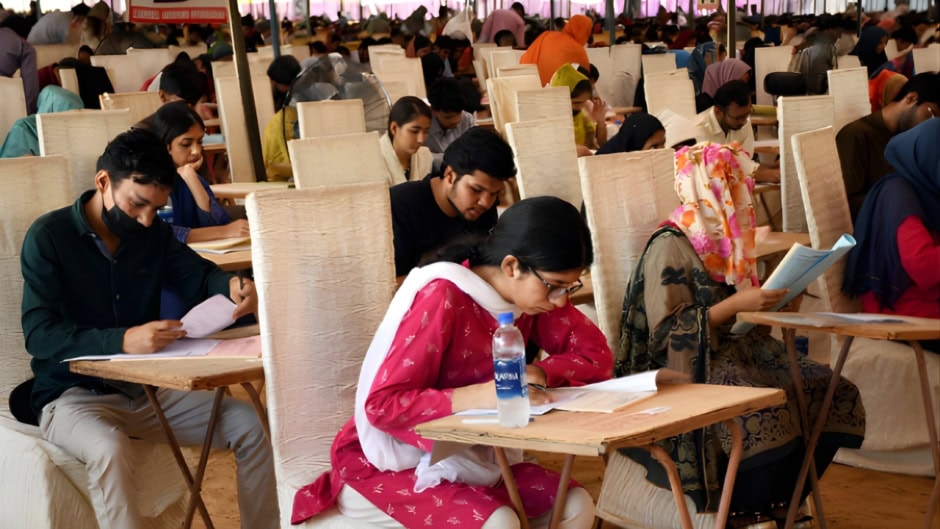
The letter also highlighted long waiting hours and inadequate facilities at examination centres. According to Zafar, candidates were asked to report at 6:30 a.m., but examinations began at some centres at 10 a.m. and at others at 10:30 a.m. Students reportedly spent seven to eight hours at centres in temperatures ranging from 40°C to 43°C, with some seated under cloth marquees with limited facilities and inadequate fans.
Zafar called on PMDC to investigate the reported concerns, improve examination arrangements, disclose how registration fees were used, and ensure transparency and fairness in the MDCAT process.