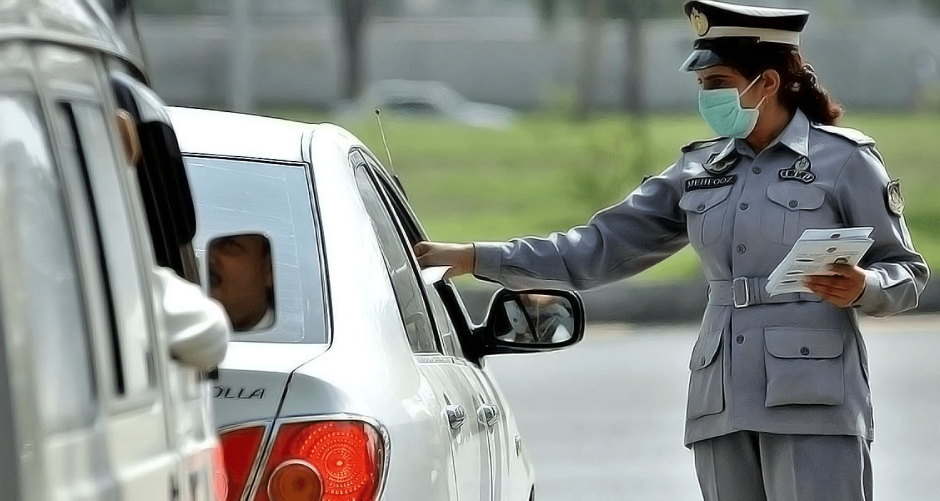
Karachi traffic police have reinstated on-the-spot challans across major roads and intersections, reversing a previous policy after a sharp rise in motorists tampering with or removing vehicle number plates to evade detection by surveillance cameras.

The decision was announced by DIG Traffic Peer Muhammad Shah during an interactive session at the 18th Annual CSR Summit and Awards 2026, organized by the National Forum for Environment and Health.
DIG Shah said the earlier withdrawal of on-the-spot fines was implemented a year ago following public complaints regarding harassment and alleged extortion by traffic officials at busy intersections. The move was intended to provide relief to citizens, but it created enforcement gaps, as the city’s camera-based system currently covers only about 10 percent of roads.
He noted that the remaining 90 percent of the city depends on traditional enforcement, which allowed violators to exploit loopholes. According to officials, a large number of motorcyclists and vehicle owners have been deliberately altering number plates by blackening, folding, taping, or removing them entirely to avoid identification.
The traffic police chief revealed that nearly 70 percent of traffic violations now involve vehicles with unreadable or missing number plates, while the remaining 30 percent stem from incorrect or incomplete residential information provided to the excise department, making it difficult to deliver e-challans.
Authorities have identified around 60 major routes in Karachi as hotspots for one-way violations after conducting a detailed study. Plans are underway to install advanced surveillance cameras capable of automatically detecting such offenses.
DIG Shah further stated that existing cameras on Sharea Faisal will be upgraded to identify additional violations, including heavy vehicles using fast lanes and motorists using mobile phones while driving.
The official also confirmed that the camera-based enforcement system has already been expanded to other cities, including Sukkur and Umerkot, with plans to extend it further across major urban centers.
Addressing public concerns regarding Ajrak-designed security number plates, DIG Shah advised motorists awaiting official issuance to carry proof of application. He added that, as a temporary measure, citizens may obtain similar plates from the open market until official ones are issued.