 3 min read
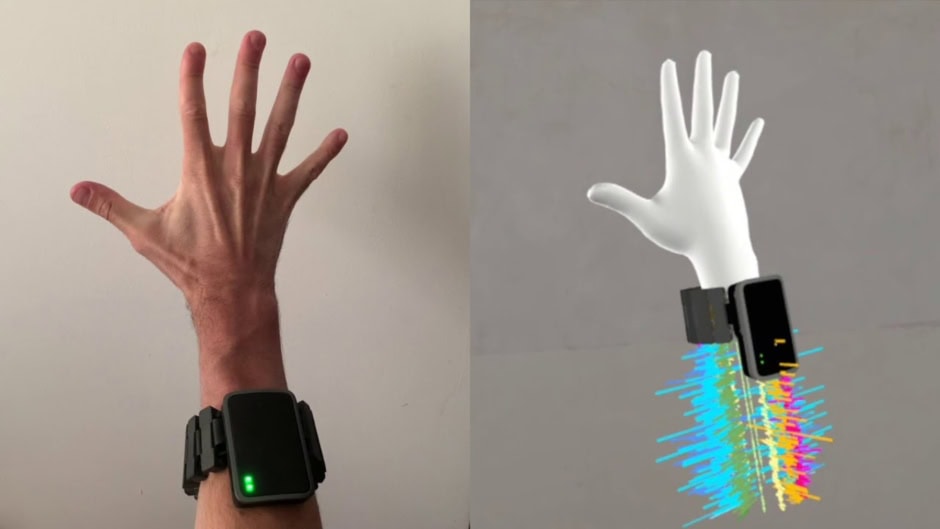
Straight out of a sci-fi movie, now all you need to control your AR glasses is a finger flick. Meta has officially unveiled its most futuristic input device yet: a sleek EMG (electromyography) wristband. This device is capable of decoding your finger gestures using muscle activity alone. Details of it are in a peer-reviewed Nature paper titled “A generic non-invasive neuromotor interface for human-computer interaction.”
Unlike vision-based systems, this EMG wristband doesn’t require cameras or exaggerated movements. Instead, it detects the subtle electrical signals from your wrist muscles that control finger motion. You can swipe, tap, write, and scroll in mid-air while your hand remains relaxed on your lap.
The sEMG technology originated from CTRL-Labs, a startup acquired by Meta in 2019, and is still helmed by its co-founder Thomas Reardon. The system supports a set of microgestures including:
-
Air-writing characters for text entry
-
Rotating the wrist to control cursors
-
Swiping the thumb along the index finger
-
Tapping thumb to finger for clicks or holds
Meta’s latest paper claims the device can now generalize across users without requiring personalized calibration, a major leap forward in accessibility and ease-of-use.
Meet “Ceres”: Meta’s Future-Facing Input Device
While the paper reveals a working research prototype, Meta has already taken the next step. At Meta Connect 2024, the company debuted a refined, near-final version of the wristband (codenamed Ceres) designed as a companion input for its upcoming Orion AR glasses.
Leaked renders and tutorial footage uncovered in early firmware builds point to Ceres shipping alongside Meta’s forthcoming Celeste HUD glasses, formerly known by the codename Hypernova. These heads-up display glasses are expected to retail between $1000 and $1400, and the bundled EMG wristband would make them one of the most advanced AR kits ever released to consumers.
According to various reported sources, tutorial videos embedded in the leaked firmware include advanced gestures like pinching, pulling, and dynamic thumb-index interactions. All of these match those described in Meta’s scientific paper.
The Dawn of EMG Computing
Meta’s EMG wristband could signal the end of screen-tapping, voice commands, and clunky gesture-tracking. By transforming neuromotor signals into fluid, camera-free input, Meta is aiming to define the “invisible interface” era.
The company has also released over 100 hours of EMG recordings to the public, encouraging research in accessibility tech, assistive devices, and next-gen wearables.
All eyes are now on Meta Connect 2025, scheduled for September 17, where the Celeste glasses and Ceres wristband are expected to go official, with preorders to follow in October.