In a breakthrough that challenges traditional engineering knowledge, researchers have observed metal healing itself without external intervention.
A team from Sandia National Laboratories and Texas A&M University conducted a study in 2023 where a tiny piece of platinum showed self-repairing behavior at the nanoscale, something never seen before in metals.
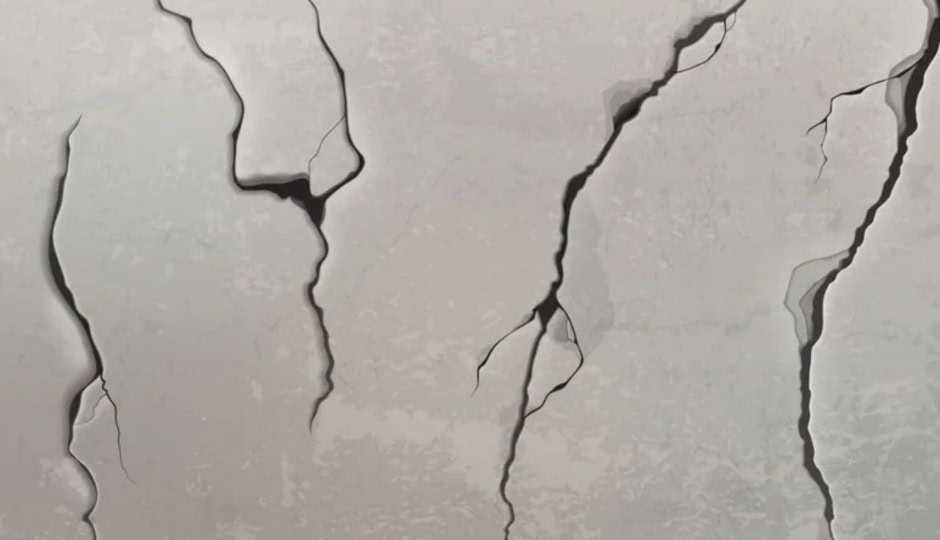
Using a transmission electron microscope inside a vacuum, researchers stretched a 40-nanometer-thick strip of platinum 200 times per second to mimic fatigue stress, tiny, repeated movements that eventually cause cracks in machinery and infrastructure. After 40 minutes, scientists were stunned to see the microscopic crack suddenly fuse back together, restarting in another direction.
The experiment, initially designed to study material fatigue, ended up revealing something far more remarkable.
“This was absolutely stunning to watch first-hand,” said Brad Boyce, a materials scientist at Sandia.
“We certainly weren’t looking for it. What we have confirmed is that metals have their own intrinsic, natural ability to heal themselves, at least in the case of fatigue damage at the nanoscale.”
Theory Meets Reality
Interestingly, this wasn’t entirely unpredictable. A decade ago, Michael Demkowicz of Texas A&M had developed models suggesting that metals might heal microcracks due to shifting internal grain boundaries under stress. Demkowicz, who also co-authored this study, ran updated simulations and confirmed that what he had theorized matched exactly with what was observed.
This experiment was conducted in a vacuum and at room temperature, without applying any heat, making the finding even more extraordinary. In most cases, metals need extreme heat to change structure or fuse. Scientists believe the healing may be linked to cold welding, a phenomenon where metal surfaces bond together when atoms are brought extremely close, often in space-like conditions.
“My hope is that this finding will encourage materials researchers to consider that, under the right circumstances, materials can do things we never expected,” said Demkowicz.
While more research is needed to see if this self-healing effect can happen in everyday environments, the implications are massive. From repairing bridges and vehicles to phones and spacecraft, self-healing metals could reduce maintenance costs and revolutionize how we design everything from infrastructure to electronics.