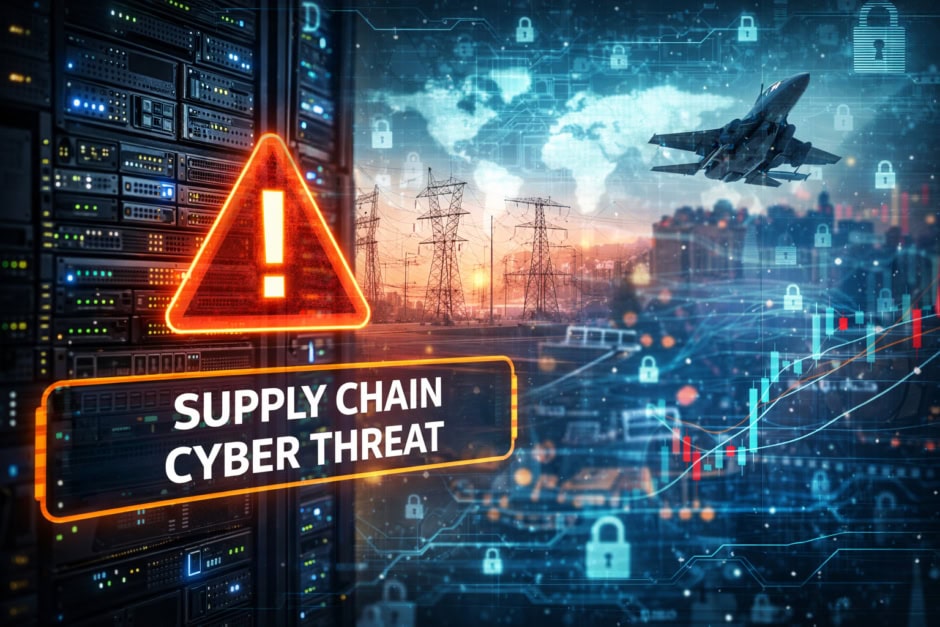
The National Computer Emergency Response Team (NCERT) has issued a new cybersecurity advisory warning that global cyber threats are increasingly targeting supply chains, putting national critical infrastructure such as power grids, banking systems, healthcare networks, and defense operations at serious risk.
In its advisory titled “Securing National Critical Infrastructure Against Supply Chain Exploitation,” the National Computer Emergency Response Team warned that attackers are no longer limited to breaching networks. Instead, cyber actors are infiltrating manufacturing and distribution processes of trusted vendors to compromise systems before hardware or software even reaches the end user.
According to the advisory, weak security in the final stages of hardware delivery or software development environments could lead to widespread disruptions across multiple sectors. Authorities noted that such vulnerabilities could affect critical national infrastructure, including energy systems, banking networks, healthcare services, and defense platforms.
NCERT described the growing threat as a form of state-sponsored cyber sabotage and espionage. Advanced threat actors may insert malicious components into hardware devices or software updates during the production or distribution process, enabling large-scale compromise.
The advisory also referenced historical cyber sabotage incidents such as the Stuxnet cyberattack to highlight how sophisticated cyber operations can silently disrupt critical systems.
Officials warned that compromised supply chains could lead to systemic failures across interconnected infrastructure, covert surveillance through manipulated communication devices, hidden backdoors within government networks, and a loss of public confidence in digital systems.
To detect potential risks, organizations managing critical information infrastructure have been advised to monitor warning signs such as unexplained delays in hardware deliveries, tampering in logistics chains, abnormal behavior in trusted software updates, unusual ownership links with vendors, and suspicious network traffic communicating with unknown command-and-control servers.
NCERT emphasized that hidden hardware modifications or malicious implants may require advanced technical inspections to identify and neutralize potential threats.
The advisory recommends immediate adoption of strict verification measures, including advanced screening techniques such as X-ray and acoustic microscopy inspections of critical devices. Organizations have also been advised to audit hardware security components like Trusted Platform Modules and test software updates within isolated sandbox environments before deploying them across systems.
In addition, authorities recommended introducing tamper-proof logistics tracking systems and strengthening monitoring mechanisms to detect abnormal network activity.
NCERT further stressed that supply chain security must go beyond traditional cybersecurity defenses. Strategic reforms suggested include mandatory disclosure of vendors’ Ultimate Beneficial Ownership, the adoption of Software Bills of Materials to track third-party code, implementation of zero-trust verification for incoming hardware, and network segmentation for sensitive administrative systems.
As part of the immediate response plan, critical infrastructure operators have been directed to audit vendor ownership and logistics processes without delay. Behavioral sandbox systems for software updates should be established within seven days, while hardware integrity checks through NCERT laboratories are recommended within 14 days.
In cases of suspected compromise, the advisory instructs organizations to immediately disconnect affected hardware from networks, preserve evidence for forensic investigation, and shift operations to verified backup systems.
The National Computer Emergency Response Team concluded that without strict transparency and monitoring across supply chains, national infrastructure could face what it described as “backdoors by design,” allowing adversaries to disrupt essential services without direct confrontation.