The National Electric Power Regulatory Authority (NEPRA) officially updated the electricity tariff structure effective February 12, 2026. Consequently, consumers will see new fixed charges on their utility bills starting this month.
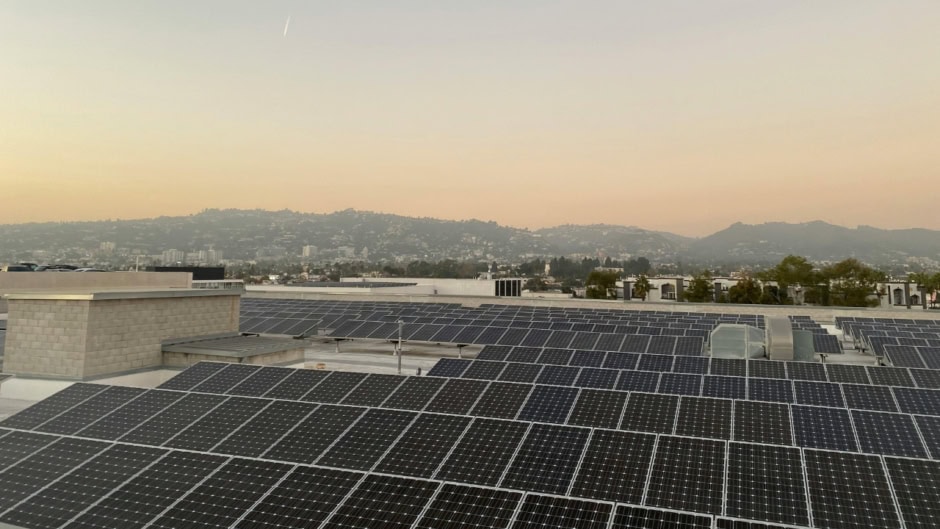
Currently, the traditional volumetric tariff model is collapsing. The rapid adoption of rooftop solar systems is significantly reducing grid-based electricity demand. However, 93% of the national power system’s costs, such as generation capacity payments and transmission infrastructure, remain fixed. Therefore, NEPRA is shifting to a fixed-cost recovery structure. The government must claw back revenue from consumers regardless of how few units they draw from the grid.
Revised Calculation for Time of Use (ToU) Customers
Specifically, Time of Use (ToU) customers during both peak and off-peak hours face a new fixed rate. NEPRA will charge these consumers a fixed rate of PKR 675 per kW/month.
Furthermore, the billing methodology links directly to a consumer’s sanctioned load or demand. Authorities calculate the Applicable Fixed Charges by comparing 50% of the sanctioned load against the Maximum Demand Indicator (MDI). The utility company will bill the consumer based on whichever value is higher, multiplied by the Rs. 675 rate.
Consider this practical example:
- Sanctioned Load: 6 kW
- 50% of Sanctioned Load: 3 kW
- Recorded MDI: 4 kW
- Calculation: Since the MDI (4 kW) is higher than 50% of the load (3 kW), the final charge is 4 kW × 675.
- Total Fixed Charge: Rs. 2,700.
Importantly, if the MDI is unavailable for ToU domestic consumers this month (February 2026 billing cycle), the utility will strictly apply fixed charges based on 50% of their sanctioned load. Meanwhile, Non-ToU domestic consumers will incur fixed charges based on their entire sanctioned load.
Breakdown of Domestic Fixed Charges by NEPRA
NEPRA applies different fixed charges depending on unit consumption and protected status. Below is the updated monthly fixed charge schedule for domestic consumers.
| Monthly Unit Consumption | Domestic Un-Protected Fixed Charge (PKR) | Domestic Protected Fixed Charge (PKR) |
|---|---|---|
| Up to 100 Units | Rs. 275 | Rs. 200 |
| 101 – 200 Units | Rs. 300 | Rs. 300 |
| 201 – 300 Units | Rs. 350 | Rs. 350 |
| 301 – 400 Units | Rs. 400 | Rs. 400 |
| 401 – 500 Units | Rs. 500 | Rs. 500 |
| 501 Units and above | Rs. 675 | Rs. 675 |
Exemptions & Minimum Monthly Charges
Despite these aggressive tariff updates, Residential Lifeline Consumers face absolutely no change in their fixed charges.
However, other consumers cannot escape billing entirely. Even if a household consumes zero energy from the grid, utility companies will enforce minimum monthly customer charges. Consequently, single-phase connections carry a minimum charge of Rs. 75 per month. Similarly, three-phase connections carry a minimum charge of Rs. 150 per month.