Nestlé has announced an additional investment of USD 60 million in Pakistan, reinforcing its long-term commitment to the country, during a high-level Business Roundtable held on the sidelines of the World Economic Forum (WEF) Annual Meeting in Davos.
The roundtable was chaired by Federal Minister for Finance and Revenue Senator Muhammad Aurangzeb and brought together chief executive officers and senior leaders of multinational corporations to discuss Pakistan’s reform agenda, investment climate, and long-term economic prospects.
Expansion and Exports
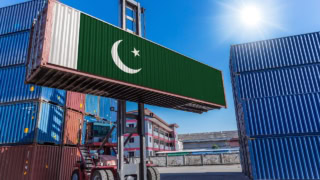
The investment announcement was made by Remy Ejel, Executive Vice President and Chief Executive Officer for Asia, Oceania, and Africa at Nestlé. He said the company would undertake a significant expansion of its operations in Pakistan and intended to develop the country as a regional manufacturing and export hub, with products to be exported to 26 countries.
Mr. Ejel expressed confidence in Pakistan’s economic outlook and said Nestlé expected strong growth in its local business in the coming years. He noted that the company’s strategy in Pakistan focuses on localization, advanced manufacturing, sustainability, and agricultural transformation.
Technology and Sustainability
Nestlé has recently outlined these plans in discussions with the Finance Minister in Islamabad, highlighting progress in technology-driven manufacturing, including increased automation, use of renewable energy, improved packaging solutions, and digitalized supply chains aimed at enhancing efficiency and reducing environmental impact.
During the roundtable, Mr. Ejel also referred to Nestlé’s global footprint, noting that the company operates in more than 180 countries, employs over 277,000 people, and recorded global revenues of approximately USD 114.25 billion in 2025. He said Pakistan’s demographic profile, rising nutrition needs, and underpenetrated value-added food segments resemble growth patterns observed in Southeast Asia.
Welcoming the announcement, Senator Muhammad Aurangzeb described the investment as a strong vote of confidence in Pakistan’s economic reforms and formalization efforts. He reiterated the government’s commitment to policy consistency, strengthening the tax ecosystem, and facilitating long-term investment through sustained engagement with the private sector.
The finance minister said Pakistan offers opportunities in affordable nutrition, climate-resilient dairy, localized sourcing, and export-oriented manufacturing, and emphasized the government’s objective of positioning the country as a competitive base for regional production and participation in global value chains.