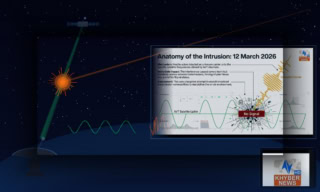
In response to escalating cyber threats targeting unmanned aerial systems, researchers are developing shield systems that allow drones to detect, mitigate, and repel digital attacks in real time. The technology could tilt the balance in favor of drone operators by ensuring mission resilience even under hostile electronic warfare conditions.
The Cyber Threat to Drones
Drones are increasingly used across reconnaissance, delivery, agriculture, infrastructure inspection and defense. But with rising connectivity and reliance on wireless links, they become vulnerable to cyber intrusions such as GPS spoofing, command hijacking, jamming, data exfiltration and signal interference. Such attacks can ground fleets or turn them into liability.
The shield system combines real time monitoring, anomaly detection and active countermeasures. It continuously scans radio frequencies, command channels and sensor data for signs of interference, spoof signals or hostile packets. When a threat is recognized, it can autonomously reroute data paths, switch to backup communications, shuffle encryption keys or temporarily isolate affected modules.
In effect, the drone becomes partly self defending. It does not just rely on external cybersecurity controls or human operators but has onboard capacity to respond on the fly.
“Without robust recovery mechanisms, a drone cannot complete its mission under attacks, because even if it is possible to detect the attacks, the mission often gets terminated as a fail-safe move,” said Mohammad Ashiqur Rahman, lead researcher and associate professor in FIU’s Knight Foundation School of Computing and Information Sciences.

Applications & Use Cases
- Military and defense drones: Operating in contested environments, shield equipped UAVs can better resist jamming or takeover attempts.
- Critical infrastructure inspection: Drones inspecting power lines, pipelines or telecom towers often operate in remote areas. Onboard defense helps when remote communication links are compromised.
- Autonomous delivery systems: With drones potentially carrying high value cargo, shield systems reduce the risk of route interception or signal hijack.
Challenges & Development Paths
Building such a shield system faces multiple hurdles. The defense logic must act fast to counter threats before damage occurs. It must avoid false positives that degrade performance. Shield systems also consume computational, power and weight overheads which are critical constraints in drone design.
As drones use diverse architectures, shield modules must adapt across platforms and standards. Coordinating shielded drones in swarms where one drone’s defenses may affect interference for others is another complex frontier.