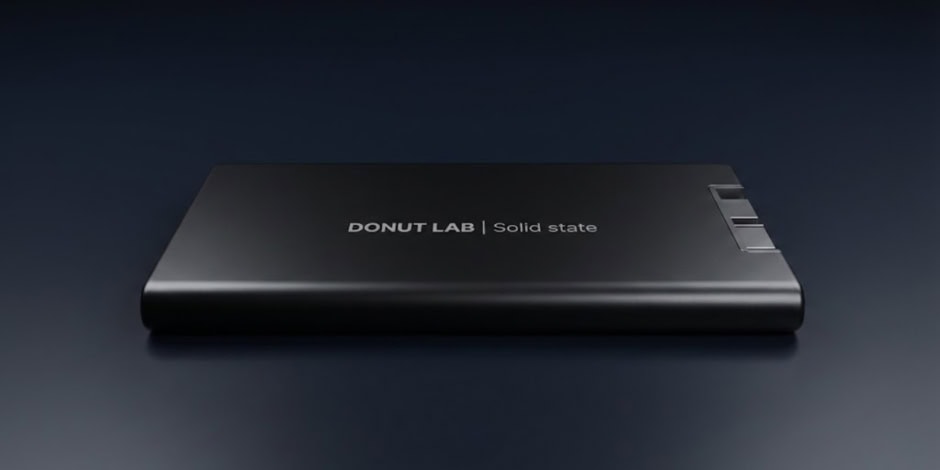
A Finnish battery startup facing sustained accusations from industry rivals that its technology is overstated or outright fraudulent has released new independent test data showing its solid-state cells deliver more than their rated capacity at temperatures that would degrade or destroy a conventional lithium-ion battery.
Donut Lab, which has previously claimed its cells can charge in minutes and offer high energy density, commissioned a second evaluation by VTT Technical Research Centre of Finland, the country’s state-run research institute. The results, published by Donut Lab this week, focus specifically on thermal performance, examining how the battery behaves at 80°C and 100°C, temperatures at which standard lithium-ion cells begin to suffer serious performance loss and pose safety risks.
Standard lithium-ion batteries are very sensitive to heat, with an upper operating temperature limit of typically around 60 to 70 degrees Celsius. High temperatures increase the risk of damage to battery cells and shorten their service life. High temperatures can also cause accelerated reactions inside the cell, and in the worst case, the risk of thermal runaway increases significantly.
The Donut Battery does not use flammable liquid electrolytes, the component most responsible for thermal runaway in conventional cells. That difference in architecture is what VTT’s tests were designed to quantify under real thermal stress.
The methodology was straightforward. Engineers placed the cell on an aluminium profile, secured a steel plate on top to apply light pressure and reduce hot spots, then measured capacity in stages at each temperature. At 176°F, the battery delivered about 110% of its rated capacity, showed better efficiency than at room temperature, and the cell showed no visible changes after the test. At 212°F, the battery used roughly 107% of its capacity and recharged back to 4.15 volts with the same capacity as at room temperature. Although the pouch lost vacuum at that temperature, the active materials remained fully functional.
The efficiency gain at elevated temperatures is explained by basic electrochemistry. Heat reduces the internal resistance of a cell, which in turn reduces the voltage drop during discharge, allowing more of the stored energy to be extracted as usable output. In a liquid-electrolyte battery, that benefit is overwhelmed by accelerating degradation chemistry. In Donut Lab’s solid-state design, the degradation mechanism is largely absent, allowing the efficiency benefit to dominate instead.
“The battery’s full capacity was utilised with excellent results at both 80 and 100 degrees Celsius, and it was possible to discharge it at a 1C discharge rate at 80 degrees and a 0.5C discharge rate at 100 degrees without any increase in temperature. The battery’s properties did not change even at 100 degrees, and it functioned normally when recharged, which demonstrates the convincing performance of the Donut Battery even in extremely hot conditions. This confirms that the battery is exceptional not only in terms of performance but also in terms of safety,” said Ville Piippo, CTO at Donut Lab.

The results carry practical implications beyond the laboratory. Batteries that tolerate extreme heat without cooling system support could reduce the weight, complexity, and cost of thermal management in electric vehicles, particularly relevant for markets in desert climates where ambient temperatures routinely exceed the operating ceiling of conventional packs. Industrial applications including grid storage, aerospace, and military systems have similarly been constrained by the thermal sensitivity of existing battery chemistry.
The tests also represent a deliberate shift in how Donut Lab is managing its public credibility. After bold claims generated skepticism rather than investment interest, the company is now building its case incrementally through third-party data published openly, letting the numbers do the work that press releases could not.
For automakers in the US and companies focused on energy storage, having batteries that can handle extreme heat is absolutely essential. Batteries that can endure high temperatures not only lessen the strain on cooling systems but also enhance safety in sweltering regions like Arizona, Texas, and Nevada.
Whether the technology proves durable at manufacturing scale remains the central unanswered question, but on the narrow question of what the cells do under extreme heat, the independent record now says they perform better than anything currently in mass production.