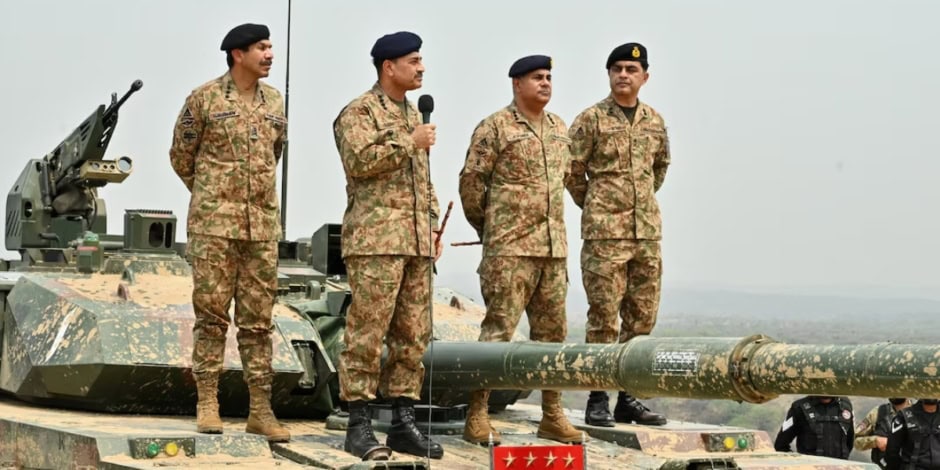
Pakistan has clinched a 4 billion dollar arms deal with Libya’s Libyan National Army, marking one of the largest defense export agreements in the country’s history and a significant expansion of its footprint in the global arms market. The agreement positions Pakistan as a key defense supplier to North Africa and signals a strategic shift in Islamabad’s military export ambitions at a time of growing competition among arms producing nations.
Pakistan finalized the deal with the Libyan National Army, a powerful military force operating in eastern Libya under the command of Khalifa Haftar. According to the report, both sides concluded the agreement after a meeting last week in Benghazi between Pakistan’s Field Marshal Syed Asim Munir Ahmed, and Saddam Khalifa Haftar, the LNA’s deputy commander-in-chief.
Officials directly involved in defense affairs spoke on condition of anonymity because of the deal’s sensitive nature.
Arab News reported that the package ranks among Pakistan’s largest-ever arms export agreements and includes equipment for land, sea, and air forces, with deliveries scheduled over roughly two and a half years.
A draft of the agreement, as seen by the publication, lists the purchase of 16 JF-17 Thunder fighter jets, jointly developed by Pakistan and China, as well as 12 Super Mushak trainer aircraft. Pakistani officials confirmed the items were part of the deal, though exact quantities may vary. According to Arab News, the deal is valued at more than $4 billion, while others placed the figure closer to $4.6 billion. Pakistan’s foreign ministry, defense ministry and military did not respond to requests for comment.
The LNA’s official media channel said that it had entered into a defense cooperation agreement with Pakistan covering weapons sales, joint training and military manufacturing.
“We announce the launch of a new phase of strategic military cooperation with Pakistan,” Haftar said in remarks aired by Al-Hadath television.
This development comes as Pakistan intensifies efforts to diversify export revenue and strengthen its defense industrial base amid sustained fiscal pressure and foreign exchange constraints. High value defense exports offer Islamabad both economic relief and strategic leverage, allowing the country to monetize domestic manufacturing capacity while expanding influence in geopolitically sensitive regions.
Strategically, the agreement enhances Pakistan’s visibility in North Africa and the wider Middle East, where defense partnerships often translate into deeper political and security ties. Analysts note that such arrangements typically extend beyond hardware sales into training, maintenance, and longer-term industrial cooperation.