Oil prices surged 20% in early trading today, March 9, 2026. The cost per barrel hit its highest mark since July 2022. The expanding US-Israeli war with Iran triggered this massive spike. Consequently, major Middle East producers cut their supplies. The Middle East war also sparked deep concerns about prolonged shipping disruptions through the Strait of Hormuz.
Middle East War: Emerging Markets Take the Brunt
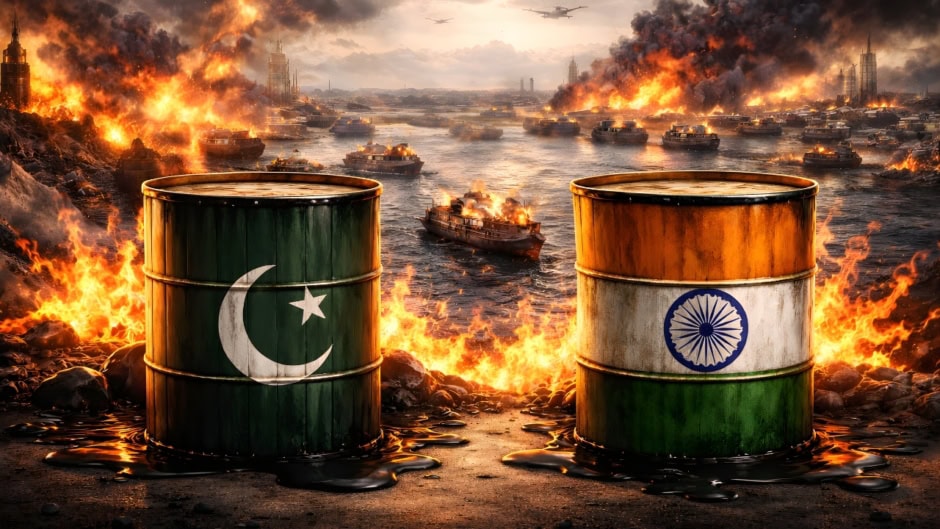
Emerging markets face severe economic impacts. First, Pakistan and India stand entirely vulnerable. Both nations import heavy amounts of energy and rely heavily on the Strait of Hormuz. Additionally, the Gulf Cooperation Council (GCC) will experience massive economic shocks. These shocks will heavily disrupt trade, logistics, tourism, and investment across the region.
Furthermore, Egypt and Turkey remain highly exposed. Their high energy import bills, fragile external positions, and massive energy subsidies make them prime targets for economic pain. Meanwhile, commodity-producing nations like Nigeria, Ghana, and Peru face the least risk.
Supply Chain Collapse & Stagflation Threats
Currently, Middle East producers are slashing output. Storage facilities are filling up fast. Consequently, producers might soon shut down oil wells. This action will severely delay any market recovery once the conflict eventually eases.
Moreover, attacks on refineries threaten to cut off 15% to 20% of the global oil supply. This massive cut will severely slow down the global economy. Simultaneously, it will introduce a devastating inflation impulse. The combination of inflation and slowing growth creates stagflation. Experts call this scenario an absolute economic disaster. Even in places like Indonesia, soaring pump prices could easily trigger street protests.
Shattered Complacency & Skyrocketing Forecasts
For the last three years, the market ignored geopolitical risks. Today, that complacency is dead. Analysts warn that this existential conflict is the ultimate 50-year energy crisis scenario coming to life.
The Middle East war has now entered its second week. Currently, neither side shows any willingness to back down. US President Donald Trump demands unconditional surrender. He recently called the massive oil spike a temporary price for global safety.
However, no clear timeline exists for a resolution. The US dollar will likely outperform as countries like Japan and Korea suffer deep economic exposure. Furthermore, Brent crude is already inflicting sharp pain at $107 per barrel. If the Strait of Hormuz disruption persists for another week or two, oil prices will undoubtedly skyrocket to $130-$150 per barrel.