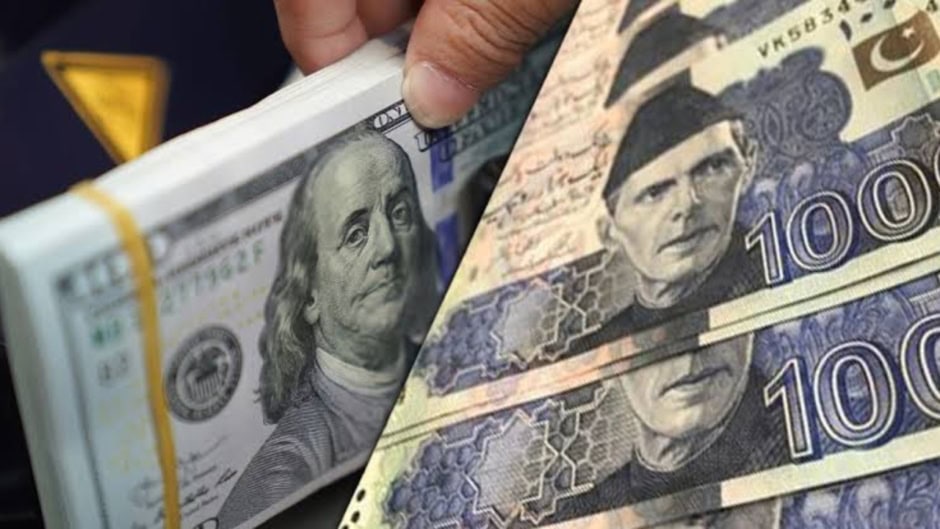
Pakistan paid $3.238 billion in interest on its external public debt during FY2025-26, while total debt servicing reached $14.436 billion, according to the Ministry of Economic Affairs’ annual Foreign Economic Assistance (FEA) report.
The report revealed that Pakistan repaid $11.198 billion in loan principal during the fiscal year, taking total external debt servicing to $14.436 billion. This was higher than the $13.32 billion recorded in FY2024-25, representing an increase of approximately 8.4%.
Pakistan’s external public debt also increased by 6.84%, rising from $91.795 billion at the end of FY2024-25 to $98.075 billion by June 30, 2026.
During FY26, the country received $16.16 billion in external financing against a budgetary target of $19.923 billion, achieving around 81% of its projected inflows and leaving a shortfall of nearly $3.76 billion.
Of the total foreign inflows, $9.375 billion was received for budgetary support and balance of payments requirements. Project financing accounted for $3.435 billion, followed by $2.019 billion in commodity financing and $1.329 billion in programme financing.
Naya Pakistan Certificates contributed $3.05 billion to budgetary and balance of payments support, while time deposits from friendly countries accounted for another $3 billion. Foreign commercial banks and bonds jointly provided 31% of the total amount, with the International Monetary Fund (IMF) contributing the remaining 4%.
The report further showed that approximately $59.931 billion of Pakistan’s total external public debt was owed to multilateral and bilateral development partners.
Among multilateral lenders, the World Bank disbursed $2.025 billion during FY26, followed by the Asian Development Bank (ADB) with $1.772 billion and the Islamic Development Bank (IsDB) with $1.087 billion. Saudi Arabia was the largest bilateral contributor, providing $1.013 billion, while China contributed $501 million.
Separately, Pakistan secured fresh external financing commitments worth $8.951 billion during FY26, including $3.808 billion for budgetary support and balance of payments requirements and $2.768 billion for development projects.
Of the new commitments, $6.809 billion was allocated to federal projects and programmes, while $2.142 billion was earmarked for provincial initiatives.