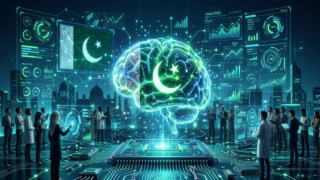
Pakistan is on the brink of a major technological leap as it prepares to approve its first-ever national Artificial Intelligence (AI) policy. Finalized after extensive consultations both locally and internationally, the policy promises to reshape how the country integrates emerging technologies into its economy and society.
Speaking at a seminar hosted by Quaid-i-Azam University, Federal IT and Telecommunication Minister Shaza Fatima Khawaja confirmed that the long-awaited AI policy is “likely to be approved soon.” The announcement comes after nearly a year of collaborative discussions among experts and stakeholders.
Moving From Planning to Implementation
Reiterating the government’s commitment, the minister emphasized that it’s time to act.
“Our main focus now is on putting the policy into action,” she stated.
She urged all segments of society to contribute actively to its successful execution:
“We want everyone to join this journey and help bring the ideas to life.”
Shaza Fatima encouraged feedback from professionals, urging them to examine six key pillars of the policy:
- Innovation
- Awareness
- Infrastructure
- AI Ethics and Safety
- Sectoral Transformation
- Global Cooperation
The Ministry is accepting input through social media and email to ensure transparency and inclusiveness.
Emphasis on Unity and Inclusion
The minister acknowledged the need for collective effort.
“If we work together, nothing can stop our progress. But for this, we must leave behind narrow thinking and work as a team,” she said.
She also highlighted the importance of gender inclusivity, noting the strong presence of women at the event.
“Women’s inclusion is not optional—it’s necessary for growth,” she emphasized. “No country can succeed by leaving out half its population.”
Shaza Fatima showcased the government’s achievements in skill development, noting that over 350,000 young people have been trained through collaborations involving PSEB, Ignite, NAVTTC, HEC, and global tech leaders such as Google, Huawei, and Microsoft.
“Our aim is to ensure that every IT graduate either gets a job or starts a business,” she said, adding that significant funding has been allocated in the Public Sector Development Program to create more employment opportunities in AI and digital technology.
Stressing the importance of collaboration, the minister pointed out that isolated efforts are not enough.
“The ministry alone cannot do everything. Centers of Excellence and other institutions must work together. Development depends on national cooperation,” she noted.
Foreign Investment in Digital Sector
Shaza Fatima also highlighted Pakistan’s growing international presence. This year, the country hosted its first-ever Digital FDI Forum, drawing participants from 45 countries, including top ICT ministers. Backed by Saudi Arabia’s Digital Cooperation Organization, the event led to $700 million in MoUs, the highest digital investment in Pakistan’s history.
She encouraged startups and innovation hubs to actively seek cross-border collaborations:
“If you are ready to collaborate, the funding is available.”
In a major announcement, the minister unveiled the Pakistan Startup Fund, with a dedicated focus on AI-led ventures.
“This fund is set to become one of the biggest government-supported platforms for innovation, research, and product development,” she stated.
She concluded by saying that Prime Minister Shehbaz Sharif had used the forum to present Pakistan as an emerging digital force across all sectors.