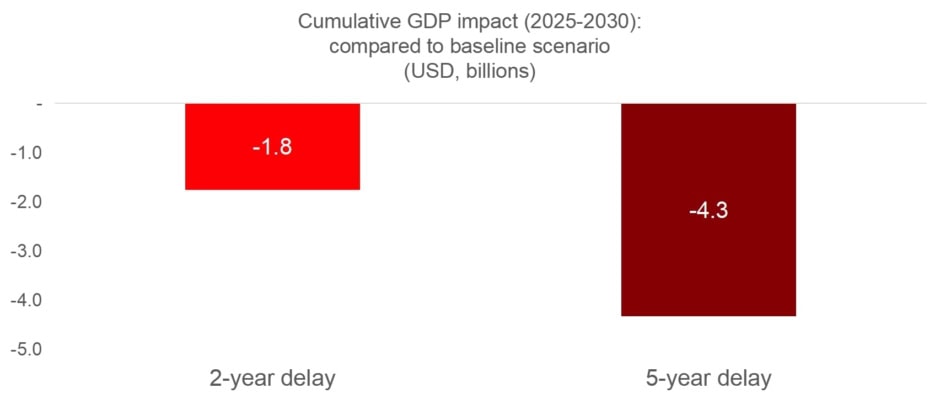
Islamabad’s latest spectrum advisory meeting has laid bare the challenges facing Pakistan’s telecom sector, with both industry leaders and GSMA urging the government to overhaul its spectrum policy. Without urgent reforms, they warn, Pakistan could lose between $1.8 billion and $4.3 billion in economic benefits over the next five years.
Documents accessed by Techjuice revealed that at the Spectrum Advisory Committee session held on September 8, Aamir Ibrahim, Chairman of the Telecom Operators Association of Pakistan, stressed that broadband underpins every pillar of a “Digital Pakistan.”
From fintech and e-commerce to healthtech and edtech, connectivity fuels growth across the economy. But despite surging data demand, which has nearly doubled in three years, Pakistan still ranks 98th out of 104 countries in data speeds and 95th globally in digital quality of life.
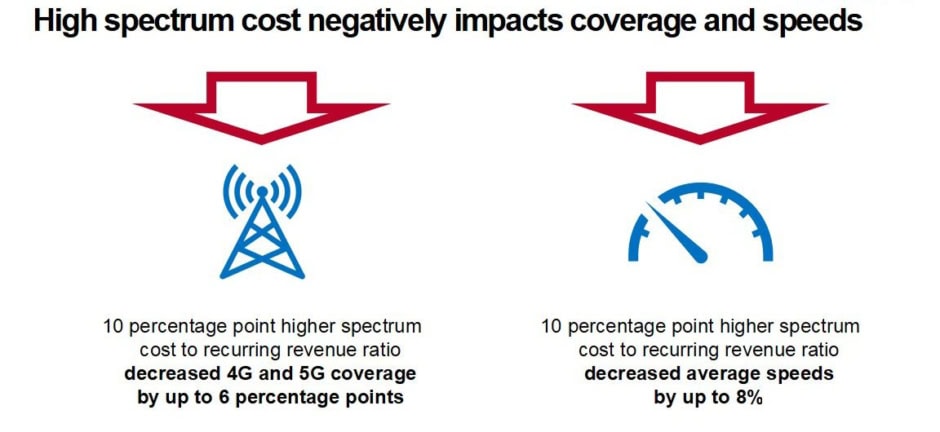
The GSMA presentation echoed those concerns, highlighting that spectrum costs in Pakistan are among the highest in the world, accounting for about 20% of operator revenues. Such costs, the group warned, directly erode 4G and 5G coverage, reduce speeds, and limit investment. A 10-point increase in spectrum cost relative to revenue can slash coverage by up to 6% and average speeds by 8%, according to GSMA Intelligence.
Pakistan’s spectrum auctions have historically struggled to attract bidders. Since 2014, more than 40 MHz of spectrum has gone unsold, often priced at dollar-indexed rates that operators argue are unsustainable in a volatile economy.
At the same time, average revenue per user (ARPU) in Pakistan has fallen to one of the lowest globally, at just $1.00–$1.80, far below the $2.50 threshold considered viable for network investment.
An industry report shared during the meeting also underscored the sector’s financial strain, citing surging costs in electricity (up 197% since 2018), fuel (57%), and foreign exchange pressures that have risen over 150%. These challenges, combined with one of the world’s lowest ARPUs, leave operators with little room to invest in network expansion.
The report warned that unless spectrum scarcity is addressed alongside broader financial reforms, Pakistan will remain stuck behind regional peers in both connectivity and innovation.
Aamir Ibrahim, CEO of Jazz and Chairman of Telecom Operators’ Association, said, ‘Spectrum is the invisible infrastructure behind every call, every payment, every online classroom. To unlock Pakistan’s digital future in line with the Prime Minister’s vision, we need a pricing and policy framework that encourages investment, not hesitation. With the right reforms, we can deliver faster networks, stronger exports, and meaningful digital inclusion for millions.”
Both the industry and GSMA urged a shift in mindset: away from short-term revenue collection and toward long-term digital growth. Their recommendations include pricing spectrum in local currency, easing payment terms with installments, and providing duty-free access to 5G equipment and smartphones. They also called for a clear spectrum roadmap and swift resolution of legal disputes, such as contested allocations in the 2600 MHz band.
Senator Muhammad Aurangzeb commended industry experts and GSMA for their contributions, highlighting the need for Pakistan to adopt global best practices in its spectrum roadmap. He stressed the importance of timely spectrum allocation to unlock economic and social opportunities.
Federal Ministers Ms. Shaza Fatima Khawaja and Senator Azam Nazeer Tarar reaffirmed the government’s dedication to a digitally connected Pakistan, emphasizing the importance of inclusive, affordable, and high-quality connectivity for digital transformation.
The meeting focused on the vital role of spectrum policy in shaping Pakistan’s digital future, with an emphasis on innovation and economic growth. Key attendees included the aforementioned ministers, Julian Gorman from GSMA, and representatives from major mobile operators and regulatory bodies.
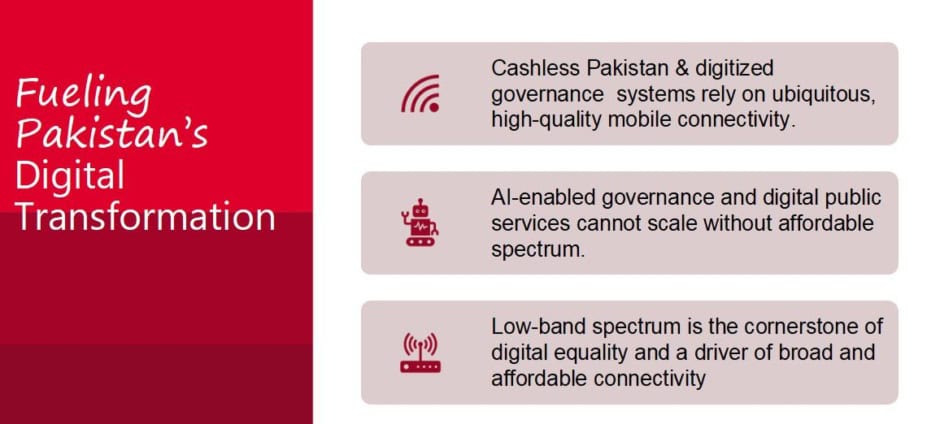
The stakes are high. With less than 1% of devices in Pakistan 5G-ready and nearly half the population still without broadband, the country faces a widening digital divide. For policymakers, the choice is clear: treat telecom as critical infrastructure and unlock additional spectrum, or risk stalling the next phase of Pakistan’s digital transformation.