
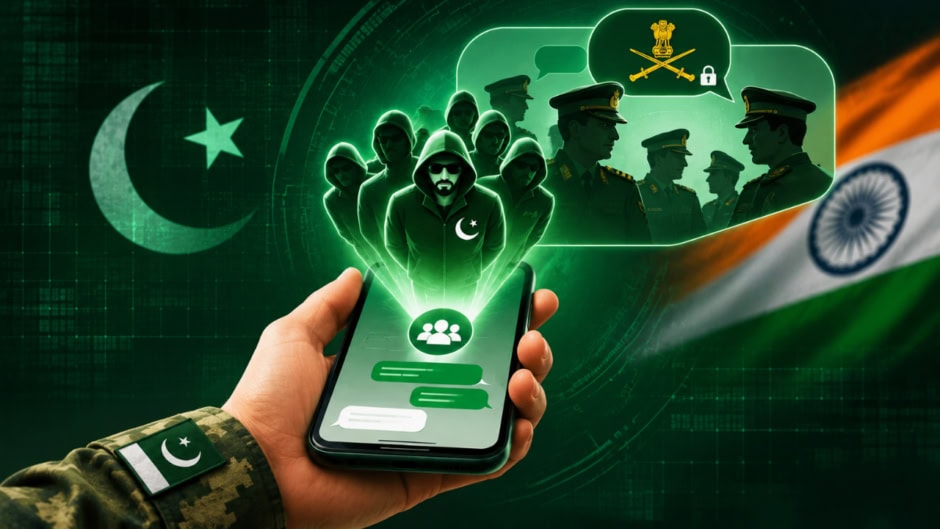
Pakistani intelligence operatives infiltrated at least 13 unofficial WhatsApp groups used by the Indian Army, paramilitary forces, and civil defence organizations. Indian security agencies have now placed all armed forces on high alert after discovering the breach.
The operatives allegedly used spoofed or compromised Indian mobile numbers to gain access to these private groups. Once inside, they stayed silent and monitored conversations along with documents shared by military personnel. Intelligence officials believe the operatives may have used smuggled SIM cards to avoid detection. Earlier busts by the National Investigation Agency and border-state police had already uncovered SIM-smuggling networks with links to Pakistani intelligence.
One case brought the entire breach to light last week. An operative using the name “Soniya” joined a group called “All India Defence Civilian Mutual Transfer Posting” while claiming to be a DRDO scientist. She then held extended conversations with a civilian staff member who allegedly leaked sensitive defence information in exchange for money.
This is not an isolated pattern. Earlier this year, an Indian Air Force Wing Commander reportedly fell victim to a similar honey-trap operation. A suspected Pakistani operative posed as a woman seeking help from a therapist and extracted sensitive information over more than two months. In 2023, Maharashtra’s Anti-Terrorism Squad arrested senior DRDO scientist Pradeep Kurulkar for sharing classified details on the BrahMos missile project with a Pakistani operative posing as a London-based software engineer through WhatsApp.
Following the latest breach, the Defence Ministry issued an advisory directing all organizations to strengthen digital security. The advisory went out to the CRPF, BSF, SSB, and ITBP. Administrators must now verify every member’s identity in their WhatsApp groups and immediately remove unidentified or suspicious accounts. Additionally, all personnel are strictly barred from sharing official or classified information on WhatsApp or any other unofficial platform.
The repeated breaches highlight a persistent vulnerability in how Indian defence personnel use consumer messaging apps for unofficial communication.