Pakistan’s textile sector maintained revenue stability in the third quarter of FY25 despite macroeconomic challenges and input cost pressures, but a looming threat from proposed US tariffs now casts a shadow over its future export prospects.

3QFY25 Performance
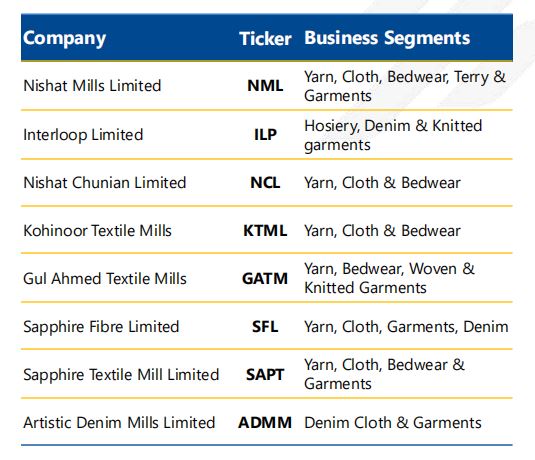
According to a JS Global report, based on a sample of eight leading textile companies representing 71% of the sector’s market capitalization, the industry recorded a 4% year-on-year (YoY) increase in revenue for 3QFY25. However, gross margins declined by 2% YoY, attributed primarily to the softening of global product prices.
Despite flat quarterly revenue, earnings rose 13% YoY, largely due to a 24% YoY decline in finance costs, thanks to lower effective borrowing rates and a shift to cheaper energy sources. Energy costs remained flat even as gas prices surged by 25% quarter-on-quarter, signaling increased reliance on alternatives like coal, furnace oil, or grid power.
Yet, the QoQ earnings dipped by 10%, pressured by higher taxes, reflecting ongoing fiscal tightening.
Textile Export Performance
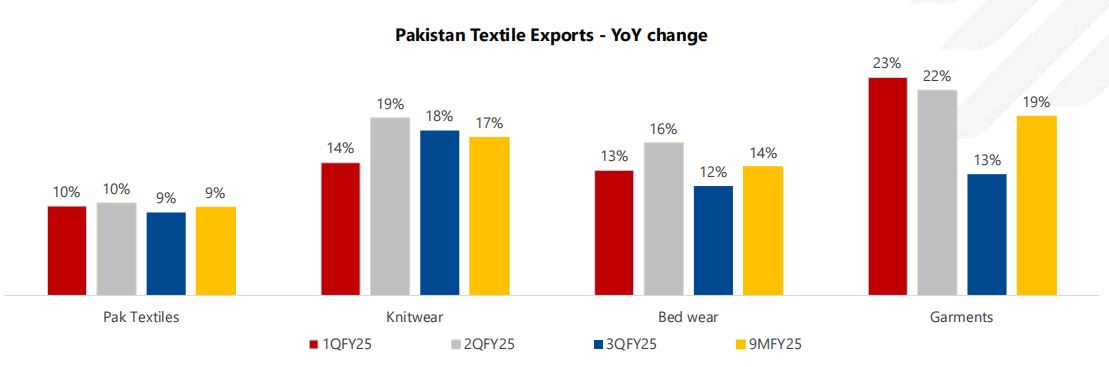
Pakistan’s textile exports rose by 9% YoY to US$4.53 billion in 3QFY25. This growth was spearheaded by:
- Knitwear exports: +18% YoY in value, +16% YoY in volume
- Readymade garments: +13% YoY in value, with prices up 15.5% YoY
- Bedwear: +12% YoY in value, with a 3% YoY price hike
However, a 34% drop in domestic cotton production, falling below 6 million bales, forced mills to import 3.2 million bales, costing over US$1 billion in 10MFY25, compared to US$314 million the previous year. Domestic cotton prices also declined by 15% YoY, in line with weaker global demand.
US Tariffs: A Rising Concern
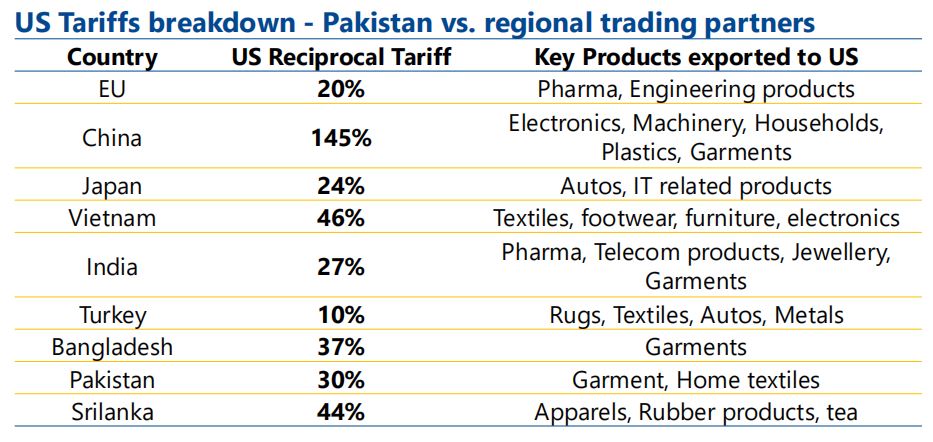
On April 4, US President Donald Trump announced reciprocal tariffs on over 60 trading partners, including Pakistan. Under the proposal:
- Pakistan faces a 30% tariff on garments and home textiles, up from existing MFN rates.
- China (145%), Vietnam (46%), and Bangladesh (37%) also face significant hikes.
- Tariffs have been temporarily paused for 90 days, with final rates expected post-July 2025.
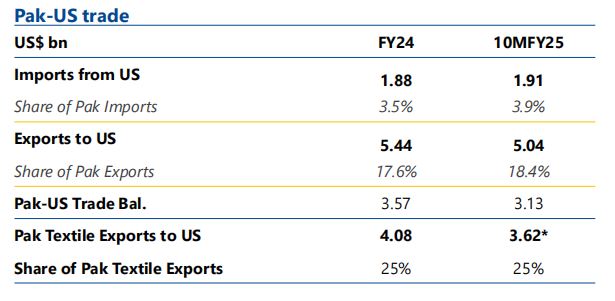
The United States remains Pakistan’s largest single export market, accounting for:
- 18.4% of total exports (US$5.04 billion in 10MFY25)
- 25% of all textile exports (US$3.62 billion estimated)
While Pakistan has proposed a zero-tariff bilateral agreement on select industries, including textiles, progress remains uncertain.
Impact and Outlook
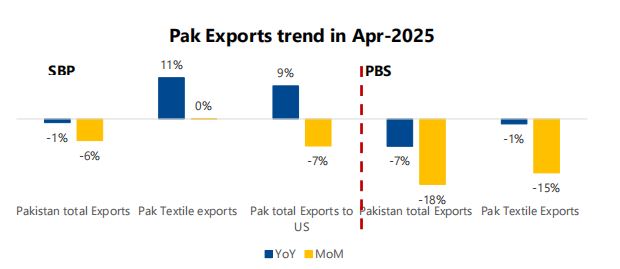
Industry analysts predict near-term pressure on export volumes and margins, particularly as US buyers seek price discounts to offset increased tariffs. April 2025 already saw a 7% month-on-month drop in Pakistan’s exports to the US.
The broader impact could ripple through the textile value chain from cotton growers to spinners and exporters, at a time when global container shipments to the US are down 11% YoY, and China’s exports to the US have dropped 38%.
However, long-term opportunities exist if Pakistan can:
- Capture market share from countries hit with higher tariffs (e.g., China and Vietnam)
- Expand into new regions like Europe, Africa, and Japan
- Invest in vertical integration, labor productivity, and sustainable practices
While 3QFY25 shows encouraging signs of resilience, the proposed US tariffs could redefine the trajectory of Pakistan’s textile sector. With 25% of its textile exports at stake, strategic policy negotiation, export diversification, and cost optimization are now more crucial than ever.