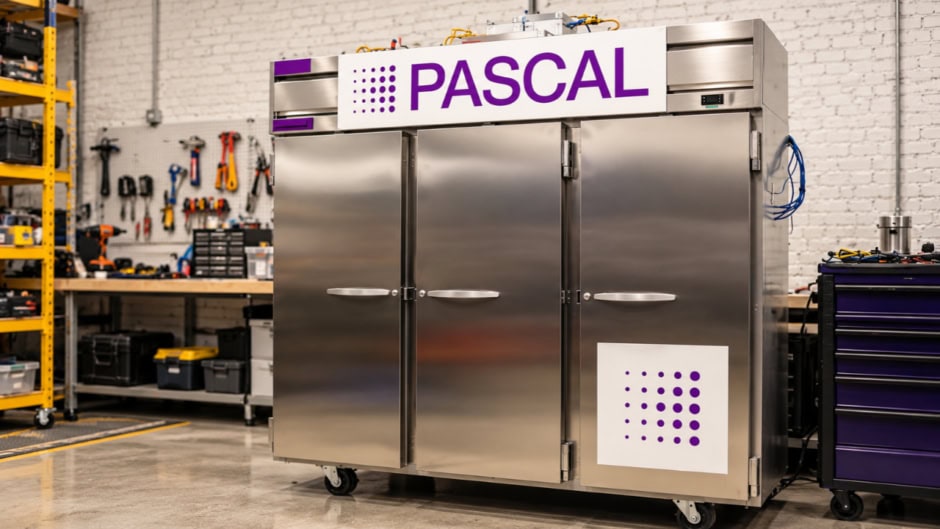
Harvard spinoff Pascal raised $8.5 million to build heat pumps and refrigerators that use solid-state refrigerants instead of greenhouse gases. Sazze Partners and LB Investment co-led the follow-on seed round, with KDB Silicon Valley also participating.
Traditional refrigerators and heat pumps rely on chemical gases to move heat. However, older refrigerants like Freon damaged the ozone layer, and newer ones like R-134a remain potent greenhouse gases. As a result, the industry has cycled through replacements for decades without solving the emissions problem.
HVAC systems contribute about 2% of total greenhouse gas emissions through refrigerant leaks alone. Meanwhile, global energy demand for air conditioners could triple by 2050, according to industry estimates. This growing demand makes the need for cleaner alternatives more urgent.
Pascal takes a different approach. Its system compresses carbon dioxide gas into cartridges filled with a proprietary porous material. When the gas enters the pores, its molecules collide with the walls and transfer energy as heat. A heat exchanger then releases that heat, while reversing the flow lets the material absorb heat instead. Because the solid material stays sealed in its cartridges, it cannot leak into the atmosphere.
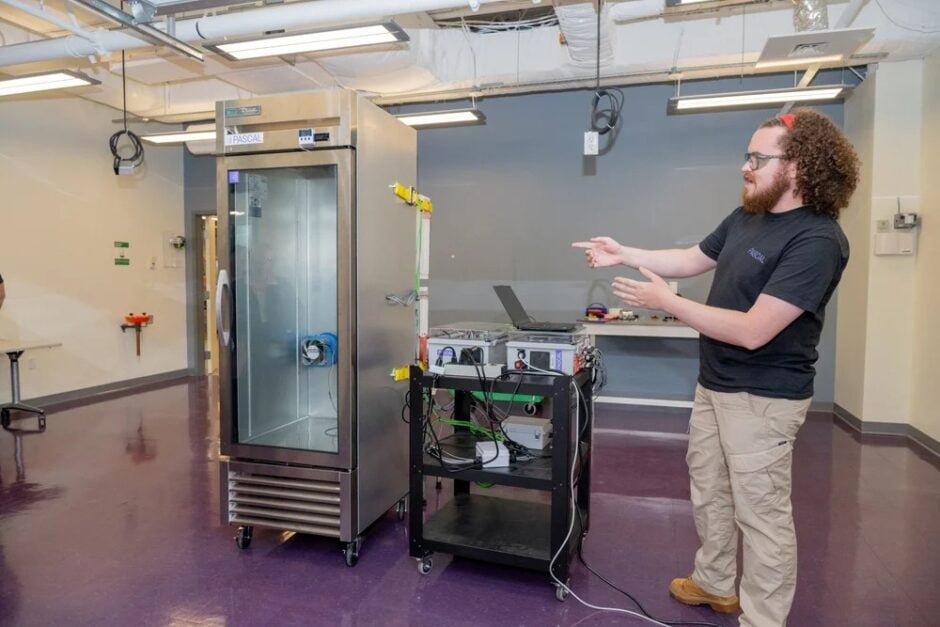
The company says its refrigerators run about 20% more efficiently than existing models. Furthermore, Pascal claims the material has survived 300,000 operating cycles, which equals roughly one year of use. Co-founder and CEO Adam Slavney said the material proves “very robust” under repeated stress.
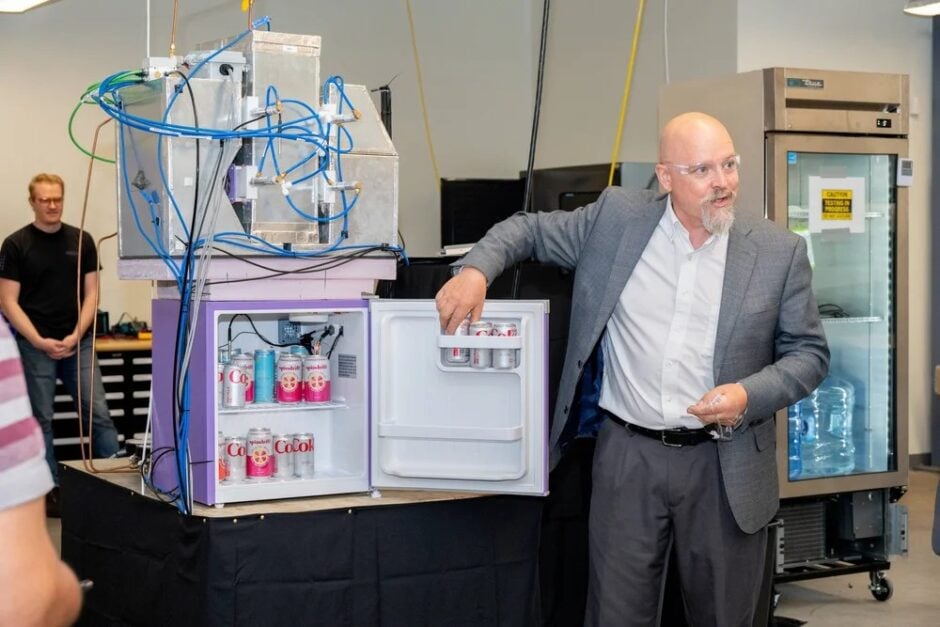
Pascal also uses conventional system components, which the company believes will keep costs low enough for wide adoption. Slavney and co-founder Jinyoung Seo developed the underlying research at Harvard University’s Mason Group. The team built its first prototype cooling system at Harvard in August 2022. The startup previously raised $8 million from Engine Ventures and Khosla Ventures in May 2024.
The new funding came together earlier than planned after Pascal signed a contract with a multinational beverage company for a pilot program. In addition, the company plans to deliver its first prototype in early 2027, with a batch of polished refrigerators scheduled for 2028. Pascal operates from Boston with a team of mechanical engineers, chemists, and materials scientists.