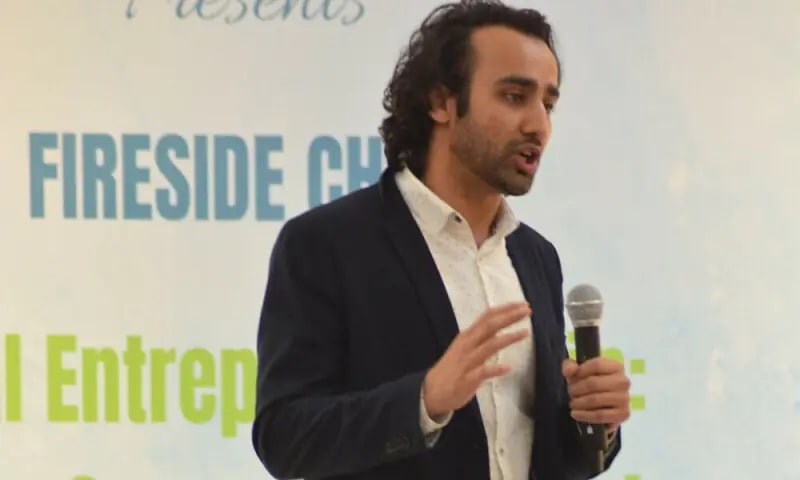
Pakistan has taken a significant step toward regulating its booming cryptocurrency sector by issuing no-objection certificates (NOCs) to global exchanges Binance and HTX. Bilal Bin Saqib, Chairman of the Pakistan Virtual Assets Regulatory Authority (PVARA), clarified that the approvals are not a “blanket approval” but the “first step under a risk-mitigated, phased, supervised entry framework.”
In a televised statement on Sunday, Saqib explained that the initial clearance, granted on Friday, allows Binance and HTX to register local subsidiaries, link with Pakistan’s Anti-Money Laundering (AML) system, and begin preparing full exchange license applications.
“The issuance of NOCs to Binance and HTX is the first practical step reflecting a new mindset,” Saqib said. “This step is based on a Pakistan-first approach, ensuring that every platform operates transparently under our laws.”
Saqib outlined that the supervised framework gives authorities control over three critical areas: preventing money laundering and terrorism financing, verifying ownership and operational fitness, and enforcing timelines for licensing. He emphasized, “It is mandatory for every platform to register on the AML system and have direct linkages with the financial monitoring unit. No platform will be allowed entry without full disclosures and verification.”
Supervised Framework Aims to Balance Innovation and Oversight
The chairman highlighted that licensing would only proceed after entities comply with Pakistani law and oversight. “This model is not unique to Pakistan. Leading financial centers worldwide adopt phased approaches to emerging industries,” he added.
Reiterating the Pakistan-first strategy, Saqib said, “We will first control this industry and then scale it.” He pointed out that Pakistan ranks among the world’s top three crypto-adoption countries, with an estimated 30 to 40 million users. “They have embraced this industry without any regulatory framework or formal education. Our youth is world-class, but are our systems world-class? Are our regulations world-class?”
Saqib questioned the wisdom of ignoring a sector in which millions are actively involved. “You cannot ignore innovation. Failing to introduce the right policies weakens the country and puts people at risk,” he said. He added that the government is working to narrow this gap.
Highlighting the economic potential, Saqib said, “Countries that regulate early will attract capital. Few nations have the opportunity that Pakistan has. We are not promoting crypto, but regulating it, as people have already adopted it.”
He noted that Pakistan’s fifth-largest population, tech-savvy youth, and growing digital adoption could benefit from a structured legal framework. “Without a framework, talent will leave. The state must create an enabling environment for emerging technologies so global capital can flow into the country,” Saqib said.
The framework, he said, prepares Pakistan for “the industries of 2035 and 2025.” “We do not want our youth to remain just consumers. They should become builders and global experts,” he added, stressing the importance of global trust.
Saqib concluded by reaffirming the country’s openness to innovation: “Pakistan welcomes international investment in digital assets, but only from entities that follow our rules, create opportunities for local youth, and operate under a Pakistan-first approach.”
Addressing young Pakistanis directly, he said, “This is not our destination. This is the foundation of a building you have to construct. Pakistan’s future should not rely on imports. It should be built here, by your hands. Pakistan can emerge as a global case study in digital assets.”