ISLAMABAD: China seems to be out of contention for the Pakistan Steel Mills (PSM) revival contract, as Pakistan and Russia signed a protocol on Friday. The agreement aims to restart and expand steel production in the country, marking a significant step forward in Pakistan-Russia industrial cooperation.
The protocol was signed at the Pakistan Embassy in Moscow by Secretary of Industries Saif Anjum and Vadim Velichko, General Director of Industrial Engineering LLC.
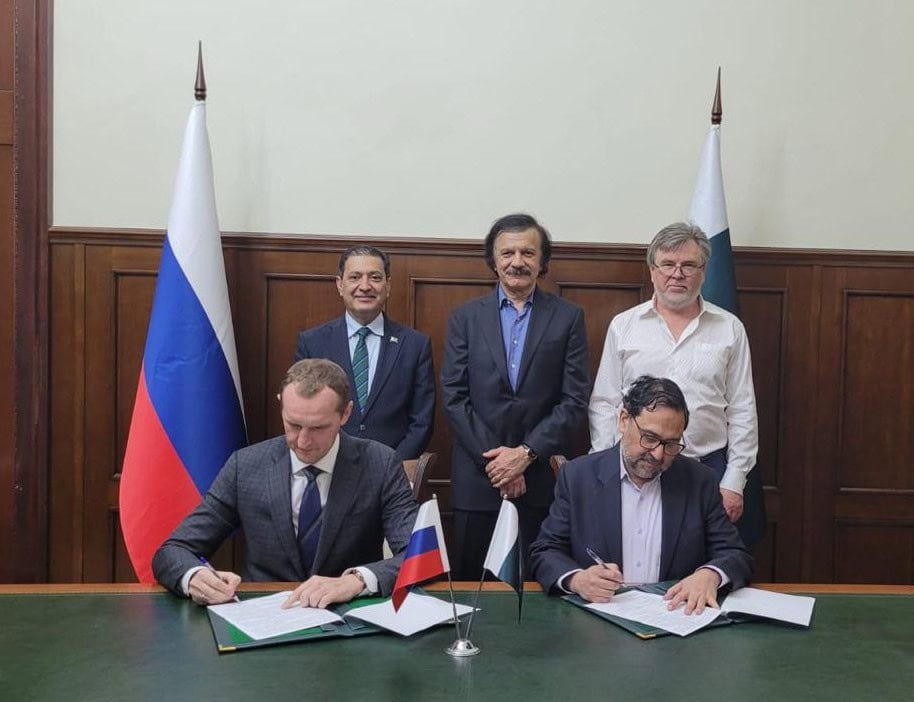
The signing was witnessed by Special Assistant to the Prime Minister Haroon Akhtar Khan and Ambassador Muhammad Khalid Jamali. Khan, on a visit to Russia, emphasized the importance of the partnership.
“Reviving the PSM with Russia’s support reflects our shared history and commitment to a stronger industrial future,” he stated.
The PSM was originally built in 1971 with assistance from the former Soviet Union. It has long symbolized Pakistan-Russia industrial collaboration.
Pakistan Steel Mills: Profit & Loss
PSM operated profitably until 2007-08, recording a cumulative profit of Rs9.54 billion. However, after 2008, its decline began. Losses surged to Rs16.9 billion in 2008-09 and climbed to Rs118.7 billion within five years.
Factors contributing to the decline included political interference, overstaffing, global recession, and operational inefficiencies. The plant suffered massive financial damage, especially under the PPP and PML-N governments from 2008 to 2018.
The PTI government later launched a revival initiative. This triggered competition between China and Russia to secure the project. Initially, Pakistan leaned toward China, but talks failed to progress.
Russia then reasserted its position, arguing it had originally built the facility and was best equipped to restore it.
Economic & Industrial Hurdles
The mill’s downfall was also linked to external economic pressures. Liquidity crunch, low-priced steel imports, gas shortages, and Chinese steel dumping severely impacted operations. In 2016, the Economic Coordination Committee (ECC) reviewed these challenges. Officials blamed the Pakistan-China Free Trade Agreement (FTA) for accelerating the mill’s collapse.
During the PML-N tenure, a bailout of Rs18.5 billion was announced. The goal was to raise production to 77% capacity, the break-even point, by early 2015. However, the plan was never fully executed. By the end of PML-N’s tenure in 2018, PSM’s total losses had ballooned to nearly Rs200 billion.
The recent signing with Russia marks a hopeful turning point for Pakistan Steel Mills. It signals a revival rooted in past collaboration and future industrial growth. If implemented successfully, the agreement could restore one of Pakistan’s most vital industrial assets and reignite local steel production.