Samsung Electronics is preparing to replace traditional silicon interposers with glass substrates in chip packaging by 2028.

This move, recently confirmed through the company’s official roadmap, signals a turning point in AI chip innovation and manufacturing efficiency.
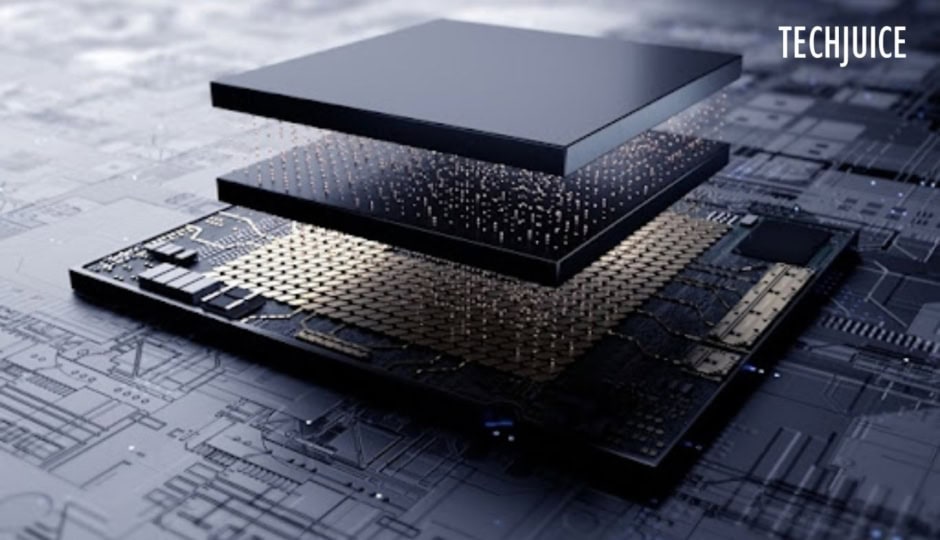
The switch to glass interposers offers multiple advantages over current silicon-based options, especially for 2.5D chip packaging used in AI semiconductors. Interposers play a key role by connecting GPUs with high-bandwidth memory (HBM), ensuring fast data communication.
While effective, silicon interposers are costly and less stable at scale. Glass, on the other hand, provides “more precision for ultra-fine circuits” and better dimensional stability, all at a lower cost—a critical factor as AI adoption soars.
According to industry insiders,
“Samsung has established a plan to transition from silicon interposers to glass interposers in 2028 to meet customer demands.”
Samsung’s Unique Approach
Samsung’s strategy stands out from the rest of the industry. While competitors like AMD are also exploring glass interposers, Samsung is working on sub-100x100mm glass units. It is a smaller format compared to the industry’s 510x515mm glass panels. This allows faster prototyping, helping Samsung accelerate its market entry despite a slight trade-off in manufacturing efficiency.
Moreover, Samsung plans to use its Cheonan campus PLP (Panel-Level Packaging) line, which uses square panels instead of round wafers. This method could enable Samsung to optimize its packaging process and reduce production time.
All-in-One AI Manufacturing Ecosystem
This shift complements Samsung’s broader AI Integrated Solution strategy, which aims to consolidate foundry services, HBM memory, and advanced packaging within a single streamlined process. This could give the tech giant a powerful edge in the AI race by offering end-to-end chip solutions.
With the AI chip market growing rapidly, this strategic change may not only improve Samsung’s internal chip performance but also attract external clients, potentially boosting its semiconductor revenue. The adoption of glass substrates is expected to evolve gradually, allowing Samsung to refine the process and widen its lead over time.