
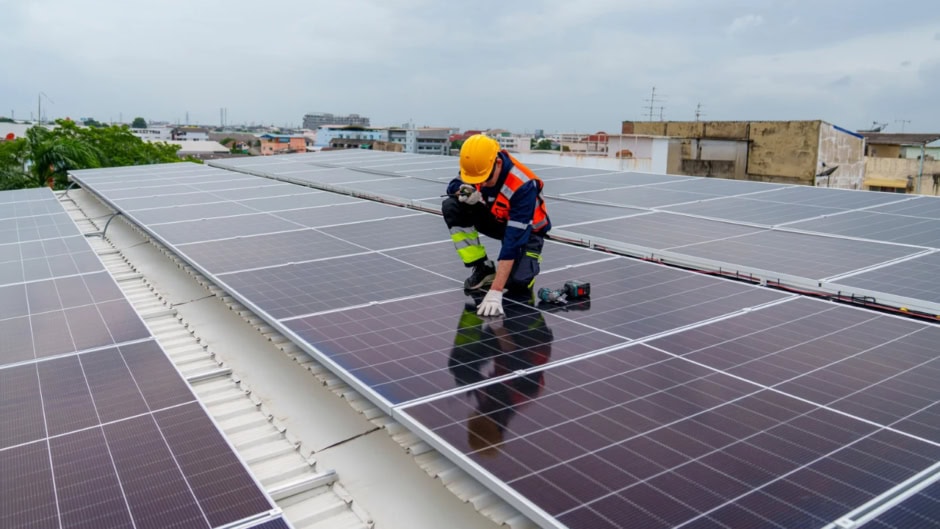
Pakistan achieved substantial energy import savings during FY26 due to its ongoing solarization drive. According to a recent SBP estimate, gross annual energy import savings reached $5.9 billion to $6.9 billion. Even after accounting for solar equipment imports, net annual import savings stood between $4.5 billion and $5.5 billion.
Rapid Solarization Growth & Power Generation
Pakistan expanded its distributed solar deployment significantly between FY2025 and March 2026. Specifically, installed solar capacity rose from 38GW in FY2025 to 51GW by March 2026, according to the Pakistan Electricity Review Report 2026. Consequently, the average installed and operational solar capacity for FY26 reached 44.5GW, calculated as (38 + 51)/2 per the latest available PBS HS 8 data.
Furthermore, SBP staff assumed a capacity factor of 17 to 20 percent based on the five-year average from the Pakistan Electricity Review Report 2026. This solar capacity utilisation factor remains resource-driven and reflects daytime generation, bounded by solar irradiance and weather impacts. As a result, annual solar electricity generation reached between 66 TWh and 78 TWh, calculated as 44.5 × 8,760 hours × (17-20 percent).
Displaced Fuel Costs Drive Gross Import Savings
This surge in solar generation directly displaced expensive traditional fuel sources. Based on recent shares in the generation mix, the weighted average fuel cost of displaced generation stood at PKR 24.9/kWh. Specifically, this figure reflects the weighted average of three fuels:
- RLNG at PKR 34/kWh
- Coal at PKR 16/kWh
- RFO at PKR 58/kWh.
Using a benchmark of 77.964 billion kWh multiplied by PKR 24.9/kWh, estimated annual energy import savings totaled PKR 1,649.99 to 1,941.3 billion. Moreover, applying an average exchange rate of PKR 281 converts these gross energy import savings to $5.9 billion to $6.9 billion.
Machinery Import Bill vs. Net Import Savings
However, the ongoing solarization drive also increased imports of solar panels and related components. In FY26, these imports recorded around US$ 1.4 billion within the machinery import bill. Per the latest PBS HS 8 data, this import cost breaks down into three distinct categories:
- Solar panels: $819 million
- Solar inverters: $344 million
- Batteries: $254 million
Nevertheless, subtracting these component imports from gross energy savings still left Pakistan with $4.5 billion to $5.5 billion in net annual import savings. Overall, SBP staff compiled these estimates using Pakistan Bureau of Statistics (PBS) HS 8 import data, the Pakistan Electricity Review Report, NEPRA performance evaluation reports of operational power plants, China’s Solar PV Exports data, and Ember’s report, Shedding light on Pakistan’s distributed solar revolution.