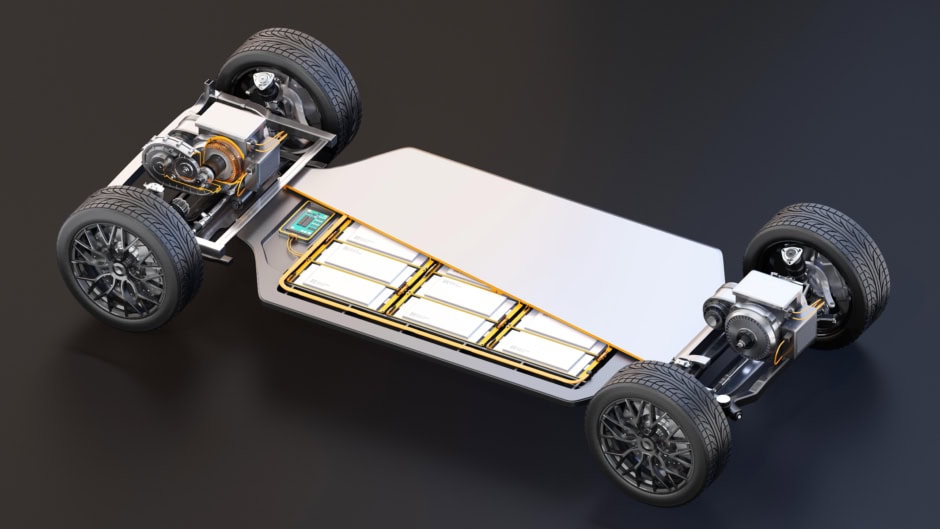
Recent developments in electric vehicle (EV) battery technology indicate that solid-state batteries are moving closer to real-world use, potentially transforming the EV industry. According to a report by Electrek, several Chinese automakers are conducting testing and trial runs of new battery systems designed to significantly improve EV performance.

Promising Gains in Range and Efficiency
Solid-state batteries use a solid electrolyte instead of the liquid electrolyte found in conventional lithium-ion batteries. This design improves safety, reduces weight, enables faster charging, and increases driving range.
While the technology has faced challenges due to high costs and complex manufacturing processes, several Chinese manufacturers are advancing testing efforts. Dongfeng Motors has begun trials of a battery capable of 620 miles in extreme cold conditions. Chery’s Rhino-series batteries, which include semi-solid and fully solid-state designs, are expected to reach ranges of up to 932 miles, with validation and production planned for next year. Changan Automobile’s Golden Bell battery is also targeting similar range figures, with in-vehicle testing scheduled later this year.
Global Competition in Battery Development
Chinese companies currently produce approximately 75% of the world’s lithium-ion battery cells, according to the Center for European Policy Analysis. Other global players are also pursuing solid-state technologies.
Boston-based Factorial, in partnership with Mercedes-Benz, tested a solid-state battery in a modified EQS, achieving an estimated 745 miles per charge. Companies including Tesla, Rivian, and Ford are also developing next-generation battery technologies, with Ford signaling further innovations in the pipeline.
Limited Access to the U.S. Market
Despite rapid progress, many Chinese EV technologies have yet to enter the U.S. market due to trade policies and a lack of established dealership networks. However, discussions between Ford CEO Jim Farley and former President Donald Trump suggest potential opportunities for selective Chinese EV imports under agreements favorable to the U.S.
BYD has reported progress in battery chemistry and fast-charging technology, with a system capable of delivering up to 621 miles of range and charging from 10% to 97% in just nine minutes.
Industry analysts agree that solid-state batteries are poised to be a key technology for future EVs. With ongoing trials in China, Japan, Europe, Korea, and the U.S., the technology appears to be advancing steadily toward commercial viability.