South Korea wants to dominate the global semiconductor and artificial intelligence markets. However, the government’s ambition just collided with a brutal physical reality. Finding enough electricity to power these massive mega-projects is becoming a critical crisis. AI data centers and chip fabs demand uninterrupted, 24/7 baseload power. Renewable energy simply cannot provide this constant supply due to its intermittent nature. Consequently, the government is abandoning its post-Fukushima nuclear phase-out. South Korea is urgently pivoting back to nuclear energy to keep its tech dreams alive.
The Massive Power Deficit
The sheer scale of these tech hubs is breaking existing power grids. A newly announced semiconductor cluster for Samsung Electronics and SK hynix in the southwest, alongside massive AI data centers, will require a staggering 24.7 gigawatts (GW) of additional generation capacity.
Furthermore, this demand piles on top of an already strained national grid. The government’s long-term electricity plan currently projects a peak demand of 129.3 GW by 2038. Meanwhile, a separate massive chip cluster in Yongin requires another 15 GW.
The immediate problem is time. Infrastructure teams now realize that computing capacity depends entirely on regional grid planning. The state wants the first southwest fabs operational by 2030. However, new nuclear reactors take at least seven to ten years to build. Therefore, securing enough electricity for the initial phase of operations is a major concern.
South Korea Fast-Tracking Nuclear Energy Solutions
To bridge this massive gap, policymakers are scrambling to accelerate nuclear infrastructure. The initial four fabs in the southwest alone will draw 6.3 GW. To meet this immediate need, the government plans to rely on the existing Hanbit Nuclear Power Plant, solar power, and energy storage systems.
Industry leaders are demanding more. Samsung Electronics Vice Chairman Jun Young-hyun recently urged the government to expand nuclear power and liquefied natural gas (LNG) cogeneration without fail. Climate, Energy and Environment Minister Kim Sung-whan echoed this sentiment. He confirmed that new reactors are highly likely if the southwest cluster scales up to match the massive Yongin project.
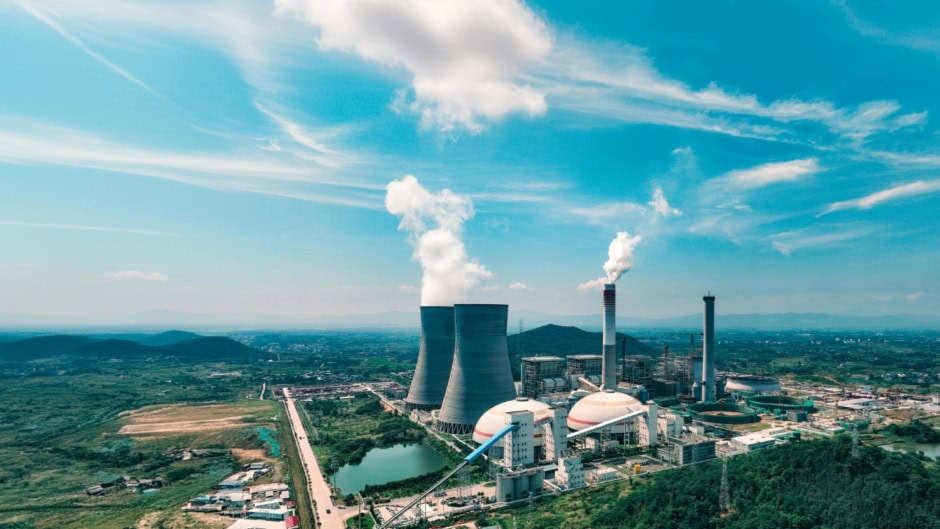
Officials are currently discussing a plan to add four new reactors to the existing Hanbit and Saeul nuclear plants. By utilizing existing sites, the government hopes to bypass lengthy permitting processes. Additionally, state-run Korea Hydro & Nuclear Power recently selected Yeongdeok for two large-scale 2.8 GW reactors. They also pinpointed Busan’s Gijang County for a 700-megawatt small modular reactor (SMR).
The Water Supply Bottleneck
Electricity is not the only resource running dry. The new southwestern cluster requires 650,000 tons of water daily for cooling and operations. Supplying this water risks heavy environmental damage and potential conflicts with local farmers.
To minimize destruction, the government plans to upgrade existing infrastructure rather than build new dams. Raising the height of the Dongbok Dam will secure 300,000 tons of water per day. The remaining 350,000 tons will come from the nearby Juam and Jangheung dams.
Ultimately, South Korea’s computing expansion is no longer just a tech investment story. It is a high-stakes energy infrastructure problem. If power and water delivery arrive late, billions of dollars in digital infrastructure will sit completely useless.