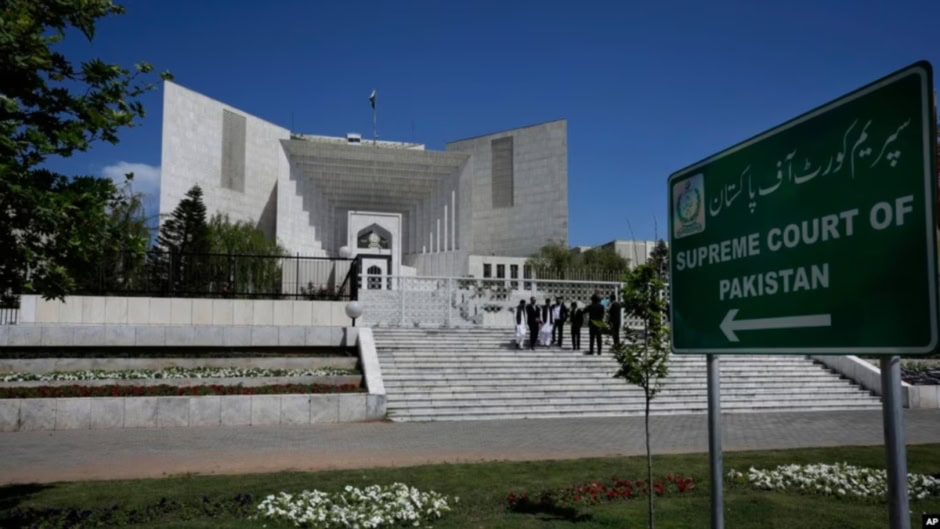
The Super Tax came under legal scrutiny on Monday as senior counsel Ahmed Jamal Sukhera argued before the Supreme Court’s Constitutional Bench (CB) that the Constitution does not allow arbitrary measures, including legislation.
The bench, headed by Justice Aminuddin Khan, is reviewing multiple petitions filed by taxpayers against the amended Section 4C of the Income Tax Ordinance (ITO), 2001, which introduced the levy for the 2023 tax year.
Representing Fauji Fertilizer, Sukhera said the government imposed the Super Tax to generate Rs215 billion simply to create fiscal space. He pointed out that in the previous year, Rs350 billion was collected through sales tax, even on essentials like matchsticks, a measure that, according to a policy statement, pushed segments of the population below the poverty line.
This time, he said, the government decided to tax high-earning individuals on the grounds that they had earned windfall profits and could bear the extra burden. According to him, the policy statement revealed only two factors: that last year’s sales tax had inflationary effects and that wealthy taxpayers could be tapped to raise the additional Rs215bn.
Ignored Alternatives to Super Tax Highlighted in Court
Sukhera argued that several alternatives were ignored, even though cabinet and World Bank reports show fiscal space of Rs1.7 trillion could be created annually by aligning federal spending with constitutional and legal provisions. He highlighted seven examples, starting with annual losses of Rs600bn to Rs800bn from state-owned enterprises, which could be reduced instead of burdening taxpayers.
He further noted that the federal government spends Rs328bn annually on subjects devolved to the provinces under the 18th Amendment. Adopting a treasury single account, he added, could save another Rs404bn. He also pointed to electricity theft and related losses amounting to Rs600bn each year, arguing that reducing this loss by Rs215bn would make the super tax unnecessary.
The counsel said the government also violates the Fiscal Responsibility and Debt Limitation Act, 2005 (FRDLA), which requires the fiscal deficit to stay below 3.5 percent of GDP and debt-to-GDP under 60 percent. Both limits have been breached since 2016. Instead of cutting expenditures as required, the government keeps borrowing, passing the cost of interest payments onto taxpayers through higher taxes.
Concluding, Sukhera stressed that the state is constitutionally bound to act as trustee of public funds. He said it was time to hold the government accountable for wasteful spending so that taxpayers are not repeatedly burdened with additional levies.