A wearable device MenstruAI, can detect health markers directly from menstrual blood. Developed by researchers at ETH Zurich, it offers a revolutionary, non-invasive method that could revolutionize women’s healthcare.

This “first-of-its-kind” wearable technology challenges the notion that menstrual blood is merely a waste product, instead positioning it as a valuable diagnostic fluid.
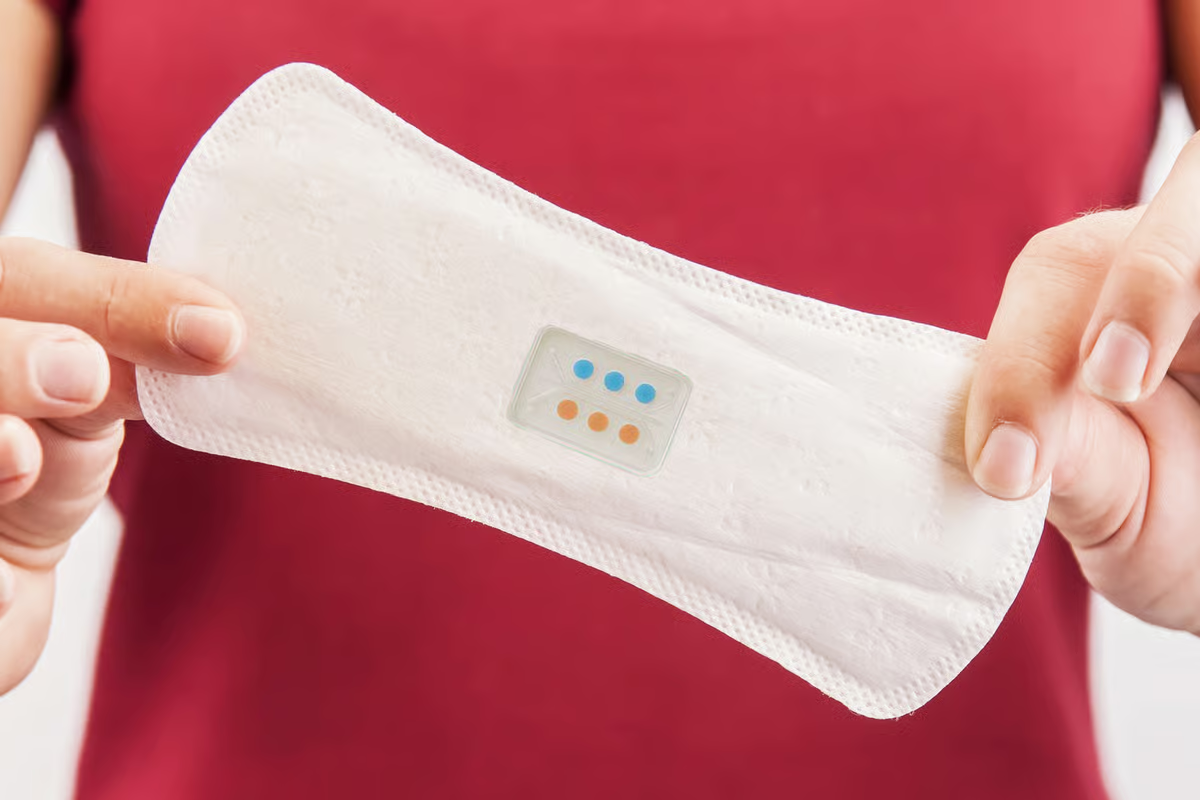
The core of MenstruAI is a wearable lateral flow assay (LFA) platform, essentially a paper-based test strip similar to an at-home COVID-19 test. This test strip is integrated into a small, flexible silicone chamber that can be attached to standard sanitary pads.
When menstrual blood comes into contact with the test strip, specific antibodies on the strip react with target biomarkers present in the blood.
This reaction produces a colored indicator, with the intensity of the color directly correlating to the concentration of the biomarker. The darker the color, the higher the concentration.
Users can interpret the results visually, or, for more objective and nuanced analysis, they can take a picture of the used pad with their smartphone. A specially designed app powered by machine learning then analyzes the image, recognizing subtle color differences and providing a quantifiable result. This app effectively turns a smartphone into a portable diagnostic reader.
Initially, MenstruAI focuses on three crucial biomarkers relevant to women’s health:
- C-reactive protein (CRP) is a general indicator of infection and inflammation within the body.
- Carcinoembryonic antigen (CEA) is a tumor marker often associated with various gynecological cancers.
- CA-125 is a marker linked to both endometriosis and ovarian cancer.
The research team is actively exploring additional biomarkers to expand the diagnostic capabilities of the device.
The development of MenstruAI is based on growing scientific evidence that menstrual blood is a rich source of health information.
Studies have shown strong correlations between biomarkers in menstrual blood and those in venous blood for conditions like diabetes (e.g., HbA1c levels) and inflammation. The blood contains endometrial cells, immune components, and hormones that can offer clues about conditions such as endometriosis, adenomyosis, and even certain types of uterine infertility.
The researchers have conducted an initial feasibility study and are planning a larger field study with over 100 participants to further evaluate the device’s accuracy and suitability for everyday use.
While MenstruAI can never be a replacement for definitive diagnostic tests. But it can serve as an early warning system, alerting users to pay a visit to a medical professional.