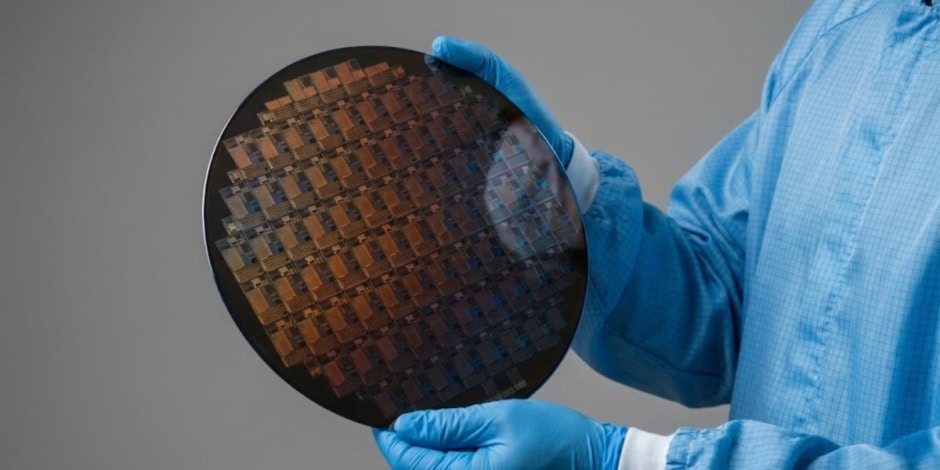
Taiwan Semiconductor Manufacturing Company has quietly begun volume production of its first 2nm class chips, marking a major manufacturing milestone as the world’s largest contract chipmaker transitions to a new transistor architecture for the first time. The development confirms that TSMC’s next generation process technology has moved beyond pilot runs and into early high volume manufacturing.
“TSMC’s 2nm (N2) technology has started volume production in 4Q25 as planned,” a statement at TSMC’s web page dedicated to 2nm Technology reads. “TSMC N2 technology will be the most advanced technology in the semiconductor industry in terms of both density and energy efficiency. N2 technology, with leading nanosheet transistor structure, will deliver full-node performance and power benefits to address the increasing need for energy-efficient computing. With our strategy for continuous enhancements, N2 and its derivatives will further extend TSMC technology leadership well into the future.”
The company has not made a public announcement, but industry tracking indicates that production has started at TSMC’s Baoshan and Kaohsiung facilities, with initial output focused on test and early customer wafers. Volume manufacturing at this stage suggests yields have reached commercially viable levels, a critical hurdle for any node transition, particularly one involving a fundamental transistor redesign.

Gate all around transistors wrap the gate fully around the channel, improving control over current flow and reducing leakage. This shift is widely viewed as essential for sustaining performance scaling as transistors approach physical limits. Rival foundries such as Samsung and Intel have also announced GAA based processes, but TSMC’s move into volume production positions it ahead in terms of manufacturing maturity.
Customers expected to adopt the 2nm node include Apple, AMD, and Nvidia, all of which depend heavily on TSMC for leading edge silicon.
Apple is widely anticipated to be the first major customer, likely integrating 2nm chips into future iPhone and Mac processors once mass availability expands.
Apple is expected to transition its flagship mobile processors to 2nm in 2026, while high performance computing customers are targeting similar timelines for data center and AI accelerators.
For TSMC, there is already an added advantage of advanced node manufacturing worldwide. A smooth transition to GAA transistors strengthens its lead over competitors still stabilizing their own implementations.
As production ramps through 2025, attention will turn to yield improvements, customer adoption timelines, and how quickly 2nm chips move from early wafers into consumer and enterprise products. With volume manufacturing now underway, the industry’s next major silicon transition has effectively begun.