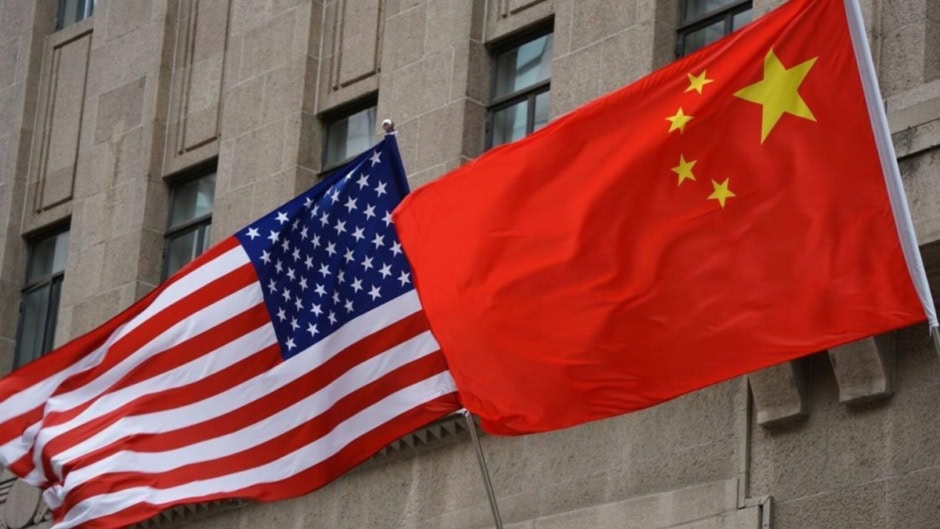
In a surprising turn of events, the United States and China have agreed to a drastic tariff rollback for an initial 90-day period, offering a major boost to global markets. The unexpected breakthrough was announced Monday through a joint statement following intense trade talks over the weekend in Geneva, Switzerland, where officials from both countries reported making “substantial progress.”
The joint statement emphasized the significance of building a “sustainable, long-term, and mutually beneficial economic and trade relationship.” Global investors welcomed the news, which signaled a pause in the bruising trade war that had rattled markets, disrupted supply chains, and heightened fears of a global recession.
Following the US-China tariff rollback announcement, Dow futures surged more than 2%, S&P 500 futures jumped nearly 3%, and Nasdaq Composite futures climbed over 3.5% during Asian afternoon trading. Major Asian markets also responded positively, with Hong Kong’s Hang Seng Index closing 3% higher. Meanwhile, the US dollar strengthened, and gold prices, typically a safe haven, dropped as investor confidence soared.
New Tariff Structure Aims to Ease Economic Pressure
The revised tariff structure, set to take effect by May 14, will see each country slash tariffs by 115 percentage points for 90 days. This means the US will lower its tariffs on Chinese goods from 145% to 30%, while China will reduce tariffs on American imports from 125% to 10%. However, Trump’s 20% fentanyl-related tariffs on China will remain in place.
The US-China tariff rollback follows a period where both economies have felt significant strain. The US reported its first quarterly GDP contraction since early 2022 as importers rushed to sidestep soaring tariffs. Meanwhile, Chinese exports to the US plunged, contributing to a sharp contraction in the country’s manufacturing activity and prompting Beijing to roll out new economic stimulus measures.
Dan Ives, a managing director at Wedbush Securities, hailed the US-China tariff rollback as a “best-case scenario” following the Geneva talks. In a research note, Ives suggested this agreement marks just the beginning, predicting that tariffs could be further reduced as negotiations continue.
Ongoing Dialogue to Shape Future Trade Relations
Looking ahead, the US and China also agreed to establish a framework for ongoing dialogue, led by Chinese Vice Premier He Lifeng, US Treasury Secretary Scott Bessent, and US Trade Representative Jamieson Greer. The discussions could alternate between China, the United States, or a mutually agreed third country, according to the joint statement.
Speaking at a press conference, Bessent stressed that neither nation desires a complete economic decoupling, calling the high tariffs akin to an embargo that both sides now seek to avoid. He emphasized the mutual commitment to fostering more balanced trade relations.
Meanwhile, a spokesperson for China’s Commerce Ministry praised the US-China tariff rollback as a key step toward resolving economic tensions and laying the groundwork for deeper cooperation. This softer, more optimistic tone marked a significant shift from China’s previous hardline stance, where it had demanded full tariff removal before engaging in negotiations.
The dramatic breakthrough stunned many observers, especially after US officials had downplayed expectations ahead of the Geneva talks, suggesting only a de-escalation rather than a comprehensive trade agreement was likely.