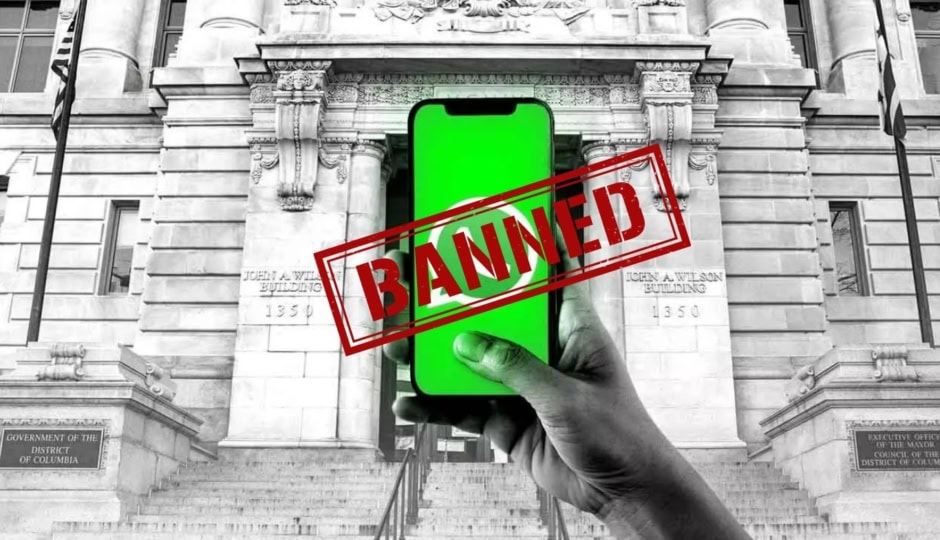
The US House of Representatives has officially banned WhatsApp from all House-issued devices, effective June 30. The decision was announced in an internal memo sent to House staff on Monday by the Office of Cybersecurity.
According to the notice, WhatsApp has been deemed a “high risk” application due to its “lack of transparency in how it protects user data,” “absence of stored data encryption,” and “potential security risks.” Staffers have been instructed to uninstall the app and switch to more secure alternatives.
The memo encouraged House employees to use platforms such as:
- Microsoft Teams
- Amazon Wickr
- Signal
- Apple’s iMessage and FaceTime
These apps, according to the House’s cybersecurity team, offer better safeguards for official communications.
Meta Pushes Back
Meta, the parent company of WhatsApp, pushed back strongly against the decision. A spokesperson said the company “disagreed with the move in the strongest possible terms,” claiming that WhatsApp provides stronger security than the recommended alternatives.
This isn’t the first time Meta’s flagship messenger app has come under scrutiny. Earlier this year, a WhatsApp official disclosed that Israeli spyware firm Paragon Solutions had targeted dozens of users, including journalists and civil society members.
Ongoing Government-Meta Collaboration
Despite the ban, Meta continues to foster connections with the US government. The Financial Times reported that the tech giant is strengthening its relationship with the military, allowing US defense agencies to use its AI models and even partnering with defense firm Anduril on new technologies.
Meta’s CTO, Andrew Bosworth, was recently commissioned as a lieutenant colonel in the US Army Reserve’s Executive Innovation Corps. This highlights Meta’s deeper involvement in national defense.
The WhatsApp ban echoes the House’s 2022 decision to ban TikTok from government devices. Both moves reflect growing concerns over data privacy and foreign surveillance.
While WhatsApp remains permitted in the US Senate, the House’s firm stance underscores the growing caution around digital communication tools in government environments.