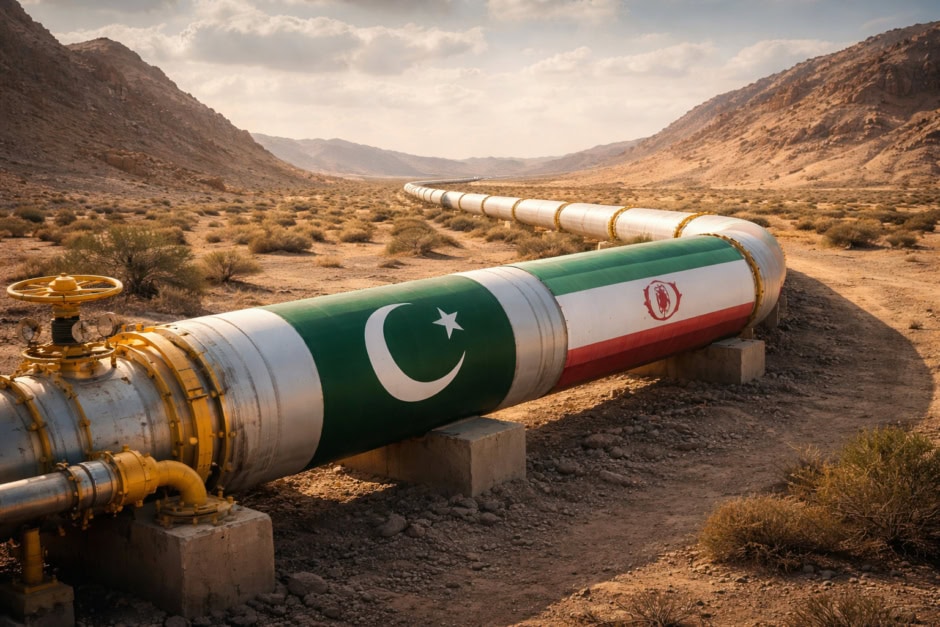
Renewed talks between the United States and Iran have sparked optimism over the possible revival of the long-delayed Pakistan-Iran gas pipeline project.

The pipeline agreement was originally signed in 2009 during the Pakistan Peoples Party government and formally inaugurated in 2013 by former Iranian president Mahmoud Ahmadinejad and former Pakistani president Asif Ali Zardari. However, progress stalled due to US sanctions on Tehran.
Recent diplomatic engagement between Washington and Tehran has raised expectations that sanctions could be eased, potentially allowing Pakistan to resume work on the project. Analysts believe that any relaxation in restrictions would significantly improve the feasibility of reviving the pipeline.
Energy experts say the project has gained renewed importance following recent disruptions in the Middle East, which exposed vulnerabilities in global oil and gas supply routes, particularly through the Strait of Hormuz. A direct pipeline connection with Iran could provide Pakistan with a more secure and stable energy supply.
Currently, Pakistan imports around 85 percent of its oil requirements and relies heavily on liquefied natural gas from Qatar to meet domestic demand. Ongoing regional tensions have further strengthened the case for alternative overland energy routes.
While Iran has already completed its portion of the pipeline, construction on Pakistan’s side has yet to begin. Officials indicate that Tehran remains open to extending the gas sale agreement, although Pakistan has previously cited sanctions and limited domestic demand as key challenges.