Since taking office in March 2024, Chief Minister Maryam Nawaz Sharif’s Punjab government has launched a sweeping set of welfare initiatives centered on physical or bank linked “cards.” In less than two years, the administration has introduced at least nine schemes built around this model.
These include:
- Kisan Card for farmers
- Himmat Card for persons with disabilities
- Bewa Sahara Card for widows
- Imam Honorarium Card for mosque imams
- Minority Card for underprivileged non Muslim families
- Livestock Card for cattle farmers
- Asaan Karobar Card for small businesses
- Punjab Ration Card for food subsidies
- Hunarmand Naujawan Parwaaz Card aimed at helping workers seek employment abroad.
Government projections suggest millions of residents across Punjab could eventually carry one or more of these cards. Officials describe the approach as a modernization effort that links welfare benefits to verified identities and banking channels. Critics, however, argue the model reflects an outdated understanding of digital governance and risks repeating problems seen in earlier subsidy programs.
Cards Are Not the Same as Digital Governance
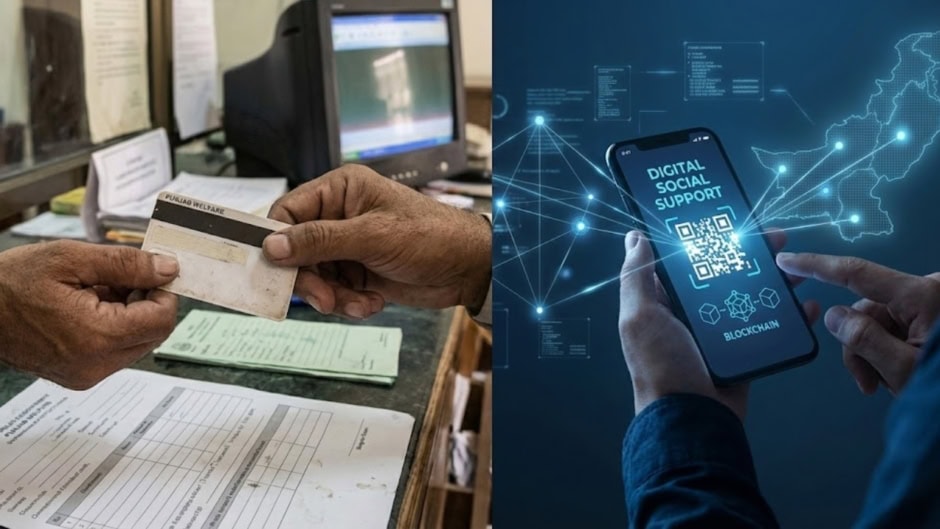
Issuing a card is not the same as building a digital welfare system. A card remains a physical object that must be printed, distributed, stored, replaced when lost, and presented at designated service points.
Each step introduces administrative friction. In environments where bureaucratic oversight is weak, those friction points often become opportunities for delays, unofficial charges, or manipulation by intermediaries.
Modern digital welfare systems increasingly rely on direct transfers linked to verified digital identities and mobile financial services. Under such models, benefits move directly into bank accounts or mobile wallets. The beneficiary receives a confirmation message and can access funds without visiting distribution centers or dealing with agents.
The BISP Experience: Lessons From Past Welfare Programs
Pakistan already has experience with large scale welfare distribution through the Benazir Income Support Programme (BISP).
While the program has helped millions of low income families receive financial assistance, it has also faced repeated allegations of irregularities. Investigations and audits over the years revealed several problems within the system.
In some cases, payments were made to individuals who did not meet eligibility criteria, including government employees or their families. Verification drives also uncovered records tied to invalid or outdated CNIC information, including cases where payments continued for individuals who had died.
Authorities have also investigated cases where intermediaries deducted money from beneficiaries before releasing payments. In some districts, agents allegedly charged small “commissions” from recipients when facilitating withdrawals.
Fraud has also targeted beneficiaries directly. Some applicants reported receiving fake SMS messages promising large payments, only to be asked for CNIC details or mobile banking credentials. Others said they were asked to pay unofficial fees during registration or while collecting funds.
The Biggest Risks of Card Based Welfare Systems
Experts say physical card systems create several structural risks.
Ghost beneficiaries remain a major concern. When verification depends on manual checks by local officials, fraudulent entries or outdated records can remain in the system for years.
Intermediary control is another issue. Card based programs require collection points such as bank branches, agents, or facilitation centers. Each intermediary can become a point where unofficial fees are charged.
Enrollment manipulation is also possible. Agricultural and business subsidy programs must verify land ownership, livestock numbers, or business activity. In regions where records remain incomplete or contested, those with stronger local influence may gain easier access to benefits.
Card theft or duplication presents another vulnerability. Physical cards can be lost, stolen, or misused, especially when beneficiaries are elderly or unfamiliar with digital processes.
The Problem of Too Many Welfare Schemes
Another challenge lies in administrative fragmentation. Launching multiple card based welfare programs means each initiative requires its own enrollment system, payment process, and monitoring framework.
Without strong integration across departments, a household could appear in several programs at once, while others remain excluded due to verification errors. Building parallel systems for each card program also increases costs related to printing, distribution, verification, and maintenance.
Digital Alternatives Already Exist
Pakistan already has the infrastructure needed for more efficient welfare delivery:
- Mobile wallet platforms and branchless banking services serve tens of millions of users. Direct transfers through these channels could eliminate the need for printing and distributing cards. Beneficiaries could receive subsidies directly on their phones and withdraw funds through existing retail networks.
- Agricultural programs could integrate digital land records and satellite crop monitoring to verify eligibility automatically.
- Small business financing programs could use transaction histories from digital payments or mobile wallets to evaluate creditworthiness rather than relying on paper documentation.
- Biometric verification through smartphones or national identity systems could further reduce dependence on intermediaries.
The Politics of Visibility
Supporters of card based welfare initiatives argue that physical cards provide visible proof of government assistance. A card can be handed to a beneficiary at a public ceremony and photographed during official announcements. Critics say this visibility often serves political messaging more than administrative efficiency.
The real measure of welfare delivery is whether funds reach the intended recipients reliably and without corruption. Those outcomes are rarely visible during press events and often emerge years later during audits or investigations.
A System at a Crossroads
Punjab’s expanding portfolio of welfare cards reflects an ambitious attempt to deliver financial support to different segments of society.
The long term success of these programs will depend less on how many cards are issued and more on whether the underlying systems reduce fraud, limit intermediaries, and deliver assistance efficiently to those who need it most.
In an era where digital payments and mobile banking dominate everyday transactions, the central question remains whether card based welfare represents a meaningful modernization or simply an older system repackaged in new branding.