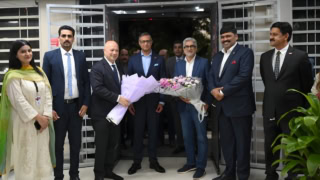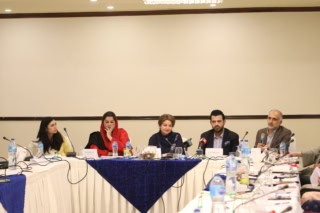
If the prelude to 2026 was about ambition, Indus AI Week proved it was about execution. Under the visionary leadership of Muhammad Shehbaz Sharif, the Ministry of IT & Telecommunication convened Indus AI Week 2026 as more than a conference. It was a declaration that Pakistan’s digital ambition has stepped off the whiteboard and onto the workshop floor.

Guided by Federal Minister Shaza Fatima Khawaja, the week stitched together strategy and execution in one continuous thread. The high-level Indus AI Summit shaped national direction, while the Innovation, Learning & Engagement Arena translated that vision into hands-on experimentation, startup energy, and technical collaboration.
Together, they created a living bridge between policy and practice, between keynote speeches and code commits, signaling that Pakistan’s AI journey is no longer theoretical. It is operational.
The formal inauguration introduced the Islamabad AI Declaration, a landmark framework built on eight strategic pillars, including sovereign AI development, human accountability, explainable systems, inclusive innovation, and private-sector-led growth. The declaration positioned AI not just as a technology priority but as a national capability.
The Prime Minister presented four revolutionary projects through his keynote speech:
- The government will invest $1 billion in AI development by 2030
- The program will provide complete financial support for 1000 AI PhD scholarships
- The federal government will implement AI education programs in federal schools nationwide.
- The program will teach AI tools to 1 million non-IT professionals.
These pledges demonstrated Pakistan’s intention to transition from being a consumer to a producer of technology.
More than 150 international delegates attended the conference, including investors, researchers, worldwide ministers, and pioneers in AI. Panels examined important topics, which included the management of large-scale AI systems, the establishment of sovereign data infrastructure, funding AI ecosystems, and designing AI-native government systems that operate with AI technology. The discussions focused on one central theme, which stated that AI requires international cooperation to be effective.
The Innovation Arena transformed concepts into practical implementation through its operations, which extended beyond its policy framework. Thousands of participants engaged in robotics showcases, startup expos, AI competitions, e-sports championships, and national bootcamps, taking part in more than 40 dynamic activities spread across 11 specialized pavilions.
The project achieved these major results:
- The distribution of PKR 68 million in cloud credits to 7 startups.
- The National AI Bootcamp provided training to 1,900 participants over 48 hours.
- The AI for Her pavilion launched initiatives to support women who work in technology fields.
- The AI competitions demanding high-performance competition brought about commercialization and product readiness.
Indus AI Week proved that Pakistan’s AI growth is not just theoretical, as evidenced by discussions about sovereign clouds, actual startup investment, AGI debates, and game creators incorporating LLMs.
The event ended with continuity rather than a conclusion. As the events in Islamabad came to an end, the momentum continued into national and worldwide interactions until February 15, reaffirming that this is not a single event but rather a beginning of long-term AI development. Indus AI Week 2026 did not just announce Pakistan’s rise in AI. It operationalized it.