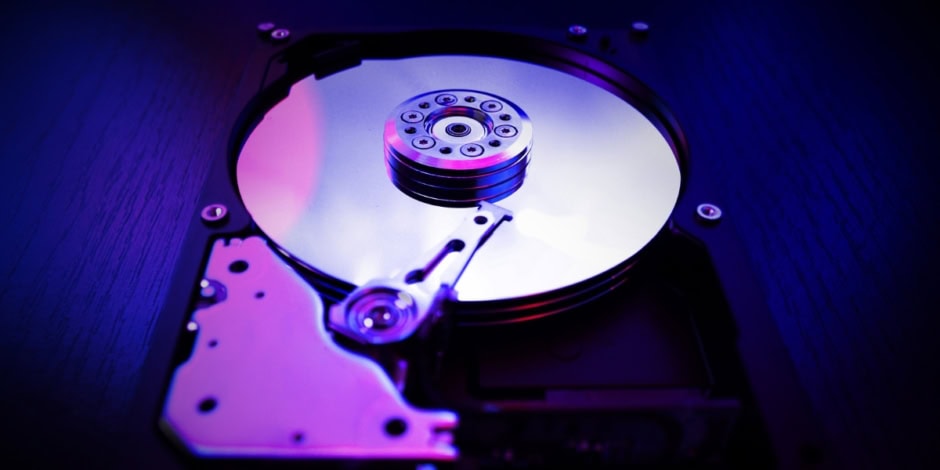
The era of cheap storage in the form of Hard Drives is hitting a wall. After nearly two years of stability, the hard disk drive (HDD) market is facing renewed pressure. Latest industry reports confirm that HDD contract prices rose by approximately 4% quarter-over-quarter in Q4 2025.
This marks the largest price hike in eight quarters. While solid-state drives (SSDs) dominate speed, the humble mechanical hard drive is making a comeback, and supply is struggling to keep up.
The Retail Reality: You Are Paying More for Hard Drives
The shortage is already hitting the consumer market. Retail pricing has climbed for three consecutive quarters, with the steepest jumps occurring right now.
- Desktop & Surveillance (3.5-inch, 1TB): Prices are hovering around $53.
- Laptop Drives (2.5-inch, 1TB): Prices have hit approximately $50.
Manufacturers report that production lines are operating at full utilisation. This limits their ability to fix the shortage quickly. If you need storage, waiting might cost you.
The AI Data Glut
The primary driver for this surge is the US data centre market. Artificial Intelligence does not just consume computing power… It generates massive amounts of training data and output logs.
Hyperscale operators (like Google, Amazon, and Microsoft) are aggressively buying high-capacity “nearline” Hard Drives. While SSDs are faster, HDDs still win on cost-per-terabyte. For bulk “cold” or “warm” storage tiers, spinning disks remain the industry standard.
To combat this, manufacturers are accelerating next-gen tech like Heat-Assisted Magnetic Recording (HAMR), targeting massive 55 TB enterprise drives. However, these premium drives are destined for cloud giants, not home computers.
China’s “Bit Rot” Fear
Unexpected demand is also coming from China. The government has shifted procurement policies to favour PCs built with domestic processors and operating systems. Interestingly, these sectors are pivoting back to HDDs.
Why the regression? Data retention. Institutions are increasingly worried about “bit rot” in SSDs. NAND flash memory relies on electrical charges to store data, which can degrade over long periods without power. For archival stability, Chinese buyers are choosing the physical reliability of magnetic disks over flash storage.
The Hard Drives Supply Chain Chokehold
Expanding supply isn’t simple. Unlike flash memory, Hard Drives rely on precision mechanical parts like read/write heads.
- DRAM Costs: HDDs use DRAM for cache memory. As AI demand spikes DRAM prices, the cost to build a hard drive rises.
- Capacity Limits: Analysts warn that shortages could become more apparent by 2026.
Suppliers are currently prioritising high-margin enterprise customers. As the industry focuses on keeping the cloud running, the consumer market will likely face extended pricing pressure.