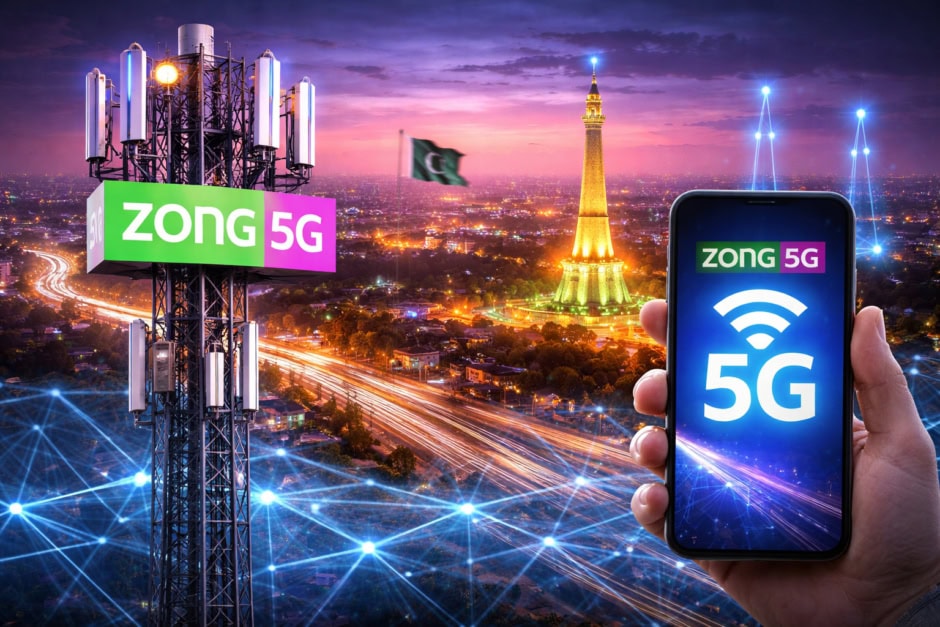
Zong has secured its 5G license and commercially launched 5G services in more than 16 cities across Pakistan. The rollout covers Islamabad, Rawalpindi, Karachi, Lahore, Peshawar, and Quetta, marking a significant step in the country’s digital journey.
The company plans to deploy and upgrade over 1,000 5G sites nationwide in 2026. Through this expansion, Zong aims to improve network speed, scale, and overall impact across Pakistan’s digital ecosystem. The launch signals a clear push to accelerate digital connectivity and economic growth.
This milestone follows Zong’s first 5G trial in 2019. Since then, the company has steadily built a multi-city 5G infrastructure. During trials, Zong recorded speeds exceeding 1.4Gbps, highlighting its focus on network performance and innovation.
Zong says customer experience remains central to its 5G strategy. The network promises low latency, high reliability, and consistent performance. As a result, users can expect smoother, immersive gaming with customized bundles, ultra-HD video streaming, and stronger support for advanced digital lifestyles. In addition, the company aims to offer faster issue resolution and a consistent experience across its app, physical touchpoints, and social media channels.
Beyond connectivity, Zong plans to expand its product and services portfolio. The company will introduce integrated solutions such as cloud platforms, enterprise digitization tools, smart homes and IoT ecosystems, and CCTV solutions. It also plans tailored offerings for startups, SMEs, and large industries. At the same time, Zong is focusing on AI enablement. The company will use intelligent automation for predictive network optimization and proactive problem detection, while offering personalized product and bundle recommendations.
Zong operates as a subsidiary of China Mobile Limited, the world’s largest telecommunications enterprise. With this backing, the company aims to build a strong digital ecosystem aligned with national priorities. The 5G rollout supports the government’s Digital Pakistan vision and Pakistan Vision 2030. It also strengthens the CPEC agenda by enabling high-speed, low-latency connectivity for smart industries, healthcare transformation, and precision agriculture.