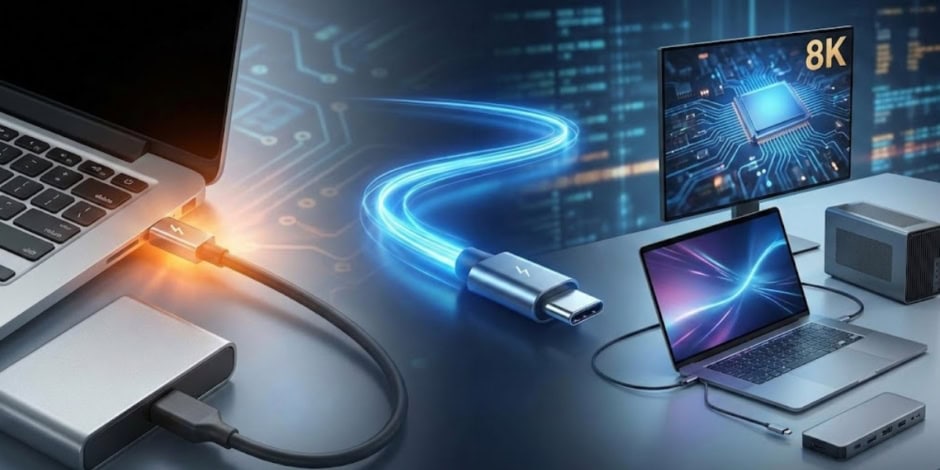
Exactly 15 years ago, on February 24, 2011, Apple and Intel unleashed the very first Thunderbolt port on the global market. At the time, it genuinely felt like science fiction. Users could finally transfer data, output high-definition video, and deliver power all through a single cable. However, the journey to universal acceptance was not always a smooth ride. The technology faced massive early adoption hurdles, sky-high prices, and even severe, headline-making security threats.
Fast forward to today, February 24, 2026. Thunderbolt 5 is actively taking over the consumer and enterprise markets. It drives our massive 8K displays, powers our intensive AI datasets, and connects our ultra-fast gaming rigs. Therefore, on this 15th anniversary, we must look back. Let us compare how this ambitious project started against its absolute dominance today. We will explore the incredible advancements made over time, the terrifying setbacks faced, and how the industry ultimately resolved them.
How Thunderbolt Started: The Apple & Intel Brainchild
In the beginning, Intel dreamed up an incredibly ambitious project called “Light Peak”. Engineers originally wanted to use flexible fiber optic cables to transfer data at an initial speed of 10 Gbps. However, optical cables had a fatal flaw for everyday consumer electronics. They simply could not carry electrical power to charge devices. Furthermore, producing transceivers and optical cables for the mass market was far too expensive.
Consequently, Intel and Apple reached a practical compromise. They switched the interface over to conventional copper wiring. Copper successfully delivered the desired 10 Gbps speeds. More importantly, it allowed the cable to carry up to 10 watts of direct power to peripherals. Apple trademarked the name “Thunderbolt” and officially launched it on the early 2011 MacBook Pro lineup.
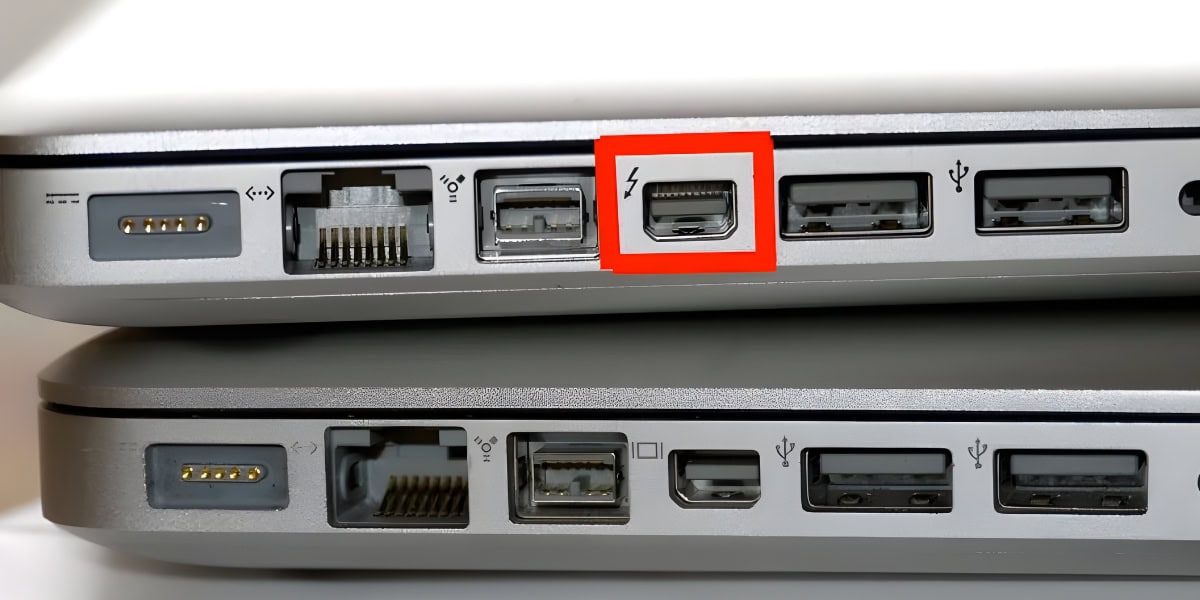
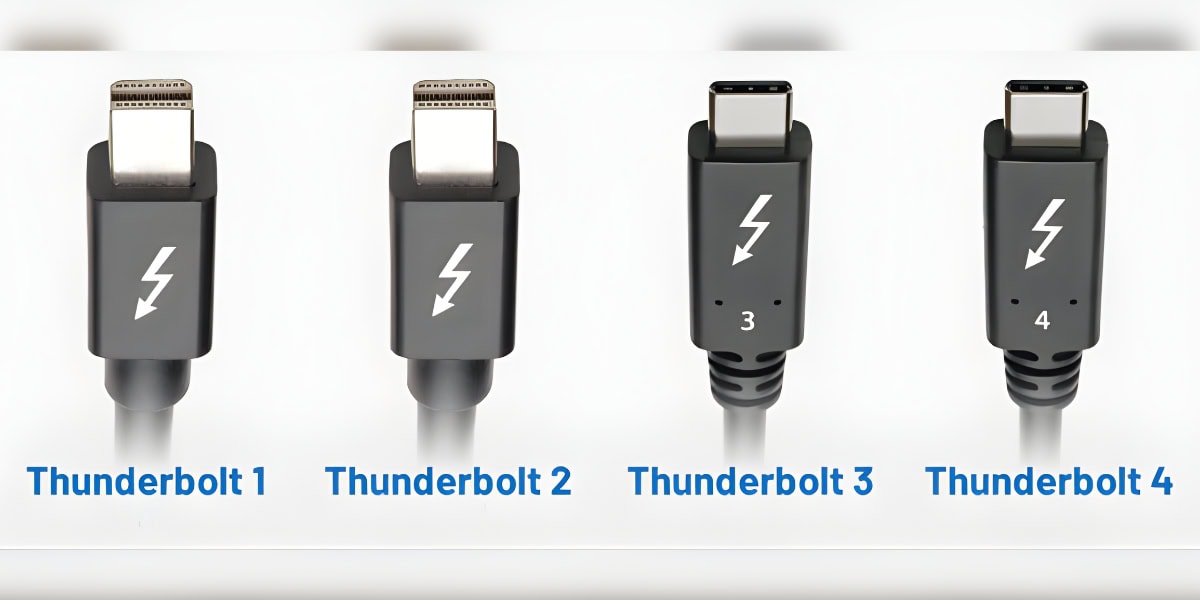
Back then, the technology landscape looked incredibly different. Thunderbolt 1 used the exact same physical shape as the Mini DisplayPort connector. This proprietary shape severely limited its mainstream appeal. Furthermore, traditional Windows PC manufacturers completely ignored it. They viewed Thunderbolt as an expensive, niche gadget port exclusively designed for Mac-based video editors and creative professionals.
Accessories were also astronomically priced. Early adopters paid between $249 and $300 just for basic Thunderbolt docking stations from companies like Matrox and Belkin. Adjusted for cumulative inflation in 2026, those early prices equal well over $400 today. Additionally, hard drive makers like LaCie had to include standard USB 3.0 ports on their premium Thunderbolt drives. They did this just to ensure people could actually use the drives on computers without the rare Thunderbolt port.
Game-Changing Advancements: The Leap to USB-C & 120 Gbps
The biggest turning point for the interface arrived in 2015 with the release of Thunderbolt 3. Intel made a brilliant, industry-shifting strategic move. They dumped the proprietary Mini DisplayPort shape entirely. Instead, they adopted the universally recognized USB-C connector. Instantly, Thunderbolt cables could plug into the exact same ports as standard USB devices. This dramatically reduced market fragmentation.
Next, Intel removed the biggest financial roadblock hindering global adoption. In 2017, they announced they would make the Thunderbolt protocol completely royalty-free for all chipmakers. This decision changed the industry forever. It allowed the USB Implementers Forum (USB-IF) to use the Thunderbolt architecture as the core foundation for the open USB4 standard. As a result, hardware manufacturing costs plummeted. Suddenly, the technology was no longer locked behind a premium paywall.
Today, in 2026, we are living in the high-speed era of Thunderbolt 5. The technical advancements are truly staggering. While the original port gave us just 10 Gbps, Thunderbolt 5 delivers a massive 80 Gbps of bi-directional bandwidth. Furthermore, it introduces a dynamic new feature called “Bandwidth Boost”. When you connect multiple high-resolution monitors, the port acts intelligently. It dynamically shifts its internal data lanes. It pushes an unbelievable 120 Gbps of video data in one direction. Thanks to this, you can easily run three 4K monitors at 144Hz or a single display at a blistering 540Hz.
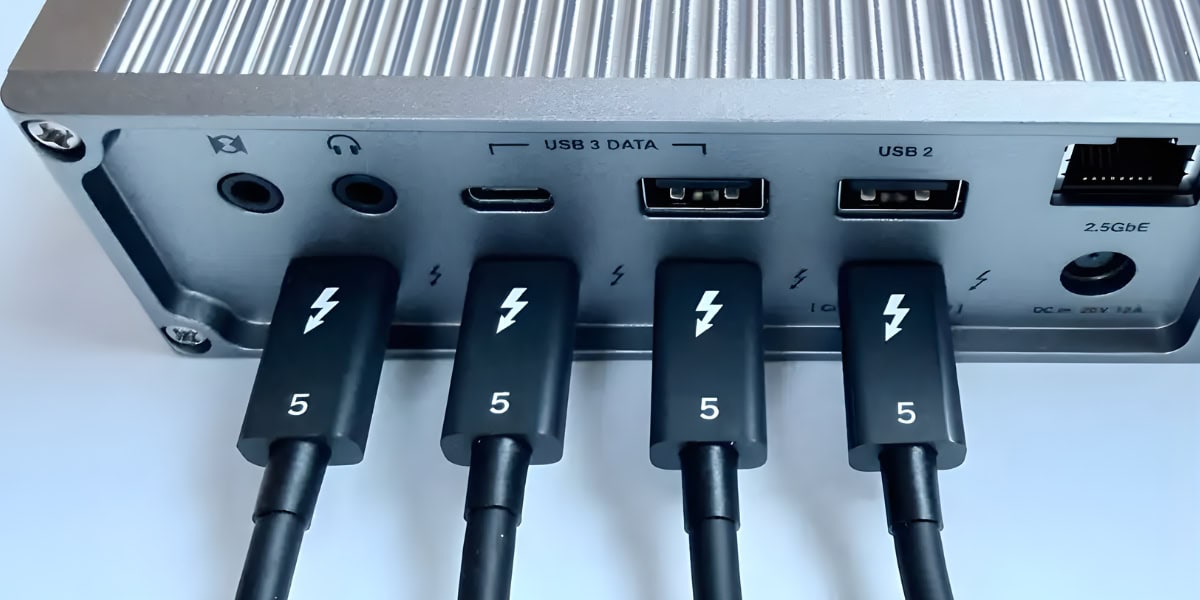
Engineers achieved this incredible speed using PAM-3 signal modulation. This technology transmits 1.5 bits of data per clock cycle. It allows massive throughput without generating too much electrical noise. Additionally, Thunderbolt 5 now supports up to 240 watts of power delivery via the USB PD 3.1 standard. This massive power upgrade effectively kills the need for heavy, proprietary laptop charging bricks.
The ecosystem is also more open and inclusive than ever before. For years, AMD users had to jump through complex hoops to get Thunderbolt running on their desktop machines. Now, in early 2026, AMD is actively releasing processors that offer incredible native connectivity. With the launch of the Strix Halo and Gorgon Point (Ryzen AI 400 series) APUs, AMD users finally enjoy the same high-speed perks. The cross-platform dream is finally a reality. Even the Linux open-source community has heavily integrated native kernel support for advanced USB4 and Thunderbolt routing.
Roadblocks & Resolutions: Security Flaws & Copper Limits
Despite the massive speed boosts and market victories, the technology faced serious setbacks over the past 15 years. The most terrifying issue involved severe architectural security flaws.
Because Thunderbolt requires direct access to your computer’s internal memory controller to achieve its high speeds, it inadvertently opened a backdoor for hackers. In May 2020, a security researcher exposed a massive vulnerability named “Thunderspy”. An attacker needed just five minutes alone with a target laptop. Using a simple screwdriver and easily portable hardware, they could bypass operating system login screens completely. They could defeat BIOS passwords and steal highly encrypted data. The worst part? The Thunderspy hack left absolutely zero digital trace on the victim’s machine.
Did the tech industry resolve this massive setback? Yes, they did, but it required a hard architectural reset. Intel mandated a strict hardware-level fix starting with the rollout of Thunderbolt 4. They forced all computer manufacturers to implement Direct Memory Access (DMA) protection via VT-d virtualization. This hardware layer virtualized the memory access. It completely blocked malicious external devices from reading protected system memory regions. Today, Thunderbolt 5 enforces this strict security protocol by default, making the connection perfectly safe for sensitive enterprise and government deployment.
The second major setback involves the unforgiving laws of physics. As bandwidth increased from 40 Gbps to 80 Gbps, copper cables hit a literal brick wall. High frequencies cause the electrical signal to degrade very rapidly over physical distance. Consequently, passive copper Thunderbolt 5 cables cannot exceed 1 meter (about 3.2 feet) in length. If you stretch the cable any longer, the data signal degrades, causing latency and connection failure. High-speed NVMe SSD enclosures also suffer from extreme heat generation at these speeds, requiring manufacturers to abandon cheap plastic for heavy aluminum and active cooling fans to prevent thermal throttling.
Fortunately, tech companies found a brilliant resolution to the distance limitation. Brands like OWC and Corning developed advanced Active Optical Cables (AOC). These specialized cables use tiny internal lasers to convert the electrical signal into pulses of light. Because light does not suffer from the same aggressive degradation as electricity, these optical cables can stretch up to 50 meters (164 feet) without losing a single drop of performance. They can even safely carry power over shorter distances. While optical interconnects remain somewhat expensive for everyday consumers, they completely solved the distance problem for professional broadcasting environments, medical imaging facilities, and massive studio deployments.
Thunderbolt & A Connected Future
Looking back exactly 15 years, the technological progress is undeniably astounding. Thunderbolt started its life as a highly restricted, overpriced port exclusively tailored for Apple loyalists. Today, it firmly forms the high-speed backbone of the entire global PC industry.
Through highly strategic pivots, like adopting the universal USB-C shape, relinquishing licensing royalties, and battling severe security flaws head-on, Thunderbolt survived its brutal growing pains. In 2026, as we seamlessly push up to 120 Gbps of data and 240 watts of power through a single wire, one thing remains crystal clear. The original, highly ambitious vision of a single, universal cable that does absolutely everything has finally been achieved.