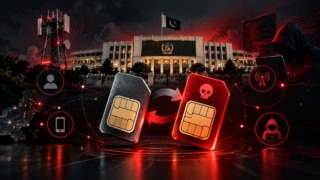
ISLAMABAD: The Senate Standing Committee on IT, chaired by Senator Palwasha Khan, held a high-stakes session on Monday, raising critical questions regarding the Pakistan Telecommunication Authority’s (PTA) management of internet disruptions and social media content moderation. Senators, particularly Senator Kamran Murtaza, pushed for clarity on the legality of these practices, questioning their alignment with constitutional rights and legal frameworks.
Internet Shutdowns Lacking Legal Justification
The meeting took a sharp turn when PTA Chairman, Amir Azeem Bajwa, revealed that internet shutdowns have been enforced in Pakistan since 2016, following directives from the Ministry of Interior. Senator Kamran Murtaza, in particular, expressed concern about the legal grounds for such actions, asking, “If there’s no legal provision for it, how is it being done?”
Bajwa acknowledged the lack of clarity in existing laws that govern internet shutdowns but defended PTA’s actions as being in compliance with government orders and judicial directives. He emphasized that the PTA follows instructions from both the Ministry of Interior and Supreme Court orders, which sometimes mandate service suspensions. However, he admitted that the current regulatory framework for such actions needs revision. The PTA Chairman also offered to provide a detailed timeline of past instances when internet shutdowns were imposed.
The discussion highlighted the growing concern that frequent internet blackouts—often enforced during times of political unrest—could potentially infringe upon citizens’ rights, especially considering the lack of a solid legal foundation for such disruptions.
Social Media Content Regulation Under Scrutiny
The committee also raised questions about PTA’s role in moderating content on social media platforms. The PTA Chairman revealed that the authority receives around 500 complaints per day related to social media content. While PTA is able to get 80% of the requested content removed by platforms, the remaining 20% is often left unaddressed.
Senator Kamran Murtaza challenged the PTA’s actions, asking whether they align with constitutional protections. He questioned the extent of the PTA’s powers to request content removal and whether those actions were legally justified.
In response, the PTA clarified that its role is limited to submitting content-blocking requests to social media platforms. However, platforms, that operate under their own policies, often decide not to act on certain requests. The PTA reiterated that it does not have the authority to unilaterally block or remove content without the platform’s cooperation.
VPN Licensing and Internet Speed Developments
A significant part of the session was devoted to the controversial issue of VPNs. The PTA Chairman denied allegations that the government had been actively banning VPN services. Instead, he outlined the steps taken to introduce a regulatory framework for VPN service providers. In December 2024, the PTA began the licensing process, and two internet service providers (ISPs) have already applied for registration under the new system.
Furthermore, the PTA is collaborating with the Pakistan Software Houses Association (P@SHA) to explore globally accepted regulatory models for VPN services, ensuring compliance with international standards.
Despite these developments, Pakistan continues to struggle with internet speed issues. The country currently ranks 97th globally in terms of internet speed, an area the government is keen to improve. The PTA Chairman revealed that Pakistan currently has seven operational submarine cables, with plans for five additional cables, including two expected to be completed by the end of this year.
Parliament Demands Accountability and Legal Reforms
Throughout the session, lawmakers stressed the need for PTA and the Ministry of IT to ensure that actions taken regarding internet shutdowns, social media moderation, and VPN regulation are fully compliant with existing laws. Senator Hiamyun Mohmand emphasized, “It is the government’s responsibility to protect digital freedoms while ensuring national security.” He called for a more balanced approach that respects citizens’ rights while addressing security concerns.
The meeting underscored the urgency of updating outdated regulatory practices and legal frameworks to meet the evolving needs of the digital landscape. With Pakistan seeking to enhance its position in the global digital economy, lawmakers urged the government to take swift action in revising laws to ensure that digital freedoms are safeguarded while maintaining national security.
This session also highlighted the growing calls for legal clarity on Internet governance in Pakistan, with lawmakers pushing for a policy framework that balances security measures with citizens’ digital rights and freedoms.