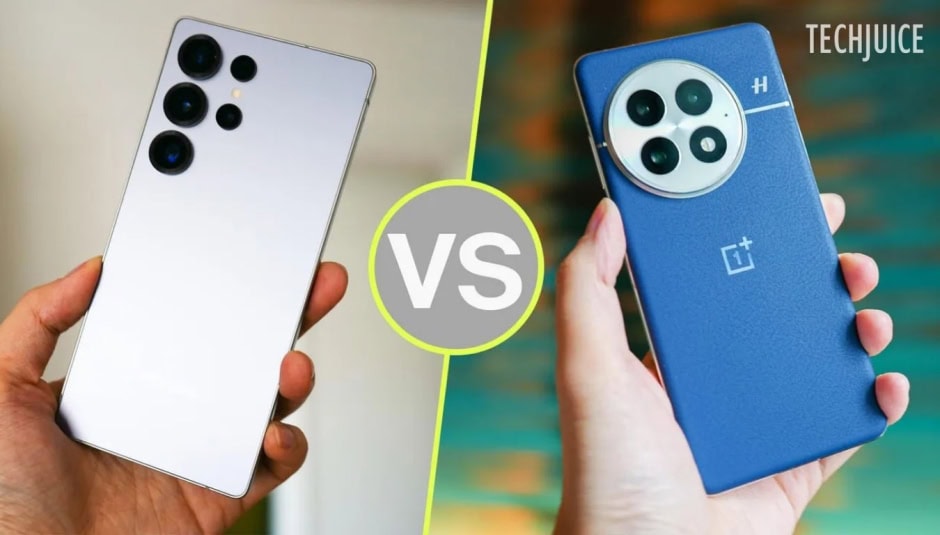
The OnePlus 12R delivered great performance at an affordable price, and OnePlus is looking to repeat that success with the 13R. In contrast, the Galaxy S25 stands as Samsung’s most refined, compact flagship yet.
With differences in screen size, hardware, software, and building materials not to mention a $200 price gap choosing between them isn’t easy. So, which one deserves your money?
Pricing, Availability & Specifications
Let’s have a look at the latest details on pricing, availability, and key specs to see which phone suits you best.
Design
Samsung sticks to a familiar design, and while the S25 is more minimalistic, its clean, professional look appeals to many. For case users, the lack of standout design is a non-issue.
OnePlus follows its usual approach, with the 13R mirroring the OnePlus 13’s design but dropping premium touches like a leather-like back and curved edges. Despite its boxier build, it remains comfortable to hold.
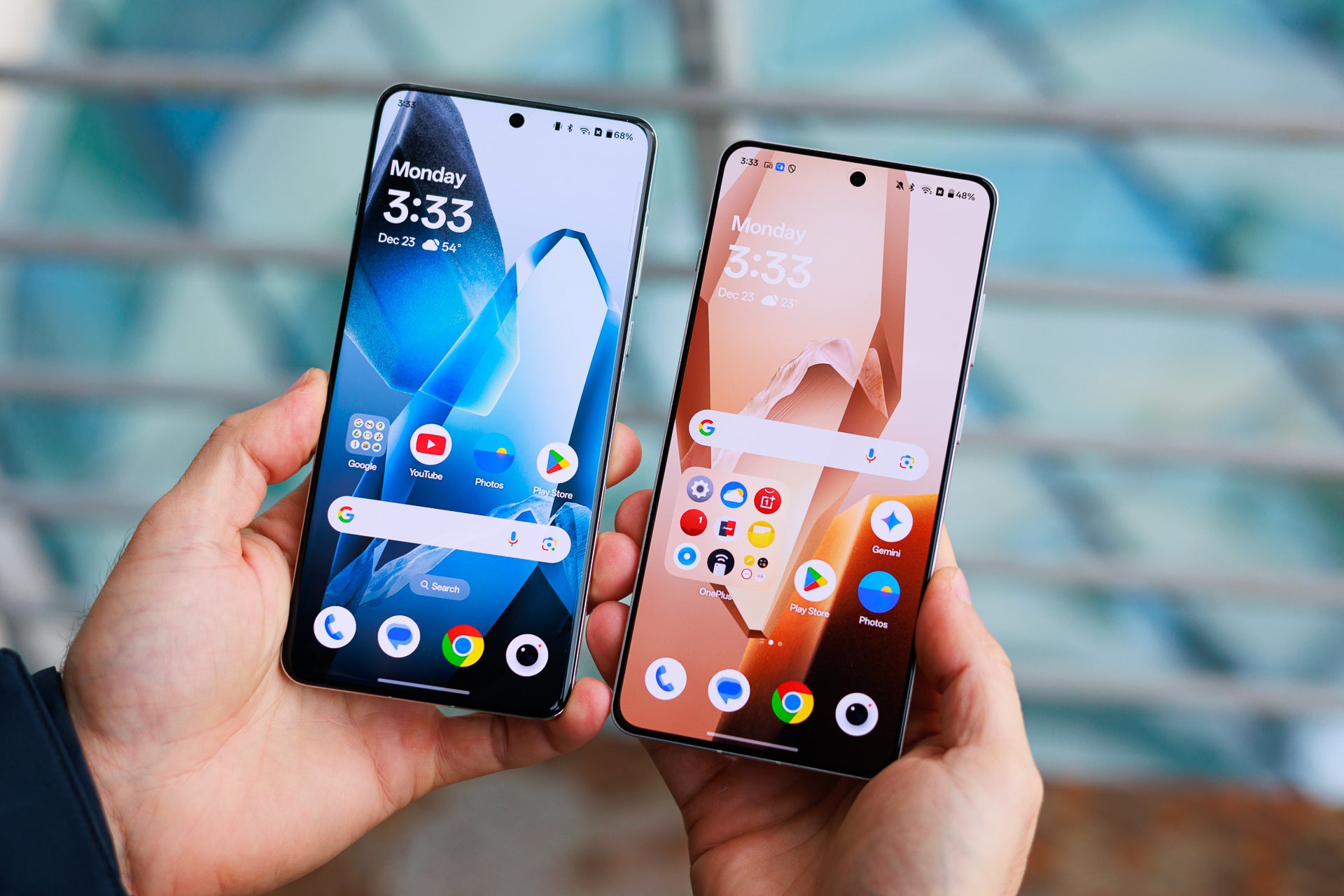
Samsung prioritizes durability, using Gorilla Glass Victus 2 and an IP68 rating, making the S25 one of the toughest compact flagships. OnePlus, meanwhile, balances cost and quality with Gorilla Glass 7i and an IP65 rating. While these differences may not be dealbreakers, they reflect each brand’s focus Samsung on premium build, and OnePlus on affordability.
Display
Both screens deliver exceptional brightness, though real-world comparisons will require further testing beyond manufacturer claims. Still, both perform well under sunlight.
They feature 1-120Hz variable refresh rates, HDR10+, and always-on display functionality. While resolutions vary due to screen sizes, both offer over 400ppi—any difference is imperceptible to the naked eye. The 13R also supports Dolby Vision, a feature absent on the Galaxy, which makes sense given its larger display.
Ultimately, both displays are top-tier the choice comes down to size preference.
Cameras
The OnePlus 13R lacks Hasselblad tuning but makes big improvements over the 12R. A new 50MP 2× telephoto lens replaces the old 2MP macro and the ultrawide jumps from 8MP to 50MP. It captures solid photos and videos, though bright light can wash out details, and the telephoto lens struggles with clarity. Still, it’s competitive for its price.
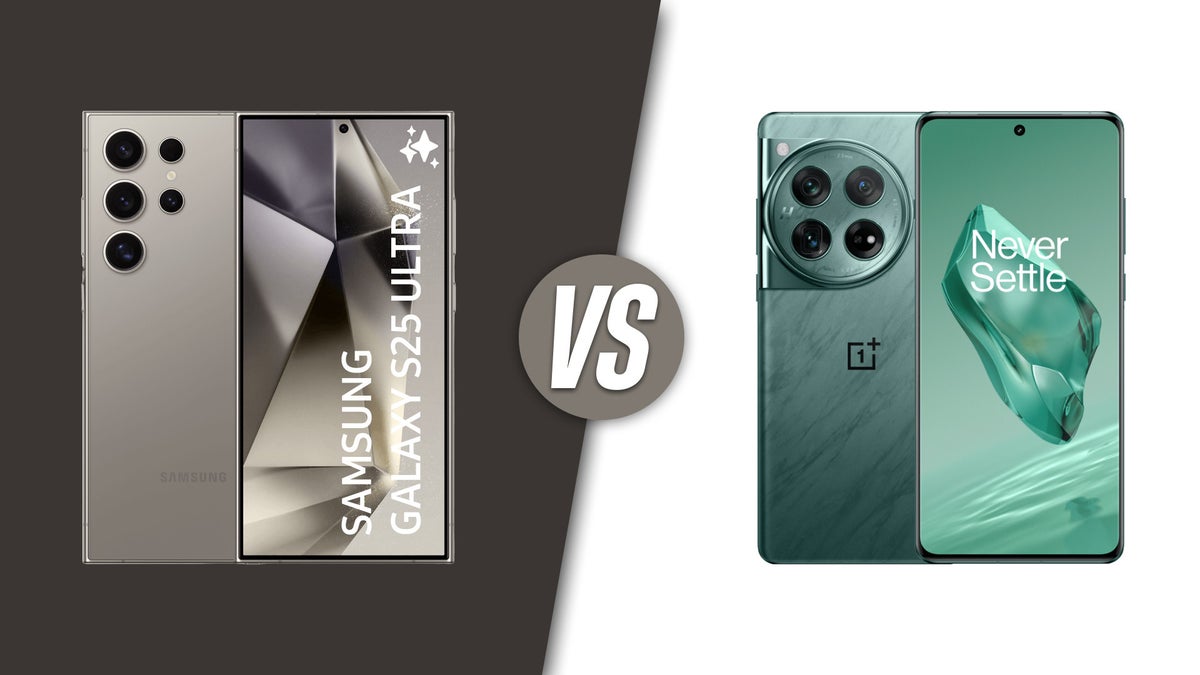
Samsung sticks with last year’s camera hardware on the S25, relying on software tweaks for improvements. While motion handling and color accuracy have seen refinements, early feedback highlights issues like reduced detail, lingering shutter lag, and low-light performance concerns. Samsung has work to do to keep up with top-tier flagships.
Software
OnePlus has refined its Android experience, borrowing elements from iOS while successfully reimagining Apple’s Dynamic Island. Notifications are well-organized, and customization is intuitive, though third-party app integration still needs work. OxygenOS 15 brings smoother animations, better multitasking, and a lag-free experience markedly improved from previous versions. OnePlus promises four years of Android updates and six years of security patches.
Samsung’s One UI also draws comparisons to iOS, with features like the Now Bar and Now Brief, which integrate user data for a more personalized experience. While these need better app compatibility, future Galaxy AI advancements may enhance them. One UI is highly customizable, user-friendly, and packed with Samsung-exclusive tools like Good Lock. It’s a distinct Android experience not for everyone but widely praised. Samsung leads in software support, offering seven years of updates.
Performance
The Galaxy’s Snapdragon 8 Elite chipset sets a new benchmark with its custom-built performance cores, delivering unmatched power and AI capabilities. It outpaces competitors like MediaTek, Google, Samsung, and even Apple in real-world performance. If heavy gaming or multitasking is a priority, the 8 Elite stands out.
That said, the Snapdragon 8 Gen 3 in the OnePlus 13R is more than capable for most users. Not everyone needs cutting-edge hardware, and unless AI features or high-end gaming are essential, the difference in daily performance is negligible. In fact, early reports suggest the SD8 Elite can run quite hot, which may be a tradeoff to consider.
Battery Life
Samsung’s compact flagship delivers solid battery life, matching the S24’s 8–10 hours of screen-on time. It is enough for most users. However, OnePlus pushes the limits with a massive 6,000mAh battery using high-density silicon-carbide tech, offering true two-day battery life.
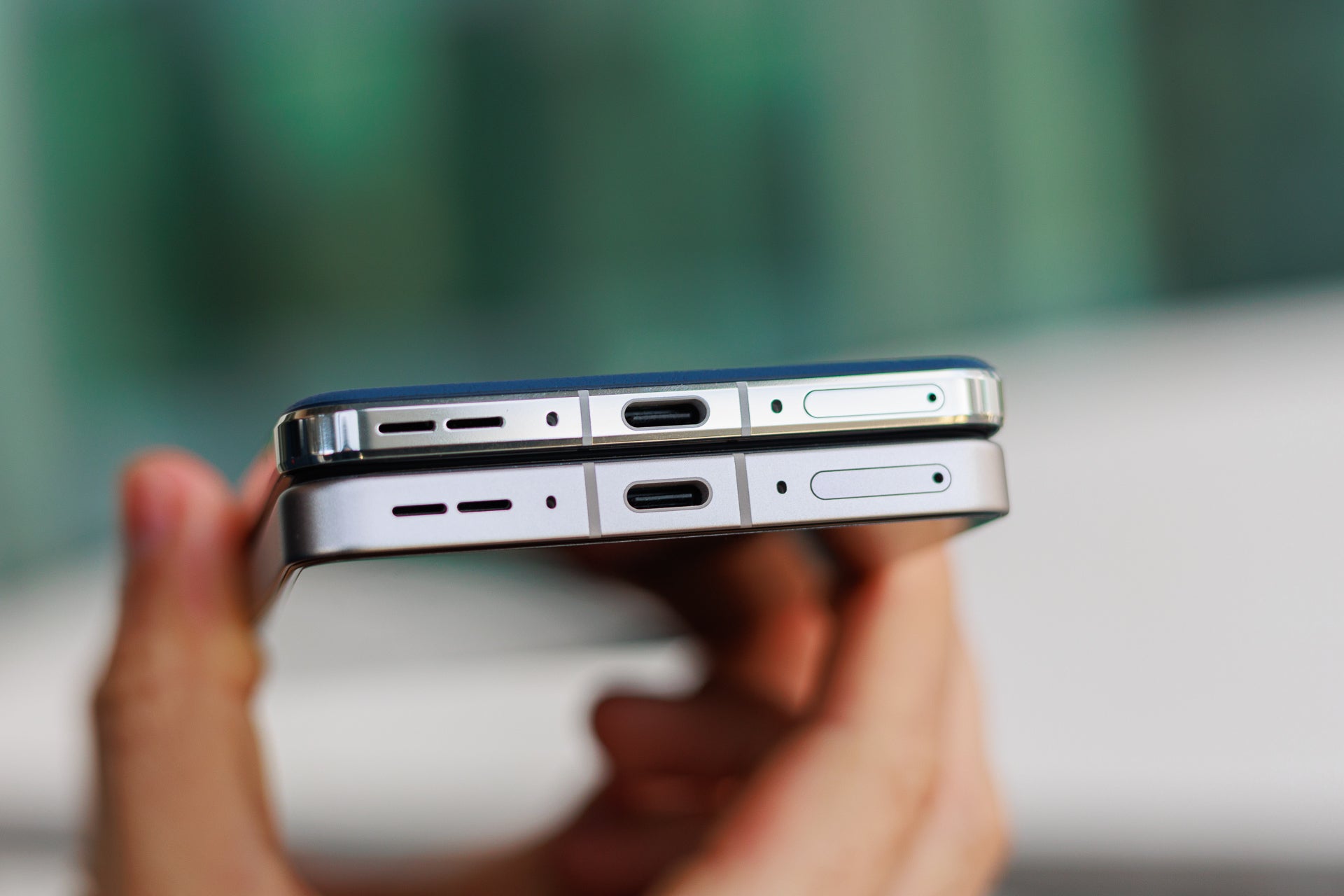
Charging is another win for OnePlus, with 55W speeds and a full-spec charger included something rare these days. If you’re a heavy user who games or relies on AI processing, the 13R is the clear choice.
Both phones excel in their own way. The OnePlus 13R offers unbeatable value, balancing smart compromises with solid performance, a sleek design, and surprisingly good cameras all at a midrange price.
The Galaxy S25, while less daring, remains a powerhouse. With top-tier hardware, long-term software support, and One UI’s loyal following, it’s a great choice for those seeking a compact, high-performance phone built to last.