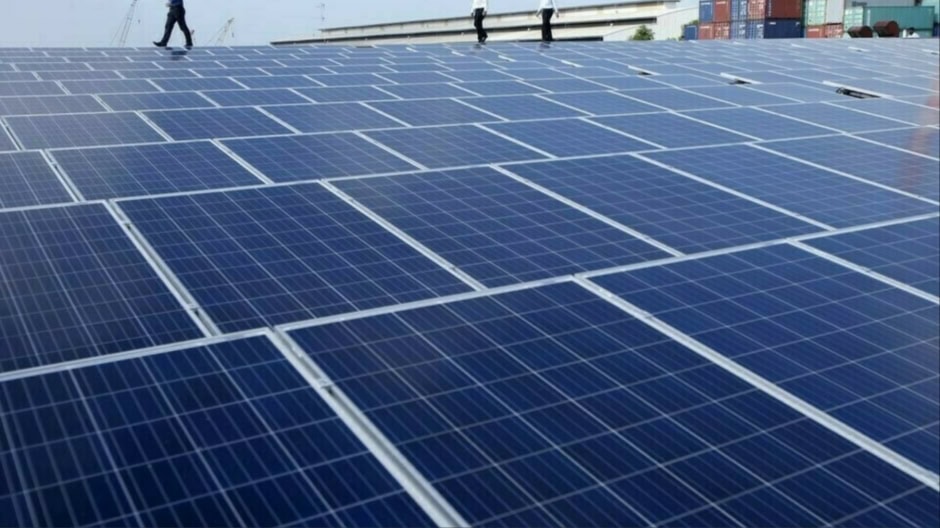
ISLAMABAD: The government has confirmed that rooftop solar panel users will not be taxed on the electricity they generate and export to the national grid. However, they will still be subject to the standard 18% tax on power consumed from the grid, according to Energy Minister Awais Khan Leghari. The new solar power policy, recently approved by the Economic Coordination Committee (ECC), aims to promote renewable energy while ensuring grid sustainability.
Speaking to local media, Leghari revealed that Prime Minister Shehbaz Sharif is set to announce a major reduction in electricity tariffs. He highlighted that renegotiated contracts with independent power producers (IPPs) have resulted in savings of Rs1,400 billion, with Rs400 billion annually being passed on to consumers in the form of lower electricity rates. Additionally, reductions in the power sector loan discount rate to 12% will further contribute to lower tariffs.
Addressing concerns over potential reductions in solar energy buyback rates, Leghari dismissed speculation that the new policy would cut the rate to Rs8.88 per unit due to taxation. He clarified that the solar buyback rate remains at Rs10 per unit, ensuring fair compensation for rooftop solar users under the revised framework.
The minister also outlined the financial viability of residential solar power systems under the new policy. Consumers with a 15% plant factor, using 25% solar electricity and 75% grid power, can recover their solar investment within 3.5 to 4 years. Meanwhile, existing net metering users will continue to receive Rs27 per unit as per their contracts, allowing them to break even within 18 months.
Pakistan has experienced a rapid surge in residential solar adoption, with rooftop solar installations adding 1,500 to 2,000 megawatts of capacity over the last 18 months. Experts project that this trend will continue, with solar power capacity growing by 1,000 to 1,100 megawatts annually. Currently, the number of solar consumers has expanded to 283,000 users, but this growth has also created a Rs150 billion financial burden on traditional grid users, who have faced tariff increases of Rs1.5 per unit to subsidize grid storage costs for net metering consumers.
To address this imbalance, the government has introduced a net billing system, where rooftop solar users will receive Rs10 per unit under five-year contracts instead of the previous net metering model. The shift aims to balance grid costs while maintaining incentives for solar energy investment.
Looking ahead, Leghari expressed confidence that industrial electricity consumption will rise following the upcoming electricity tariff reduction. He also announced that the government has canceled 10,000 megawatts worth of power projects due to their high costs, despite previously issued letters of intent.