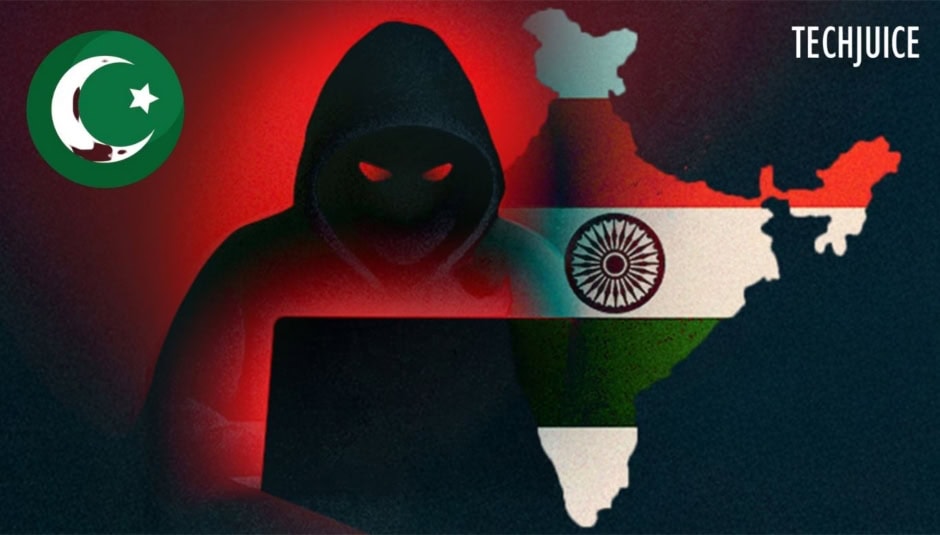
ISLAMABAD: In a bold and calculated retaliation, Pakistan employed less than 10% of its cyber warfare capacity. Yet, the resulting impact on India was profound crippling key infrastructure, exposing vulnerabilities, and shaking the foundations of its digital supremacy.
Senior defence sources confirmed that Pakistan’s cyber response, part of a larger multidimensional offensive, achieved disproportionate disruption. India, often hailed as a global IT giant, found itself reeling under the digital assault that coincided with missile strikes targeting high-value locations.
Coordinated Military and Cyber Offensive
On Saturday morning, the world watched as Pakistan launched its precise military operation featuring Fateh-1, Fateh-2 rockets, and Babur cruise missiles, striking deep into Indian territory, including its highly prized S-400 radar system. However, it was the unseen cyber attack that delivered the most significant strategic blow.
According to security insiders, Pakistan’s digital strike:
- Torched 10 SCADA arrays
- Wiped out 1,744 servers
- Took down 13 Indian government websites
- Crashed Indian railway systems
- Disrupted power grids, forcing cities like Mumbai to rely on emergency backups
The cyber intrusion leveraged GPS spoofing, signal jamming, satellite disruption, and strategic database attacks, effectively freezing infrastructure and inducing chaos.
Markets Nosedive Amid Digital Chaos
Before a single missile hit its target, India’s financial markets were already bleeding. Security sources reported a staggering loss of INR 6.9 trillion (USD 83 billion) within 48 hours. Major indices plunged. Reliance dropped by 2.1%, HDFC by 2%, while banking stocks were in free fall.
This sequence of economic turbulence prior to physical engagement highlighted Pakistan’s capability in fifth-generation warfare, which one source described as a domain ruled not by “tanks” or “treaties”, but by “firmware, fibre, frequency and fear.”
Drones, Psychological Ops, and Satellite Disruption
Adding another layer to the operation, Pakistan deployed unarmed drones over New Delhi, Gujarat, and other key cities not for strikes, but for psychological warfare. These drones, combined with kamikaze killer drones and electronic warfare tools, blinded India’s satellite systems and jammed its communication networks.
This multifaceted response showcased Pakistan’s ability to integrate traditional warfare with advanced digital disruption, taking strategic advantage without escalating to full-scale conflict.
Leveraging high-accuracy intelligence, Pakistan also neutralized several Indian terrorist training camps, specifically those involved in IED planning and execution within Pakistani territory. These strikes successfully eliminated key masterminds and operational handlers, striking a heavy blow to cross-border terror activities.