WASHINGTON: Elon Musk’s White House exit on Friday was overshadowed by fresh allegations of drug use, just hours before the billionaire joined President Donald Trump for his farewell press conference at the Oval Office.
A New York Times exposé revealed that Musk allegedly consumed ketamine frequently during the 2024 campaign trail, leading to bladder issues—a known side effect of long-term use of the anesthetic. The report also claimed Musk took ecstasy and psychedelic mushrooms while traveling with a pill box last year, though it remains unclear if he used drugs while heading the Department of Government Efficiency (DOGE).
The South African-born tech mogul, who also serves as the largest donor to Trump’s 2024 re-election campaign, has previously admitted to using ketamine under prescription to treat what he described as a “negative frame of mind.” According to the NYT, Musk himself told acquaintances that the drug affected his bladder.
Neither Musk nor his companies, Tesla and SpaceX, immediately commented on the report. The White House, meanwhile, downplayed the claims. Trump’s Deputy Chief of Staff Stephen Miller brushed off concerns when asked about Musk’s alleged drug use, shifting focus to illegal drugs crossing the southern border. “The drugs that we’re concerned about are the drugs running across the southern border,” Miller said.
Asked by CNN if Musk had undergone drug testing while employed by the White House, Miller replied, “You’ll have the opportunity to ask Elon all the questions you want today yourself.”
Musk Receives Farewell Gift, Pledges Ongoing Support to Trump
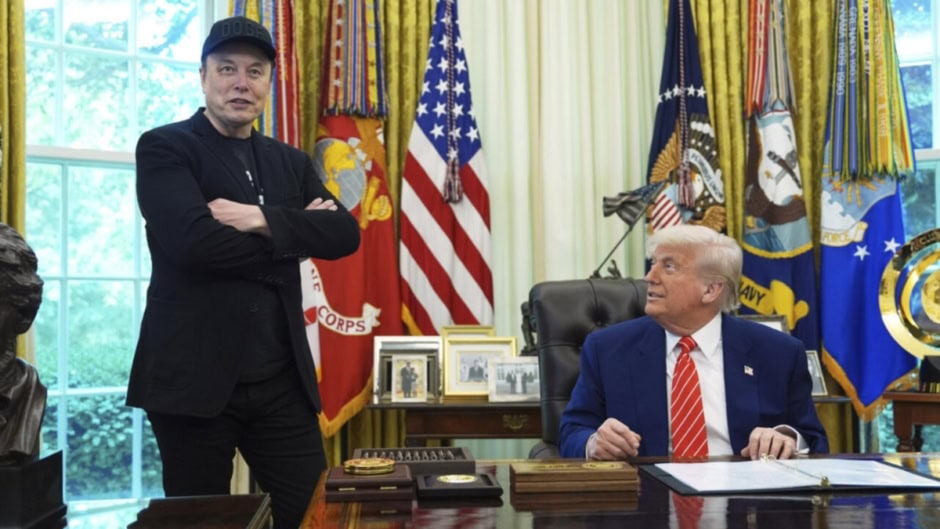
Despite the controversy, Musk marked his White House exit by reiterating his commitment to supporting Trump, stating, “I look forward to continuing to be a friend and adviser to the president.” During the farewell, Trump presented Musk with a golden key in recognition of his leadership of DOGE.
His departure came just seven months after being appointed by Trump to lead the administration’s efficiency department, aimed at cutting federal spending from key programs like the Department of Education.
Musk, wearing a black jacket and baseball cap, stood beside Trump and defended his tenure, saying his office had been unfairly blamed for every cost-cutting move. “We became, like, essentially the DOGE bogeyman, where any cut anywhere would be ascribed to DOGE,” he said.
Under Musk’s direction, DOGE slashed billions from federal budgets, including aid approved by Congress. The cuts even dismantled entire agencies like the US Agency for International Development, prompting a Boston University study that claimed tens of thousands of lives were lost due to the foreign aid freeze. The claim was earlier disputed by Secretary of State Marco Rubio.
Trump stressed that while Musk was officially stepping away, he would remain closely tied to ongoing DOGE reforms, especially efforts to overhaul the Internal Revenue Service. “Elon Musk is really not leaving,” Trump said, adding that more aggressive budget cuts are in the pipeline.
Musk’s White House exit comes as he shifts focus back to his private ventures, including Tesla, SpaceX, and X. Yet, his legacy at DOGE—marked by deep budget slashes and controversial shutdowns—continues to stir debate across Washington.