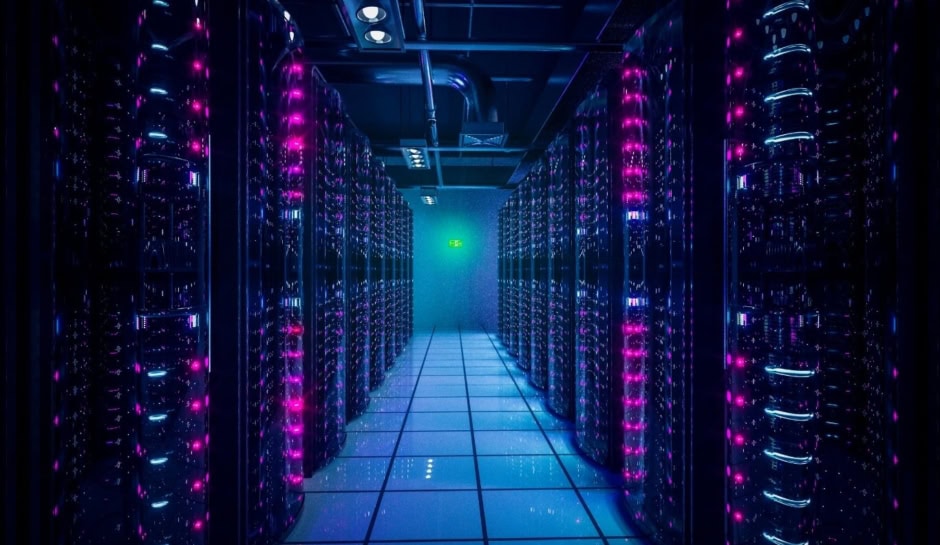
Meta CEO Mark Zuckerberg has revealed the company’s most ambitious AI infrastructure plan yet, a new AI data center called Hyperion, which will eventually supply five gigawatts (GW) of computational power to its AI operations.
In a post on Threads, Zuckerberg described the project as being on a scale large enough to “cover most of Manhattan.”
View on Threads
Meta’s move signals an aggressive strategy to compete directly with OpenAI, Google DeepMind, and Anthropic by creating a computing backbone capable of supporting frontier AI models.
The upcoming Hyperion data center will be located in Louisiana, most likely in Richland Parish, where Meta had previously committed $10 billion to data center development, according to company spokesperson Ashley Gabriel. Hyperion will initially deliver 2GW of capacity by 2030, scaling to 5GW in the following years.
In addition, Meta is developing a 1GW AI super cluster named Prometheus, slated to go live in 2026 in New Albany, Ohio. Zuckerberg claims Prometheus will be among the first AI data centers of its magnitude to be controlled entirely by a tech company.
Together, Hyperion and Prometheus represent a seismic shift in the AI compute race, positioning Meta to better attract talent and compete with companies like OpenAI and Google that rely heavily on massive compute for training state-of-the-art models.
But these data centers also bring challenges. With a combined energy pull enough to power millions of homes, the environmental and community impact is a growing concern. A recent report by The New York Times noted that one of Meta’s facilities in Newton County, Georgia, had already led to dry taps in nearby homes due to excessive water consumption.
A similar warning comes from Bloomberg, reporting that CoreWeave, another AI hyperscaler, may double the electricity demands of a Texas city with its own expansion plans.
Backed by the Trump Administration and Energy Sector
The broader AI infrastructure boom has strong backing from the Trump administration. Former President Donald Trump helped announce OpenAI’s Stargate project and continues to advocate for AI infrastructure as a priority for national advancement.
In a recent op-ed in The Economist, U.S. Secretary of Energy Chris Wright wrote that the U.S. must “lead the next major energy-intensive frontier: artificial intelligence.”
He emphasized that AI transforms electricity into “the most valuable output imaginable: intelligence,” and noted that the government will ramp up energy production from coal, nuclear, geothermal, and natural gas to meet AI demands.
Soaring Energy Demands Raise Red Flags
As AI becomes more deeply embedded in national policy and business strategy, experts warn of an impending energy crunch. Data centers accounted for just 2.5% of U.S. energy use in 2022, but that figure could jump to 20% by 2030 if current trends continue.
Without substantial investment in sustainable and scalable energy sources, this boom could lead to power shortages, water stress, and backlash from local communities affected by these mega facilities.
Meta’s rollout of Hyperion and Prometheus underscores a turning point in the global AI race, one where computational power is the new currency. With billions invested and political support mounting, the question is no longer whether AI will reshape industries, but how far companies are willing to go to fuel that transformation.