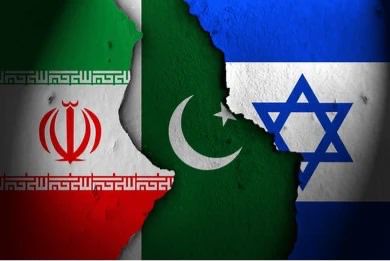
A covert online recruitment effort tied to Israel’s Mossad used Google Ads to target Iranian security personnel. Researchers report that the campaign reached users in at least 19 countries and also appeared to target Pakistani citizens. The operation redirected viewers to recruitment pages, offered money and protection, and relied on deceptive imagery and messaging to lure potential defectors.
How the ad campaigns worked
Google’s ad transparency records show four Persian-language recruitment campaigns ran across at least 19 countries, including the United States, Sweden, France, Germany, and India. One campaign directly linked to the Mossad’s official Persian recruitment form on mossad.gov.il.
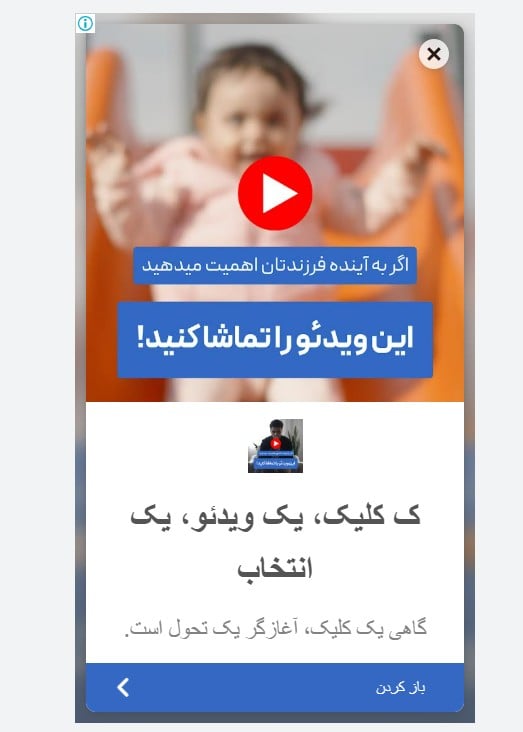
That ad even urged viewers to activate a VPN before clicking. Another campaign used an image of an infant to bait clicks, displaying text that promised a better future for the child. When clicked, the image redirected users to a recruitment form instead of playing the advertised video. The ads used both overt recruitment pages and deceptive redirects to apparent consulting firms that likely did not exist. Germany was singled out for special attention.

According to Google’s portal, it was the only country targeted by all four campaigns. Researchers flagged ads that appeared to focus on family members of Iranian nuclear engineers living in Germany. One Mossad-style advertisement read, “You are just one day away from making history. Call Now. The future belongs to you,” and it was shown in at least 18 countries.
Why Pakistan Was Targeted
Pakistani researcher Zaki Khalid reported on LinkedIn that Pakistani citizens encountered these ads, raising fears of surveillance or retaliation by Iranian authorities against locals.
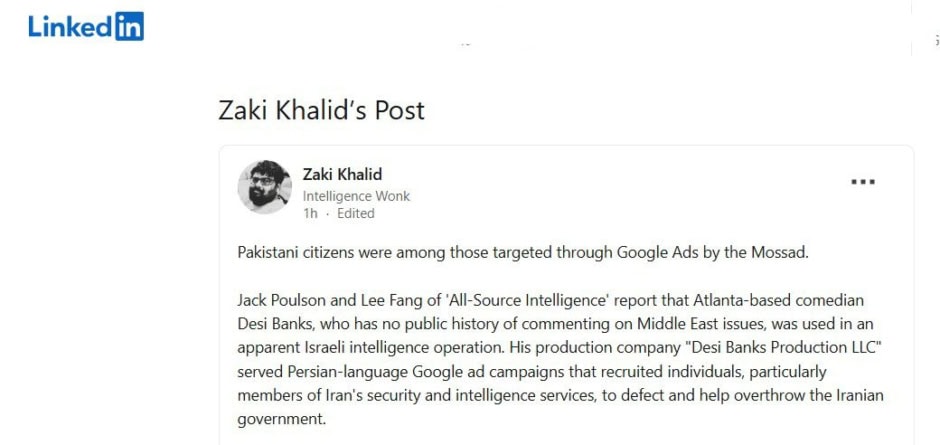
Khalid’s own investigation found that the ads also appeared in Pakistan, despite being in Farsi, a language uncommon for the local population. He argued that the targeting might have been aimed at:
- Iranian operatives based in Pakistan
- Local contacts linked to Iranian activities who could be exploited financially
- Iranian diplomatic staff in embassies or consulates within Pakistan
This, Khalid warned, potentially puts Pakistani citizens at risk of surveillance or suspicion by Iranian authorities, raising serious national security concerns.
Warfare and Big Tech’s Role
The operation, nicknamed “Payam-e-Aabi” (Blue Message), reportedly ran through Telegram and X, combining both overt recruitment attempts and deceptive advertising. While its effectiveness remains uncertain, Khalid called it a form of psychological warfare targeting the Iranian diaspora and security community.
He also stressed that the campaign highlights how Big Tech platforms like Google can be weaponized for covert state operations, enabling intelligence agencies to reach global audiences under the guise of legitimate advertising.
Researchers note that while some doubt the campaign’s success, its true impact remains unclear without a multinational counterintelligence probe. Khalid suggested that both Google and authorities, including the FBI, should be pressed for answers, given that the ads originated from U.S. soil.
For Pakistan, the revelation underscores the vulnerability of local internet users in global intelligence campaigns and the urgent need for digital oversight and cooperation with international partners to counter such threats.