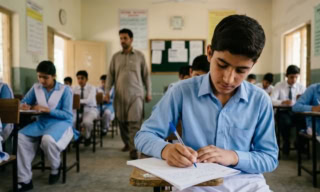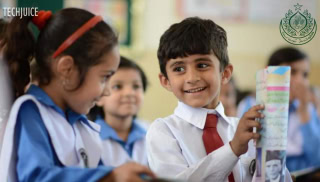
The federal government has officially approved a pilot project to introduce artificial intelligence (AI) into Pakistan’s classrooms, beginning with grade 8 students in federal-run schools.
The initiative will deploy AI-powered tools to teach the national curriculum. As part of the trial, the model will be tested in two schools, one urban and one rural, to gauge how the technology performs in different learning environments. If the pilot delivers positive results, officials say the program could scale up to cover as many as 100,000 students nationwide.
The project is being rolled out through a formal agreement between the Federal Directorate of Education (FDE) and Mind Hive, a tech company that develops digital learning solutions. Oversight will come from the Pakistan Institute of Education (PIE), which will carry out a detailed review of the pilot phase, focusing on student outcomes and classroom adaptability.
Education experts see this as a potential game-changer. They argue that AI can reshape teaching by making lessons more personalized and interactive. Instead of a one-size-fits-all approach, students will learn at their own pace, with weaker learners receiving extra support and advanced learners moving ahead more quickly.
Officials also stress the broader impact. By introducing AI at an early stage, Pakistan hopes to build digital literacy and prepare its youth for a future where technology plays a central role in both the economy and education.