
A sweeping disruption of Microsoft’s Azure cloud platform crippled services across airlines, financial institutions, gaming networks and enterprise applications worldwide. The incident highlighted vulnerabilities in even the largest cloud infrastructures and reignited questions about reliance on centralised providers.
Configuration Fault Sparks Global Cascade
According to Microsoft, the outage was triggered by a mis-configuration in its Azure Front Door and DNS-routing systems, key global gateways for Azure services. The disruption, which began around 16:00 UTC, affected multiple continents simultaneously.
Numerous organisations reported outages: check-in kiosks at Heathrow Airport, online banking for NatWest, and gaming platforms like Minecraft and Xbox Live were impacted. Recovery involved rolling back the faulty configuration and rerouting traffic via unaffected nodes, restoring most services within hours.
A Cloud Monopoly Under Scrutiny
Cloud platforms such as Azure and Amazon Web Services (AWS) underlie vast portions of the digital economy, from banking to entertainment. Analysts estimate these providers manage the majority of enterprise cloud workloads globally, meaning a failure at scale can ripple across sectors.
In September 2025, Azure acknowledged elevated latency due to multiple undersea fibre-optic cuts in the Red Sea region. Less than a month later, another outage has some experts scratching their heads.
These precedents clearly show that even top-scale cloud providers remain exposed to cascading failures, whether caused by internal configuration errors, infrastructure faults or external network events.
Lessons for Organisations and Architects
Enterprises are now re-evaluating resilience strategies. Recent reporting shows that thousands of users flagged problems with Azure services during the incident.
For example, Downdetector logged over 18,000 reports at the peak. Companies are increasingly emphasising hybrid architectures, multi-cloud redundancy and robust failover mechanisms rather than relying on a single provider.
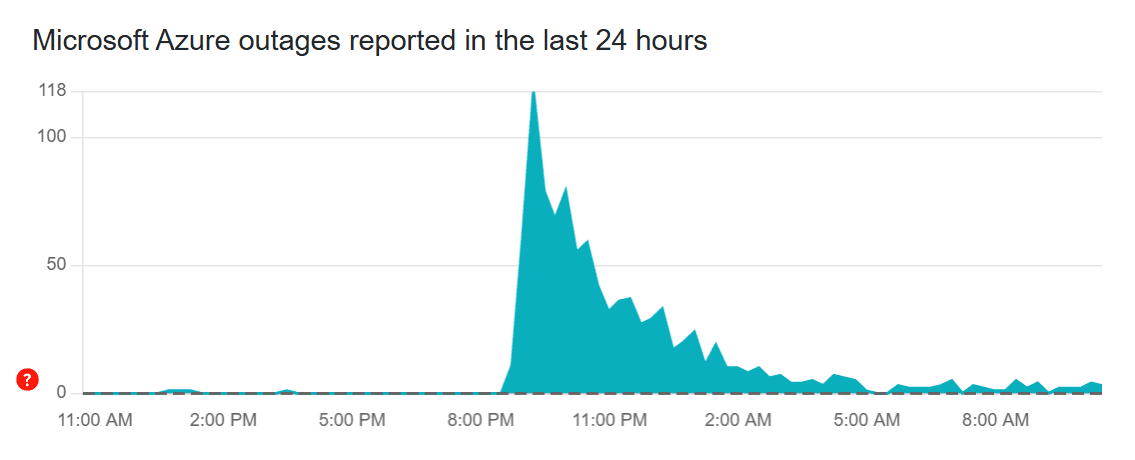
Regulatory and Client Pressure Mounts
The breadth of this outage, affecting aviation, finance and public-sector services, has drawn regulatory scrutiny. Authorities vow to review cloud-dependency risk and may demand stronger disclosure of failure modes and recovery protocols from cloud vendors.
Beyond Uptime: The Human Impact
Physical infrastructure failures translate into real-world disruption. Airlines were forced into manual rebooking, banks experienced service blackouts, remote workers lost hours and small business payment systems went offline. The very architecture designed for resilience, global cloud consolidation, is exacerbating systemic risk when things go wrong.
Microsoft has confirmed full restoration of Azure services but warned that a small number of customers may still face lingering issues. The company said it has deployed a rollback of the recent configuration change and blocked further deployments until stability is restored.
As cloud dependency deepens across industries, the effectiveness of Azure’s remediation and future architecture adjustments will be carefully watched.