AMD has quietly ended full driver and game-optimization support for its Radeon RX 6000 series graphics cards, a move that’s angered PC gamers and analysts alike.
As stated in its release notes for the Adrenalin 25.10.2 driver, the company says “New game support and expanded Vulkan extensions support is available to Radeon RX 7000 and 9000 series graphics products.”
In short, RX 6000 (RDNA 2) and RX 5000 (RDNA 1) cards are now shifted into “maintenance mode,” meaning they will receive only critical security updates and bug-fixes, but not new game optimizations or feature enhancements.
Many RX 6000 series cards launched as recently as 2022, like the RX 6750 XT, and are still widely used, meaning the premature cutoff of feature support is seen as a major misstep. PC gamers on forums like Reddit have reacted with a mix of disbelief and frustration, suggesting they feel stranded by AMD’s decision.
Analysts warn this decision could damage consumer trust, especially as rival NVIDIA continues to support older GPU generations for much longer. For example, NVIDIA still offers full driver support for its RTX 20 series hardware, which launched around the same time as the RX 6000 series.
Why has AMD taken this step? The company says it wants to focus resources on optimizing and delivering new features for its newer architectures, namely RDNA 3 and RDNA 4, rather than older chip designs. As the company transitions these GPUs into maintenance mode, there’s a bit of uncertainty about what lies ahead in the coming months.
However, an AMD spokesperson shared with Tom’s Hardware that “New features, bug fixes, and game optimizations will continue to be delivered as required by market needs in the maintenance mode branch.” AMD is gearing up to focus on the upcoming Adrenalin Edition releases, which will bring performance boosts and game-specific enhancements. This effort will be limited to the RDNA 3 and RDNA 4 architectures. Still, we’re left wondering what AMD really means by “market needs,” so we’ll have to keep an eye out for future driver updates before we can completely write off these GPUs.
Industry data reports that NVIDIA now holds about 94% of the discrete GPU market, while AMD’s market share has plummeted to around 6%.
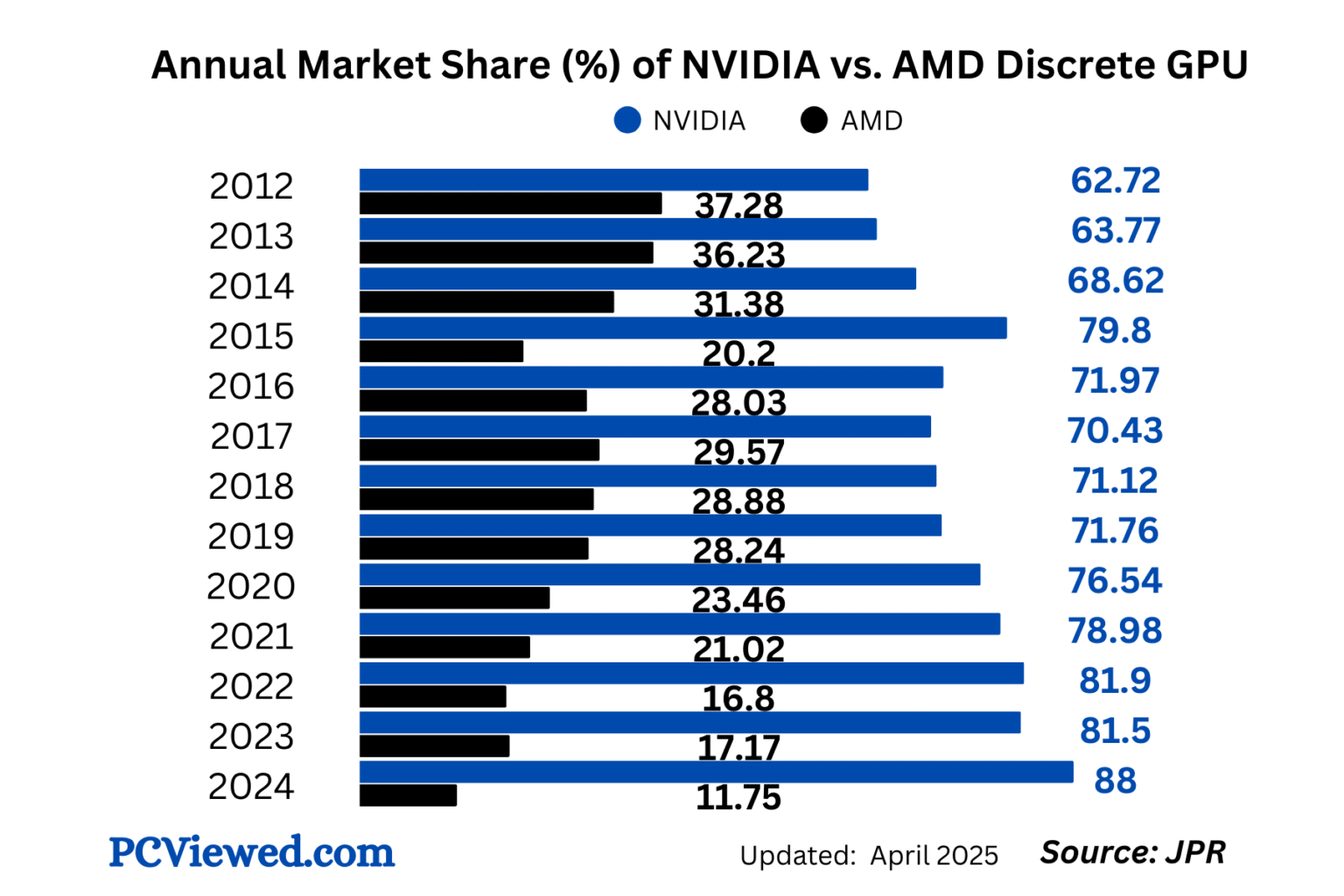
Affected gamers and system builders should take note: RX 6000 cards will still function and receive critical patches, but they have effectively stopped evolving technologically. Anyone building with these GPUs now should not expect future game-ready optimizations.
The broader implication: In the highly competitive GPU market, consumer confidence and longevity have become strategic battlegrounds. By moving early to sunset support for a relatively recent GPU generation, AMD risks alienating loyal users just as its competitive position is under pressure.