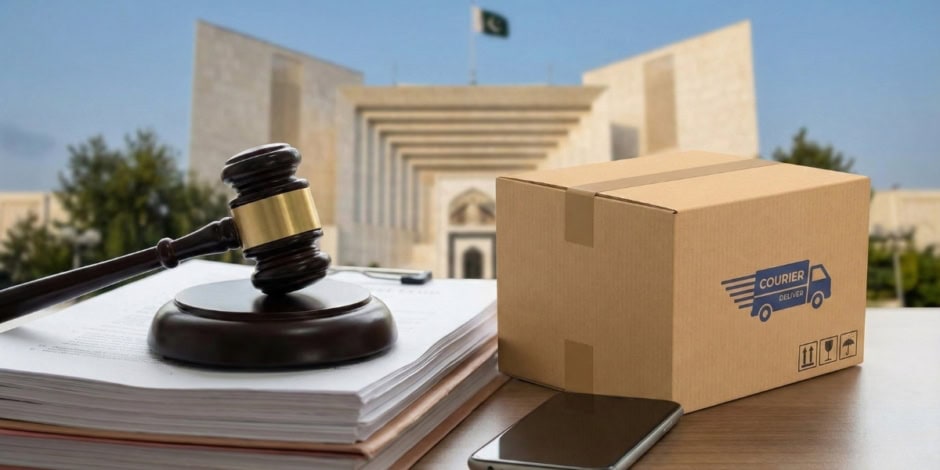
The Lahore High Court (LHC) has set a significant precedent for courier companies in Pakistan. In a detailed judgment, Justice Anwaar Hussain dismissed an appeal by TCS. Consequently, the courier giant must pay Rs. 124,000 in damages to a citizen, Muhammad Siddique Ghumman.
The case combines elements of social media fraud with strict corporate liability. It reinforces that logistics companies cannot deviate from specific delivery instructions, even if the sender is a victim of a scam.
The Facebook Trap & TCS Delivery Mishap
The incident began when Muhammad Siddique Ghumman befriended a user named “Shazia Saeed” on Facebook. During their interactions, Shazia requested a mobile phone as a gift. Ghumman agreed and purchased a new OPPO mobile phone.
Shazia instructed Ghumman not to send the device to her home. Instead, she asked him to courier it to a specific TCS office for “Self-Collection”. Ghumman booked the consignment with TCS. He paid the insurance charges and explicitly instructed that the phone be handed over only to Shazia Saeed.
However, the delivery did not go as planned. Shazia messaged Ghumman confirming receipt, but immediately blocked him on social media. Suspicious, Ghumman contacted TCS. The company’s records revealed that a man named Muhammad Amar had collected the parcel. Amar had claimed to be Shazia’s brother and convinced the staff to release the package to him.
From Romance Scam to Consumer Court
Ghumman issued a legal notice to TCS. He argued that the company violated the “Self-Collection” service agreement by handing the parcel to a third party.
Following the legal notice, TCS tracked down Muhammad Amar. Amar confessed that he was, in fact, the person behind the “Shazia Saeed” profile. He admitted to creating the fake ID to trick Ghumman. The company recovered the phone and offered to return it to Ghumman.
However, Ghumman refused the simple return. He demanded damages. He asserted that TCS was unauthorised to deliver the item to anyone other than the intended consignee. TCS refused to pay, arguing that Ghumman was at fault for sending a parcel to a fake identity.
Ghumman filed a suit in the Consumer Court. After a full trial, the court ruled in his favour. It ordered TCS to pay Rs. 24,000 (the value of the phone/insurance) and an additional Rs. 100,000 as compensation for the mental agony and litigation costs.
The High Court Verdict
TCS challenged the Consumer Court’s decision in the Lahore High Court. The hearing took place on June 3, 2025. Siddique Ghumman represented himself in court.
Justice Anwaar Hussain reviewed the case and dismissed the courier company’s appeal. The High Court upheld the initial verdict. The court determined that TCS failed its contractual obligation. Regardless of the fraud perpetrated by the recipient, the company was bound to verify the identity of the “Self-Collection” consignee.
Because TCS delivered the shipment to an unauthorised person, they remain liable. Siddique Ghumman ultimately secured Rs. 124,000 in total compensation.