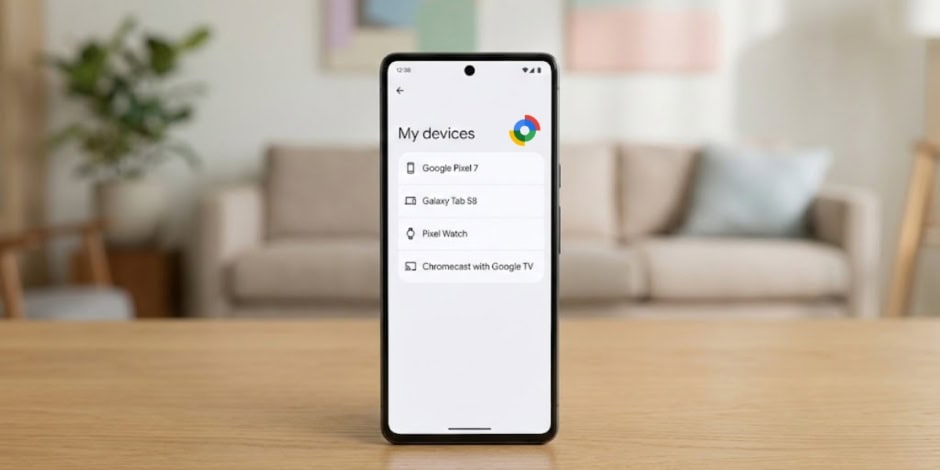
Google has begun rolling out a new Maps integration within Find Hub, strengthening its Android device tracking experience by displaying real time or last known locations on a familiar Google Maps interface. The update allows users to see misplaced phones, tablets, earbuds, and compatible accessories within a broader geographic context, potentially reducing confusion and improving recovery outcomes for lost devices and items.
Find Hub, formerly known as Find My Device, serves as Google’s centralized platform for tracking lost Android devices and supported items, including Bluetooth trackers that participate in its global device finding network. The transition to Find Hub signaled Google’s intention to move beyond basic phone location and toward a more comprehensive system for tracking, sharing, and managing personal devices and accessories.
The Maps integration matters now as mobile users increasingly rely on location based services not just for navigation but also for security and peace of mind. Traditional tracking interfaces often rely on abstract pins or coordinates, while embedding Find Hub within Google Maps allows users to interpret device locations using recognizable landmarks, roads, and surrounding terrain. Location services also support protective actions such as remote locking and data erasure, helping users secure personal information if a device is lost or stolen.
For everyday Android users, the Maps based experience simplifies the process of locating devices, particularly in unfamiliar environments. Families using shared Google accounts or location access can view multiple devices and accessories within the same interface used for directions and local discovery, reducing the need to switch between separate applications. Earlier versions of Find Hub already supported tracking across multiple device categories, and the Maps view builds on that foundation.
More broadly, Google’s decision to integrate Find Hub with Maps reflects an industry wide push to consolidate location intelligence and user safety tools. Competing ecosystems have long emphasized tight integration between tracking features and mapping interfaces, combining real time location data with visual context to improve usability and precision.
Google’s extensive global mapping data gives Find Hub a strategic advantage, particularly in regions where Android dominates. The integration also strengthens the role of Google Maps within the ecosystem by expanding its utility beyond navigation, helping keep users within Google’s suite of services for critical daily tasks. Location accuracy features that combine GPS, Wi-Fi, and network signals further enhance device and item detection.
Google has not announced a universal rollout timeline, indicating the Maps integration may continue to appear gradually based on regional and server side updates.
While the change focuses on visualization rather than introducing new tracking capabilities, it signals Google’s continued investment in refining how users interact with essential security tools.